
Climate change: Five things we've learnt from COP24
 KIARA WORTH/IISD/ENB
Delegates to the UN climate conference in Poland have reached agreement on how to implement the 2015 Paris Climate Accord, which comes into force in 2020. What are the key points to come out of the meeting?
1. The rules are key to the game
However dull it may be, the operational rules for the 2015 Paris climate agreement will govern the way the world tackles climate change for decades to come.
The key thing was not to unravel the carefully negotiated Paris agreement by having one set of rules for the rich countries and another one for the poor.
By that measure the conference was a success with China showing leadership by not pushing for a return to the old ways of countries who did, and countries who didn't.
Also helping that effort was the US. Ensuring that the China and the US face similar regulations has long been a key of American policy.
Keeping everyone on the same page also delighted the EU. Climate commissioner Miguel Arias Canete explained how the new rules would work.
"We have a system of transparency, we have a system of reporting, we have rules to measure our emissions, we have a system to measure the impacts of our policies compared to what science recommends."
To keep everyone in check, the rules will also contain a compliance mechanism, which means that countries that don't submit their reports on time will face an inquiry.
The new regulations are "flexible" for developing countries, meaning they can sign up to the rules at a later date.
2. Science is worth fighting for
One of the biggest rows at this meeting was over a key scientific report from the Intergovernmental Panel on Climate Change (IPCC).
A group of countries including Saudi Arabia, US, Kuwait and Russia refused to "welcome" the IPCC study.
They merely wanted to "note" the contents.
 KIARA WORTH/IISD/ENB
Efforts to find a compromise ended in failure.
However that was not the end of the matter.
The vast majority of countries felt that acknowledging the science was critical at this conference.
Their efforts did finally ensure that the IPCC was recognised - but many felt it was a token effort.
"That science is unsettling and it doesn't connect it to the need to do more," said Camilla Born from the environmental think tank E3G.
"The deal looks at it in isolation, it's an elegant compromise but it's not really enough."
3. International spirit is still alive
Many countries had worried that with the rise of nationalism in many countries and the recent election of Jair Bolsonaro as Brazil's president, the international co-operation needed to tackle climate change might be in danger.
For many getting agreement here in Katowice was less about technical rules and more about showing that the international spirit is still alive and has teeth.
"I think the beauty of multilateralism is that it is the effort of everybody," said Spanish Ecology Minister Teresa Ribera.
"And what we have seen is that everybody has supported the package, no single country has decided to step down.
"It is very difficult. It is like organising a party for 200 friends, and there's a single menu that everybody has to eat. It is not so easy but we have got it. That's fantastic!"
4. A win for the process but not for the planet?
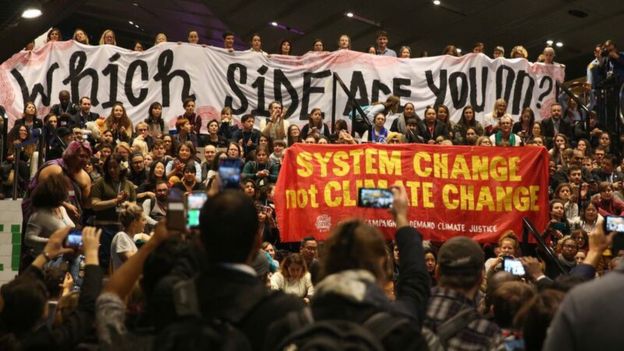
While negotiators have been congratulating themselves on a job well done in landing the rulebook, there are many voices here who feel that the agreement does not go far enough.
They point to the strength of the science, and the public recognition of the impacts of climate change seen this year in heatwaves and wildfires.
Many environmental campaigners believe that Katowice was a missed opportunity for radical action.
"We have ended up here with more of a coal trade fair than a climate convention," said Mohamed Adow from Christian Aid, referring to the efforts to promote coal by Poland and the US at this conference.
"We haven't acted in good faith, particularly for the young, that we takes seriously what science is telling us and we are responding to it. That message didn't come through.
"If people think the rulebook is the way to get the world on that path, it is not robust or ambitious enough."
5. New voices are emerging
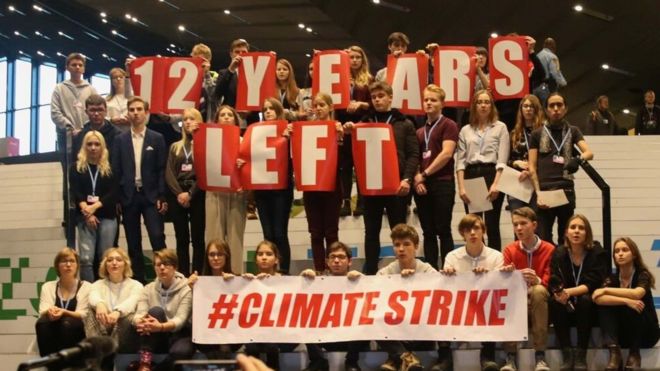
One of the most striking things about this conference of the parties was the presence of energised young people in far greater numbers than I have ever seen them at a COP before.
 KIARA WORTH/IISD/ENB
Climate change chimes with young people in a way that is sometimes missing with older people, who make up the bulk of negotiators here.
The sense that perhaps this UN process doesn't quite connect with the modern world was summed up best by Mohamed Nasheed, the former president of the Maldives and now their lead climate negotiator.
"Almost 10 years since I was last at these climate negotiations, I must say, nothing much seems to have changed.
"We are still using the same old, dinosaur language. Still saying the same old words.
"Still making the same tedious points."
It would be hard to argue with this view given the shenanigans that played out at the end, when one country, Brazil, held up progress at the talks on one issue for a couple of days.
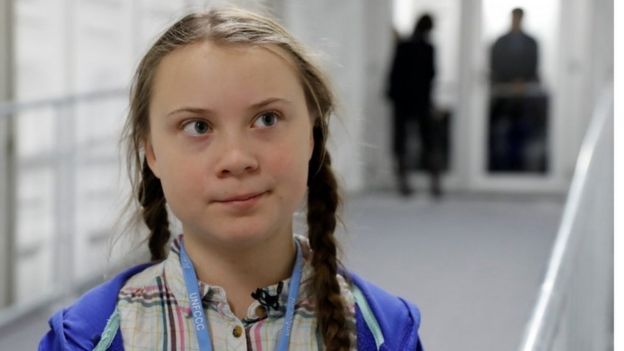
Perhaps the most memorable image of this meeting was that of 15-year-old Swedish student Greta Thunberg.
 REUTERS
This teenager who has organised school strikes in Sweden held daily press conferences here to drive home her message that platitudes and warm words just aren't enough anymore.
Her message was sharp and succinct.
"We cannot solve a crisis without treating it as a crisis."


 Posts
Posts


No comments:
Post a Comment