
Showing posts with label Hamas. Show all posts

Monday, March 25, 2019

Congresswomen Tlaib and Omar are Hamas supporters and therefore complicit in th e rocket attacks

Rocket strikes house in central Israel

A rocket, reportedly fired from the Gaza Strip, has hit a house in central Israel. Prime Minister Benjamin Netanyahu is cutting short his trip to the US to deliver what he says will be a "strong Israeli response."

Six people were injured in Israel after suspected rockets struck deep inside the country on Monday.
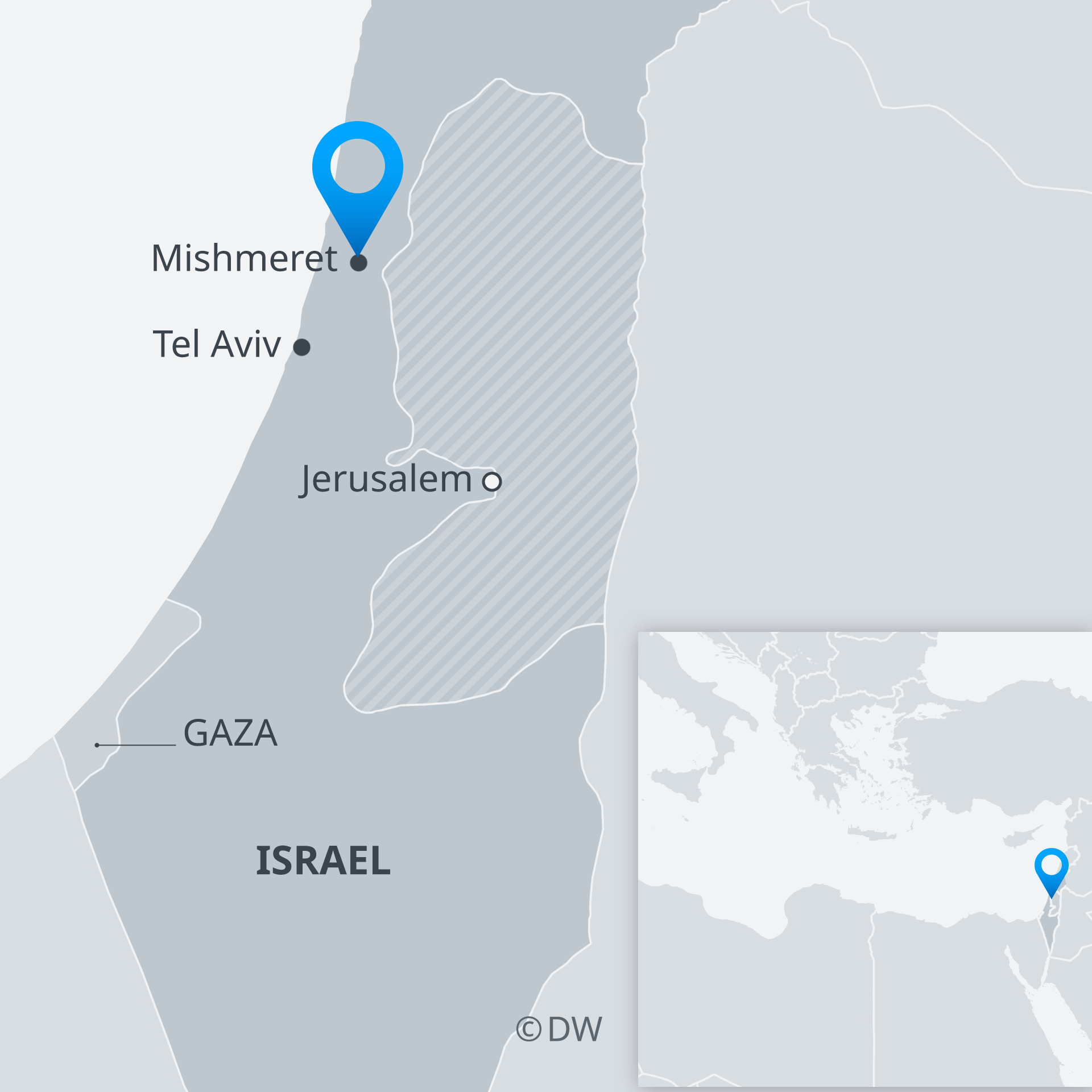
The Israeli military said one rocket was fired from the Gaza Strip, striking a house in Mishmeret, an agricultural town north of Tel Aviv.
Magen David Adom rescue service said it was treating seven people, including a 50-year-old woman who was moderately wounded.
"It's a miracle that nobody got killed," said Assi Dvilanski, a Magen David Adom paramedic.
Map of Israel showing Mishmeret
Israeli Prime Minister Benjamin Netanyahu said he would fly back to Israel immediately after meeting US President Donald Trump on Monday. 
"In light of the security events I decided to cut short my visit to the US," Netanyahu said, adding that Israel would respond "forcefully" to the "heinous attack."
A damaged house that was hit by a rocket can be seen north of Tel Aviv
A damaged house that was hit by a rocket north of Tel Aviv
The military blamed the strike on Hamas and said it was sending reinforcements to the Gaza border. Two brigades were deployed and reservists called up. Israel also closed the main crossings into the enclave.
"The launch was carried out by Hamas from one of its positions in the Rafah area," Israeli army spokesman Ronen Manelis said.
Hamas announced its Gaza chief, Yehiya Sinwar, had canceled a planned public appearance.
Rockets do not normally reach so far into the country. The attack comes 10 days after rockets were fired at Tel Aviv for the first time in two years, however Hamas leaders in Gaza claimed that was an accident. Nonetheless Israel responded with heavy fire.

Saturday, February 16, 2019

DART Officer Sues Social Media Giants Over 2016 Downtown Police Ambush...now to focus on the Hamas supporters in Congress


DART Officer Sues Social Media Giants Over 2016 Downtown Police Ambush


DALLAS (CBSDFW.COM) – A DART police officer shot in the July 7, 2016 ambush in downtown Dallas is now suing Twitter, Facebook and Google, alleging the social media companies aided in radicalizing the gunman.
Five officers died in the shooting. 
Officer Jesus Retana was one of nine other people injured.

Jesus Retana – DART Police officer (GoFundMe)
“Mentally, he’s just not the same person. He has nightmares, sweats. It has a tremendous impact on his life and his husband’s. They suffer every single day from what happened,” said attorney Keith Altman.
Altman filed the lawsuit on behalf of Retana and his husband Andrew Moss.
It claims the companies allowed Hamas to use social media networks “as a tool for spreading extremist propaganda” that reached Micah Johnson, the shooter ultimately killed by Dallas police.
“Hamas’ ability to reach into the United States has been greatly enhanced, it’s been greatly enhanced by using social media,” said Altman.
A judge dismissed a similar lawsuit filed by Altman on behalf on another officer claiming it failed to show Hamas’ connection to the ambush in Dallas.
Facebook and Google have not responded to requests for comment. Twitter told CBS11 it is not commenting.

Tuesday, October 2, 2018

Gaza and Israel's unilateral disengagement thirteen years later.


Remembering Gaza Disengagement 13 Years Later: Personal Reflections on a Missed Opportunity


Also available in العربية
October 1, 2018
Introduction
It is sometimes hard to imagine in 2018 that a different vision existed for Gaza than the one that currently exists in the news, and that Gazans live daily. Yet, I was a member of a hopeful group of technocrats who developed a clear roadmap for Gaza after Israel unilateral disengagement in 2005, and then watched as that plan collapsed. The lessons from that period on why this more optimistic vision for Gaza failed are a necessary portion of the broader conversation on the Israeli-Palestinian conflict, and are an important antidote to a narrative that presents the rise of Hamas and the ensuing violence as inevitable. Yet it is vital for international and regional actors alike to reflect on what has not worked in regards to technical aid to Gaza as the international community continues to struggle to find a solution to a worsening crisis.
The Day Israel Left Gaza
In the early morning hours of September 12, 2005, I was among the first people to enter the evacuated Jewish settlement of Netzarim, located to the south of Gaza City, as the last Israeli soldiers left the Strip. At sun rise, I was in Gush Katif, the largest Israeli settlement block stretching along Gaza’s beautiful southern coast on the Mediterranean. From there, I continued to the Palestinian side of Rafah border crossing that was also evacuated along with the 13-km long Philadilphi Route at the Gaza-Egyptian border. I ended my day at the three evacuated small settlements of Dugit, Nisanit, and Elei Sinai located along the northern Gaza-Israeli fence and at Erez Industrial zone.
The scene I observed in the ex-settlements that day was one of utter anarchy and total chaos. Tens of thousands of people from Gaza’s eight refugee camps and the few small towns adjacent to the settlements spread out over the evacuated properties and took what they could from the buildings the Israeli settlers had left behind —from pipes and doors to concrete and other basic building materials. The Palestinian police that had been assigned to provide security was nowhere in sight. Only the green houses in the middle and southern settlements remained intact due to the presence of private security guards hired in advance for protection. By the end of the day, little was left except for rubble and debris.
Palestinian Preparations for the Day After
I travelled to these locations at such a relentless pace as one of approximately 40 Palestinian professionals assembled to prepare Gaza for the day after the disengagement. The team included top technical experts in agriculture, industry, trade, border crossings, water, electricity, sanitation, land zoning, housing, and telecommunications. We mostly hailed from Gaza, aided by a small number of legal, trade, and water experts from the Ramallah-based PLO’s Negotiations Support Unit.
Our team also worked in close coordination with the World Bank and the UNDP, as well as other international organizations operating in the Palestinian areas. Periodically, we held meetings with the Palestinian civil society, the private sector, and the political factions in both the Gaza Strip and the West Bank from whom we sought feedback on our work after we presented it to them. The donor community and the representatives of the diplomatic missions in the Palestinian Authority (PA) were also briefed on our technical plans. The overall impression we received in all of these meetings was positive and very encouraging.
On November 15, two monthas after Israel's unilateral withdrawal from Gaza, the United States brokered the Agreement on Movement and Access (AMA) between Israel and the PA. This agreement appeared to greatly enhance the prospects of successful implementation of our technical plans for post-disengagement Gaza. The AMA was designed to improve Gaza’s cross-border commercial transactions with Israel, allowing for a secure passage between Gaza and the West Bank. The AMA also dealt with agricultural exports from former Israeli settlements in Gaza, outlined the operational strategy of the EU-monitored Rafah border crossing, and contained articles about resuming the talks on constructing Gaza seaport and the re-building of Gaza airport, which was destroyed during the first months of the second intifada that erupted on September 28, 2000.
Dashed Hopes
Our technocratic hopes and aspirations for a new chapter in Gaza’s history were soon dashed. The challenges posed by the broader Israeli-Palestinian conflict and internal Palestinian politics proved more powerful than our technical plans for Gaza. This is not to say that we were necessarily naïve; we did not expect a smooth implementation of our plans, or of the AMA itself for that matter. Yet, not even in our worst nightmares could we have envisioned Gaza as it stands today: a place torn by more than a decade of bitter Palestinian political division, three destructive wars between Hamas and Israel, and by a suffocating blockade and near total isolation from the rest of the world. Indeed, 13 years after the disengagement, Gazans are still struggling with high rates of unemployment, poverty, and food insecurity; with collapsed basic services and public infrastructure; with a crippled private sector; and with a widespread state of utter despair that engulf Gaza’s two million inhabitants.
Israel, Hamas, and the Realities of Disengagement
A confluence of factors led to this unfortunate outcome. Chief among them is the way in which Israel and Hamas perceived and presented the disengagement plan and its implementation.
On the Israeli side, although the plan to evacuate Gaza – which took all by surprise when first announced in December 2003 by former Prime Minister Ariel Sharon – was largely motivated by Israel’s own strategic interest, the Israeli departure from Gaza was all but inevitable; a point often neglected in writings about the Gaza disengagement. Unlike the occupation of the West Bank, the prospect of a long-term Israeli occupation of Gaza had never existed or made strategical sense. Neither the geography nor the demography of the place would have allowed for a prolonged Israeli presence in the midst of a young and burgeoning Palestinian population squeezed into a small territory. Gaza, after all, is a narrow strip of land considered to be one of the most densely populated regions on earth: at the time of the disengagement, its population stood at 1.3 million, with an annual growth rate of 3.5 percent. In light of these circumstances, the Israeli disengagement was, in fact, predictable on a strategic level. It was only a matter of time.
In contrast, Hamas presented the disengagement as a victory that proved the effectiveness of its armed resistance in the fight to “liberate” Gaza. The fact that the process had not yet ended mattered little to Hamas (after the disengagement, Israel continued to retain exclusive control over Gaza’s air space and territorial waters, the Palestinian population registry, electromagnetic space, and the movement of goods and people to and from Gaza in any location other than the Rafah border crossing with Egypt).
In the rush to capitalize on its self-proclaimed achievement of Intisar al moqawama (the victory of the armed resistance), Hamas competed against the secular Fatah party in the Palestinian legislative elections of January 2006, which – against predictions – it ultimately won.
And so, as the last Israeli soldier left Gaza in the early morning hours of September 12, 2005, Gaza was in effect sealed and delivered to Hamas. The delivery was made official following Hamas’s electoral victory in early 2006, and was finalized in mid-June 2007 with the organization’s violent takeover of the entire Gaza Strip. As the dramatic years that followed had shown, it was all downhill from there for Gaza.
Missed Opportunity?
As both Israel and Hamas were framing the disengagement in a manner that served their own political interests, it was difficult for international actors to make the disengagement work and deliver tangible economic benefits to Gaza. And there were several attempts on that front.
In December 2004, the World Bank led the way by drafting a set of technical papers containing suggestions on how to modernize Gaza border crossings with Israel, establish industrial parks and export zones, and make the Palestinian economy competitive. On April 14, 2005, the former head of the World Bank, James Wolfensohn was appointed as the Middle East Quartet Special Envoy for Gaza Disengagement. Two months later, the G-8 summit held in Gleneagles, Scotland, pledged financial support of up to $3 billion per year over a three year period to help Mr. Wolfensohn carry out his assignment. Other private sector initiatives to help Gaza included investment in former Israeli settlements’ green houses in southern Gaza, and in the Erez industrial estate located in the northern tip of the Gaza Strip.
Today, these international efforts – all part of the disengagement early history –seem a distant memory, lost in the destruction that wrecked Gaza in recent past. Had the full implementation of such initiatives been allowed, they could have offered Gaza a good shot at a different future. That, however, did not happen. With both Israel and Hamas having conflicting narratives about disengagement, failure was all but certain. Furthermore, the international efforts were purely of a technical nature, and, as such, were inherently ill-suited for dealing with challenges that were deeply rooted in a highly intricate conflict setting. And it did not take long for these international efforts to reach a dead-end when, in January 2006, they were stalled by the startling rise of Hamas to power, and later came to a complete halt with Hamas armed takeover of Gaza in mid 2007.
Lessons Learned
The disengagement plan has failed to alter Gaza’s prolonged misfortune. One can list many reasons for this outcome. But one lesson is clear: technical solutions to Gaza’s complex problems, absent supportive political and security setting, are not likely to work. This much we already know. Yet, this lesson and its policy implications, doesn’t seem to be well understood today. For instance, despite the increasingly growing realization that deterioration in Gaza’s living conditions is fast approaching and may have even already passed a breaking point, the proposed solutions to the crisis, whether from the Israeli military establishment or from the current US administration, are all in the form of a “list of mega projects” to save Gaza’s collapsing economy. Vital as such undertaking may be for addressing Gaza’s mounting socioeconomic difficulties and the chronic shortages in its basic public services, these projects, based on the experience of post-disengagement Gaza, can only be fully implemented if and only if Gaza’s political and security situation is stabilized first. This condition brings the Gaza question back to its wider context where it belongs, and where much work still needs to be done on that front by all concerned parties, including the Palestinians themselves.

Sunday, May 20, 2018

If 40,000 Hamas rioters were charging your border, what would you do?

Liberal NYC public schools are now defenders of Hamas..Parents outraged at school’s silent tribute for Gaza victims

Parents outraged at school’s silent tribute for Gaza victims


This moment of silence caused a lot of noise.
Students at the elite Beacon School were asked to pause from their studies last week to pay tribute to the victims of violence in Gaza, where some 60 Palestinians were killed the day before by Israeli soldiers.
The school-wide announcement Tuesday stunned some students and has outraged parents who question why the school is entering into the divisive Palestinian-Israeli conflict with what they see as an anti-Jewish bent.
“I am extremely upset because I did not send my child to a New York City public school to pray for Hamas operatives,” said one father, who is Jewish.
Violence erupted along Israel’s border with Gaza Monday on the same day as the opening of the US embassy in Jerusalem. A Hamas leader said two days later that 50 of the 62 people killed belonged to the militant Islamic group which rules Gaza, and the rest were “from the people.”
The US, which has labeled Hamas a terrorist organization, has stood by Israel in the wake of the killings and criticism of the Israeli response.
“I just don’t think any school should be promoting a moment of silence for terrorists. What if it was Islamic terrorists in ISIS?” said one student’s mother, who is Jewish. “No school would be having that over the loudspeaker.”
The Zionist Organization of America, a pro-Israel group, said it would send a letter to the Beacon School demanding an apology.
“It is disgraceful to mourn the death of Hamas terrorists,” said Morton Klein, the organization’s president.
The highly selective Hells Kitchen school tends to lean left. Students, some with the permission of their teachers, walked out of school in November 2016 to protest Donald Trump’s election.
Beacon principal Ruth Lacey did not return request for comment about whether she sanctioned the Gaza announcement, which was made by a student.
Students said such silent tributes at the school were rare. They did pause for the victims of the Parkland High School massacre, but that moment of silence took place during a school walkout against gun violence in March, students said.
Modal Trigger
Sophie SteinbergAngel Chevrestt
“As a Jewish student, I could see a lot of my Jewish friends get very weird when the moment of silence started,” Sophie Steinberg, a junior from Brooklyn, said about Tuesday’s tribute.
“They don’t know how to feel. They don’t know how to fit into all of this.”
Steinberg said the contemplative moment was not out of place at Beacon.
“I think that’s Beacon’s nature — to not be divisive but to bring up the things that no one wants to talk about,” she said.
But another student said she had hoped for more discussion surrounding the announcement which, she said, seemed to come out of nowhere.
“I wish there was that conversation afterwards,” said Fortune Ndombo, a junior from Manhattan. “There was no follow-up.”
Some parents say they’ve reached out to the principal, who has been unresponsive.
“We support civic engagement and advocacy amongst students, and encourage schools to provide inclusive environments where students are able to respectfully discuss current events,” a Department of Education spokesman said.

Wednesday, May 16, 2018

CNN not just anti Israel they are tools of the Islamists.

CNN refused to cover Natanyahu’s live speech, cutting away instead to coverage of protests and riots in Gaza. “They go and show the smoke billowing and say, ‘This is what happens when you decide to recognize Israel’,” 

Hamas attacked Israel

Hamas leader says 50 Gazans killed were members of group

A Hamas official says in an interview that 50 of the Gazans killed in Monday’s clashes with Israeli troops were members of the terror group.
Salah Bardawil says of the “62 people martyred, 50 were Hamas.” Gaza’s Hamas-run health ministry earlier reported 60 Gazans were killed in the clashes.
IDF spokesman Jonathan Conricus shares the interview on Twitter, pointing to it as proof that the so-called peaceful protests were orchestrated by the terror group.
https://twitter.com/LTCJonathan/status/996741642056019968
“Take his word for it. This was no peaceful protest,” Conricus writes.
Israel earlier said 24 of those killed were members of terror groups, most of them from Hamas. On Tuesday, Hamas named 10 people from the group who were killed in the fighting.

Sunday, April 15, 2018

NY Times finds “journalists,” no terrorists among Hamas rioters.

NY Times finds “journalists,” no terrorists among Hamas rioters

Yes, come join Hamas at its next picnic…bring the kids, and don’t forget your swastika banners.


We shouldn’t be surprised, but once again The New York Times has twisted itself into a pretzel as a means to defame Israel.

Of the recent tire-burning Hamas riot at Israel’s border, the Timeseditorializes that Israel purposely targeted Yasser Murtaja, who was shot and killed while supposedly serving as a Palestinian Arab journalist. The Times is outraged that this should have happened – while, in the same breath, admitting that Hamas is a “ruthless” organization, which “has drawn tens of thousands of Palestinians to Gaza’s border with Israel.”

In that case, what have we got? We’ve got “the fog of war.” This means there’s no telling what really happened.

There’s even a chance that this journalist was downed by purposeful “friendly fire.” Hamas and the other Islamist terrorists do it all the time.

They did it when they staged the Mohammad al-Dura incident, which prompted the bloody Second Intifada, which we recorded on page 147 of “The Bathsheba Deadline,” where we also recorded Daniel Seaman, Israel’s press secretary at the time, who found that media manipulation is the rule between Palestinians and journalists.

Quote from the BBC Gaza correspondent Fayad Abu Shamala at a Hamas rally in Gaza –

“Journalists are waging the campaign shoulder to shoulder together with the Palestinian people.”

Plus in this instance, “fog of war” has a double meaning, demonstrably so. Hamas burned those tires to blind the IDF. That was the plan.

Thus – who should be held responsible if mistakes did happen? As black smoke filled the air exactly as Hamas had it orchestrated, somehow, according to the Times, in all that chaotic darkness, it fell on Israel’s security forces to distinguish between a camera and a Molotov cocktail. Hamas? The terrorists? Blameless.

Next, we reach total absurdity when the Times editorialists do say that there was rock-throwing, border-breaching with perhaps weapons and explosives.

Oh? But besides that, besides the violence, “the protest was peaceful.” So says the Timeswith a straight face.

Harmless terrorism – do you understand? Peaceful violence – is that clear to you from the Style Book of The New York Times?

More than peaceful, it is positively 1960s kumbaya-time as whistled by Hamas and as danced in rhythm by The New York Times.

So we read that “many of the demonstrators stayed far back from the heavily fortified fence to PICNIC and hold a tent camp sit-in.” How is that for a doozy?

Yes, come join Hamas at its next picnic…bring the kids, and don’t forget your swastika banners.

Listen to the Times and what you get is Joan Baez and the bygone “flower children” instead of a terror group, Hamas, whose existence rests only upon its desire to murder all Jews.

Willful nonsense like that is staggering.

The Times doesn’t even know its own business, writing thus about combat journalism -- “Normally, that wouldn’t be a life-threatening career.”

That statement is insane.

On page 48 of our book, we note that “as of last count, over the past year, more than 100 Western journalists have been killed covering the Middle East and parts nearby and afar.”

Then to the question as to whether this latest casualty was really a journalist. In Israel, there is doubt. He may well have been a member of Hamas.

The Israelis have begun an investigation to find the answer at this writing, but for editorialists at The New York Times that won’t be necessary. They already have all the answers.

New York-based bestselling American novelist Jack Engelhard writes regularly for Arutz Sheva.