Showing posts with label economics. Show all posts

Sunday, July 26, 2020

Good news: "The basic idea is that fiduciaries for private pension beneficiaries cannot invest in socially responsible index funds, religious belief investment funds, or environmental and sustainable investment funds, if the investments de-emphasize financial returns in favor of a non-monetary agenda."

Labor Secretary Eugene Scalia is on the right track with activist investor reform

Friday, April 10, 2020

More damage to people's health then the Wuhan virus


Alex Berenson is a former reporter who worked for the New York Times from 1999 to 2010 where he covered everything from the drug industry to Hurricane Katrina.


After that stint he devoted himself to writing books full time. Last year, his project "Tell Your Children" was published, which deals with the science around cannabis and mental illness.
But Berenson has again come into prominence amid the growing coronavirus pandemic, as he's been posting data analysis revealing a disturbing conclusion: The models that have dictated mass business closures — and that have swiftly collapsed the American economy — are deeply flawed.

A closer look at what Berenson is seeing

Fox News reporter Adam Shaw spoke with Berenson in detail regarding what he's been learning — and he pulled no punches with his conclusion: "The response we have taken has caused enormous societal devastation; I don't think that's too strong a word."
"In February I was worried about the virus. By mid-March I was more scared about the economy. But now I'm starting to get genuinely nervous," he tweeted Wednesday. "This isn't complicated. The models don't work. The hospitals are empty. WHY ARE WE STILL TALKING ABOUT INDEFINITE LOCKDOWNS?"


More on what Berenson's been doing from the cable network:


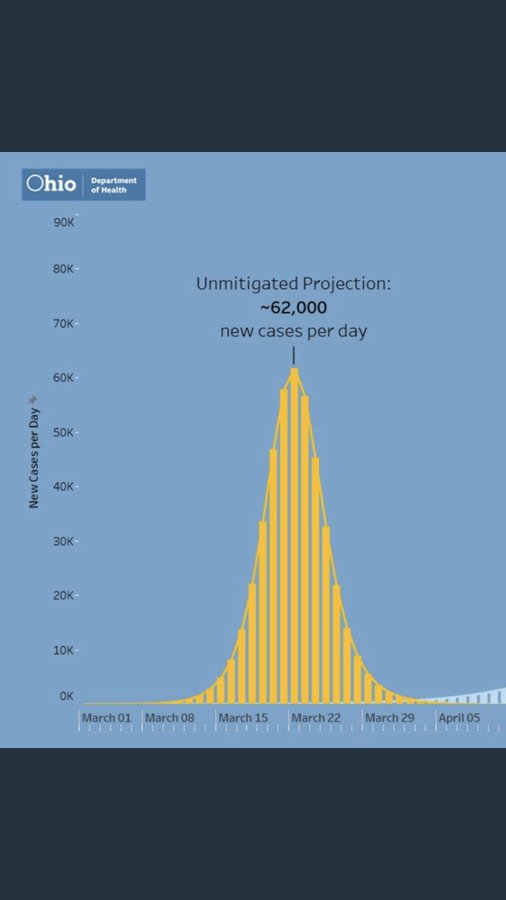
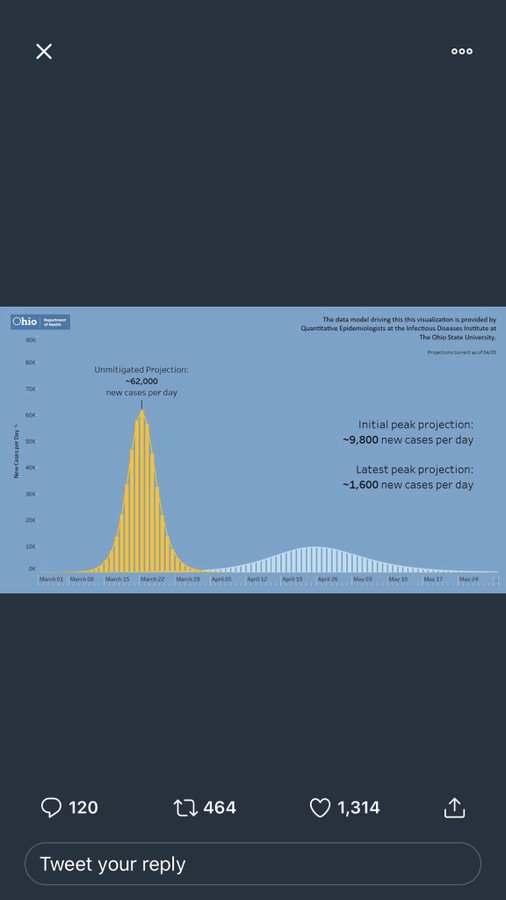
2/ The state’s “unmitigated” model “projects” that without mitigation, the peak of 62,000 will occur (will HAVE OCCURED, to be more accurate) on March 22...

View image on TwitterView image on Twitter
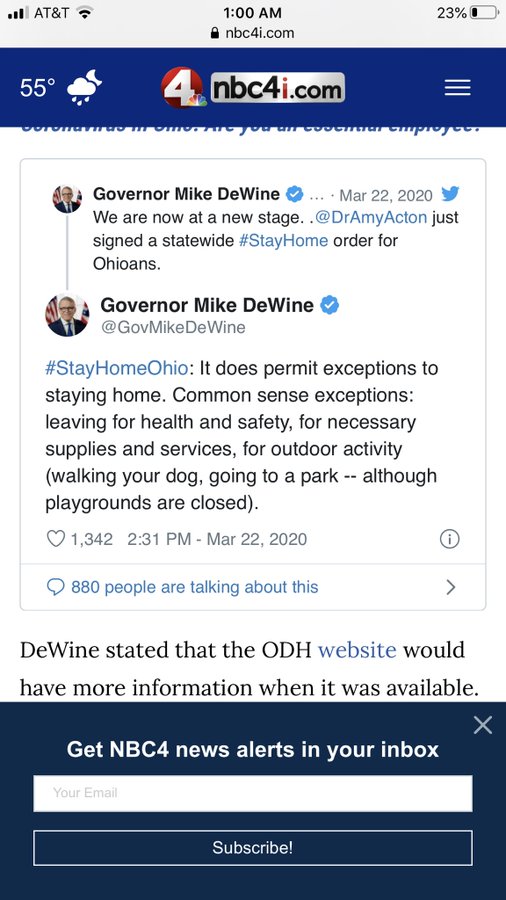
3/ Only Ohio didn’t *actually* issue a lockdown order until Monday, March 23. Yes, lockdowns are such magic that they can PREVENT (theoretical) peaks that occurred before they were issued...

View image on TwitterView image on Twitter

629 people are talking about this


Recently he's been focusing on discrepancies within the University of Washington's Institute for Health Metrics and Evaluation (IHME) model. That model has come under renewed scrutiny as it has revised its metrics multiple times. It once predicted more than 90,000 deaths by August but recently issued a new estimate that has the figure closer to 60,000. Government officials say it's a model that's moving with what the country is doing.
And while Dr. Anthony Fauci, one of national experts on the White House coronavirus task force, said indicators show social distancing is working — "what you do with data will always outstrip a model. You redo your models, depending upon your data, and our data is telling us that mitigation is working" — Fox News said Berenson insists those models already figure in social distancing and other measures.
"Aside from New York, nationally there's been no health system crisis. In fact, to be truly correct there has been a health system crisis, but the crisis is that the hospitals are empty," he told the cable network. "This is true in Florida where the lockdown was late, this is true in South Carolina where the lockdown was early, it's true in Oklahoma where there is no statewide lockdown. There doesn't seem to be any correlation between the lockdown and whether or not the epidemic has spread wide and fast."
Fox News also said Berenson has argued on Twitter that the drop in cases has come before lockdowns would have had an impact since it takes time for social distancing to work due to the time lag between infection and symptoms:

It's the economy, stupid

The tattered state of the U.S. economy due to widespread business shutdowns isn't lost at all on Berenson.
"There was incredible pressure to do something ... so these lockdowns all cascaded, every governor tried to outdo the next," he told Fox News. "And no one stopped and said, 'OK what about Japan? They don't seem to have a terrible epidemic, they wear masks, maybe we should wear masks.'"
Berenson added to the cable network that "we're in a bad spot because there's clearly a dangerous political dynamic right now — the economy is in freefall, a lot of people are hurting. If we acknowledge what is clearly happening ... the people who made these decisions, I think there's going to be a lot of anger at them, so they don't want to acknowledge it, so they say, 'Oh, it's the lockdown that saved us.'"
More from Fox News:
Berenson is not a known partisan. His Twitter feed and other works contain few references to specific politicians, and there's no indication that he's in this to bash or defend Trump or either political party. But he noted that, like with his conclusions on marijuana, there has been a distinct lack of interest from the left.
"I went to Yale, and I worked for the New York Times," he told the cable network. "The people on the left hold themselves out as being science-driven, as being smarter; they think they're smarter, but they won't look at facts that won't meet their narratives."
Here's Berenson talking to Fox News' Tucker Carlson about the conclusions he's reaching:

Thursday, January 23, 2020

President Trump Discusses The U.S. Economy and the Envy of The Davos Elite…

President Trump Discusses The U.S. Economy and the Envy of The Davos Elite…

During a pause between meetings President Trump sat down for an interview with CNBC in Davos, Switzerland.  Joe Keren notes the talk of Davos is the strength of the U.S. economy and how the results of the America-First national economic policies of President Trump are stronger than all Davos attendees anticipated.
This wide-ranging interview may even be better than the Fox Business interview as it presents more depth of insight into the next steps for President Trump’s global trade reset.  Obviously Europe is not looking forward to negotiating new reciprocal trade agreements with the Trump administration.  WATCH:

Thursday, January 9, 2020

The ways of the free market:You Can Now Make $100,000 Working at Taco Bell. Imagine the media if this happened under the previous administration?

You Can Now Make $100,000 Working at Taco Bell 

Leslie Patton Bookmark January 09 2020, 6:30 PM January 09 2020, 8:58 PM (Bloomberg) -- 

Wanted: Restaurant manager. Competitive salary: $100,000. The six-figure sum is not being offered at a haute cuisine location with culinary accolades, but at fast-food chain Taco Bell. Amid an increasingly tough U.S. labor market, the company is betting a company is betting a higher salary will help it attract workers and keep them on the team. The Yum! Brands Inc.-owned chain will test the higher salary in select restaurants in the U.S. Midwest and Northeast, and will also try a new role for employees who want leadership experience but don’t want to be in the management position.


It’s another example of how stubbornly low unemployment is changing the face of fast food, which for decades has been seen as the quintessential low-wage job. Restaurants including Olive Garden owner Darden Restaurants Inc. and Shake Shack Inc. have recently called out labor inflation that’s hurting margins. In November, the unemployment rate fell to 3.5%, matching the lowest since 1969, 
while average hourly earnings climbed and exceeded projections. Taco Bell on Thursday also announced plans to make all of its customer packaging recyclable, compostable or reusable by 2025. Amid the growth of plant-based meat imitations, the chain added it wants to continue providing vegetarian menu items for customers such as the black bean crunchwrap.

Sunday, September 22, 2019

Another attempt at derailing America's well being by the left fails

Amid Too Much Good MAGAnomic Data, Bloomberg Cancels the Recession…
Last week U.S. economic data included the Labor Department’s report on initial filings for unemployment benefits, at historically low levels. Also last week, the Commerce Department reported the U.S. housing market (new homes and permits) was the strongest since 2007. Then came the Philadelphia Fed’s index of manufacturing business activity in September, more than doubling estimates as factories continue to expand.  And if that wasn’t too much winning, the Commerce Department then announced August retail sales growth was double expectations.  Main Street USA is very strong.
None of the economic data supports the almost month-long ‘recession narrative’ pushed by financial pundits and media narrative engineers; and next week the second estimate of Q2 GDP growth will be released. Attempting to retain the smallest remaining whiff of credibility, the Bloomberg economists now announce they’re cancelling the recession.
Yes, in a piece titled “Hold That Recession – U.S. Indicators are Trouncing Forecasts“, Bloomberg admits the economy doesn’t match their gloomy narrative:
(Bloomberg) — The U.S. economy is outperforming expectations by the most this year, offering a fresh rebuttal to last month’s resurgent recession fears fueled by the trade war and a manufacturing slump.
The Bloomberg Economic Surprise Index has reached an 11-month high after four indicators released Thursday, including existing home sales and jobless claims, each surpassed expectations.
The gauge continued to advance after swinging to positive from negative on Tuesday for the first time this year. The data also pushed a similar measure produced by Citigroup Inc. to the highest level since April 2018.
“It says things are getting better,” said Jim Paulsen, chief investment strategist at Leuthold Group in Minneapolis “There’s a definitive change in the growth profile and there’s an acceleration in growth. It’s interesting how pessimistic the attitudes still are among investors, yet when you look at surprise indexes, you would think people would feel better about growth. There’s a disconnect.” (read more)
Yes, there is indeed a “disconnect”.  We’ve been talking about it on these pages for almost ten years.  When you focus on the America-First economic agenda, Main Street thrives.  However, the outcomes for Wall Street are no longer attached to the success of Main Street USA.
And when you apply MAGAnomic policy, well, the Era of De-Globalization is here.
There is nothing that China and the EU can do to stop the de-globalization process; and efforts to stimulate their economy, more quantitative easing (pumping money) while the global supply chains are being shifted, are futile.
The more a nations’ economy is dependent on exports, the more exposure they have to the inherent downsides of de-globalization. U.S. companies that are invested in these nations will lose their investment over time; some rapidly. This will keep the stock market volatile, yet the Main Street USA economy is thriving.
Allianz Group chief economic advisor, Mohamed El-Erian, accurately describes what is happening in an era where deglobalization is taking place. The U.S. economy is strong; however, the multinationals on Wall Street -invested overseas- are exposed. Thus there’s a disconnect and accompanying market volatility.

Friday, September 13, 2019

A measure of economic wealth

Average U.S. FICO Score Hits All-Time High Thanks To Trump Economy


Americans’ average FICO score has hit an all-time high of 706 on the personal credit rating scale. Ethan Dornhelm, the vice president for scores and analytics at FICO, told CBS News that a score of more than 700 basically qualifies individuals for just about any credit at favorable terms.
FICO scores range from 300 to 850. A score above 700 is considered great, and a score above 760 is considered excellent. This high national credit score may be largely attributed to the strong economy, with its historically low unemployment rate, and the Tax Cuts and Jobs Act.
“This record-long stretch of economic growth has helped minimize reliance on debt to pay the bills,” said Joel Griffith, a research fellow at The Heritage Foundation. “Low interest rates help ensure a greater portion of loan payment goes to paying down principal rather than merely making interest payments.”
Creditworthiness is now increasing, which means Americans have the ability to rely on their paychecks, not just borrowing from their futures, to fulfill their financial obligations.
Americans’ average FICO score hit a low during the financial downturn of 2008, with a score of 686. After the recession passed, the nation’s average FICO score continuously grew.
Is giving Americans more access to larger lines of credit such a good thing? According to Griffith and Federal Reserve Bank data, U.S. household debt is also declining. Even now that Americans are able to take on more debt, they are not. They’re paying off their credit cards and increasingly lowering their other debt.
Unfortunately, this national accomplishment has not been a topic discussed among 2020 Democratic nominees. Why have the Democratic presidential candidates shied away from talking about the economy? Because, they call for an economy that “works for everyone,” when the current system is working for more people than ever before.
A Gallup poll shows that 88 percent of Americans believe the current U.S. economy is either “fair,” “good,” or “excellent.” That’s because this economy has provided 5.1 million new jobs and dropped the unemployment rate to 3.7 percent — the lowest rate in nearly half a century.
This is no hot take. Trump’s economic successes are hard to attack, and that’s probably why Democrats avoid talking about the economy altogether.
As the third round of Democratic primary debates is set for September 12. It will be interesting to see if moderators ask the nominees about the economy, and if so, their response. Don’t count on it.
Chrissy Clark is a staff writer at The Federalist. Follow her on social media @chrissyclark_ or contact her at chrissy@thefederalist.com.

Tuesday, September 3, 2019

Putting poverty in America into perspective...

By James D. Agresti 
August 26, 2019
A groundbreaking study by Just Facts has discovered that after accounting for all income, charity, and non-cash welfare benefits like subsidized housing and Food Stamps—the poorest 20% of Americans consume more goods and services than the national averages for all people in most affluent countries. This includes the majority of countries in the prestigious Organization for Economic Cooperation and Development (OECD), including its European members. In other words, if the U.S. “poor” were a nation, it would be one of the world’s richest.
Notably, this study was reviewed by Dr. Henrique Schneider, professor of economics at Nordakademie University in Germany and the chief economist of the Swiss Federation of Small and Medium-Sized Enterprises. After examining the source data and Just Facts’ methodology, he concluded: “This study is sound and conforms with academic standards. I personally think it provides valuable insight into poverty measures and adds considerably to this field of research.”

The “Poorest” Rich Nation?

In a July 1st New York Times video op-ed that decries “fake news” and calls for “a more truthful approach” to “the myth of America as the greatest nation on earth,” Times producers Taige Jensen and Nayeema Raza claim that the U.S. has “fallen well behind Europe” in many respects and has “more in common with ‘developing countries’ than we’d like to admit.”
“One good test” of this, they say, is how the U.S. ranks in the OECD, a group of “36 countries, predominantly wealthy, Western, and Democratic.” While examining these rankings, they corrupt the truth in ways that violate the Times’ op-ed standards, which declare that “you can have any opinion you would like,” but “the facts in a piece must be supported and validated,” and “you can’t say that a certain battle began on a certain day if it did not.”
A prime example is their claim that “America is the richest country” in the OECD, “but we’re also the poorest, with a whopping 18% poverty rate—closer to Mexico than Western Europe.” That assertion prompted Just Facts to conduct a rigorous, original study of this issue with data from the OECD, the World Bank, and the U.S. government’s Bureau of Economic Analysis. It found that the Times is not merely wrong about this issue but is reporting the polar opposite of reality.

Poor Compared to Who?

The most glaring evidence against the Times’ rhetoric is a note located just above the OECD’s data for poverty rates. It explains that these rates measure relative poverty within nations, not between nations. As the note states, the figures represent portions of people with less than “half the median household income” in their own nations—and thus—”two countries with the same poverty rates may differ in terms of the relative income-level of the poor.”
The upshot is laid bare by the fact that this OECD measure assigns a higher poverty rate to the U.S. (17.8%) than to Mexico (16.6%). Yet, World Bank data shows that 35% of Mexico’s population lives on less than $5.50 per day, as compared to only 2% of people in the United States.
Hence, the OECD’s poverty rates say nothing about which nation is “the poorest.” Nonetheless, this is exactly how the Times misrepresented them.
The same point applies to broader discussions about poverty, which can be measured in two very different ways: (1) relative poverty or (2) absolute poverty. Relative measures of poverty, like the one cited by the Times, can be misleading if the presenter does not answer the question: “Poor compared to who?” Absolute measures, like the number of people with income below a certain level, are more straightforward and enlightening.

Unmeasured Income and Benefits

To accurately compare living standards across or within nations, it is necessary to account for all major aspects of material welfare. None of the data above does this.
The OECD data is particularly flawed because it is based on “income,” which excludes a host of non-cash government benefits and private charity that are abundant in the United States. Examples include but are not limited to:
  • healthcare provided by Medicaid, free clinics, and the Children’s Health Insurance Program.
  • nourishment provided by Food Stamps, school lunches, school breakfasts, soup kitchens, food pantries, and the Women’s, Infants’ & Children’s program.
  • housing and amenities provided through rent subsidies, utility assistance, and homeless shelters.
The World Bank data includes those items but is still incomplete because it is based on government “household surveys,” and U.S. low-income households greatly underreport both their income and non-cash benefits in such surveys. As documented in a 2015 paper in the Journal of Economic Perspectives entitled “Household Surveys in Crisis”:
  • “In recent years, more than half of welfare dollars and nearly half of food stamp dollars have been missed in several major” government surveys.
  • There has been “a sharp rise” in underreporting of government benefits received by low-income households in the United States.
  • This “understatement of incomes” masks “the poverty-reducing effects of government programs” and leads to “an overstatement of poverty and inequality.”
Likewise, the U.S. Bureau of Economic Analysis explains that such surveys “have issues with recalling income and expenditures and are subject to deliberate underreporting of certain items.” The U.S. Census Bureau says much the same, writing that “for many different reasons there is a tendency in household surveys for respondents to underreport their income.”
There is also a wider lesson here. When politicians and the media talk about income inequality, they often use statistics that fail to account for large amounts of income and benefits received by low- and middle-income households. This greatly overstates inequality and feeds deceptive narratives.

Relevant, Reliable Data

The World Bank’s “preferred” indicator of material well-being is “consumption“ of goods and services. This is due to “practical reasons of reliability and because consumption is thought to better capture long-run welfare levels than current income.” Likewise, a 2003 paper in the Journal of Human Resources explains that:
The World Bank publishes a comprehensive dataset on consumption that isn’t dependent on the accuracy of household surveys and includes all goods and services, but it only provides the average consumption per person in each nation—not the poorest people in each nation.
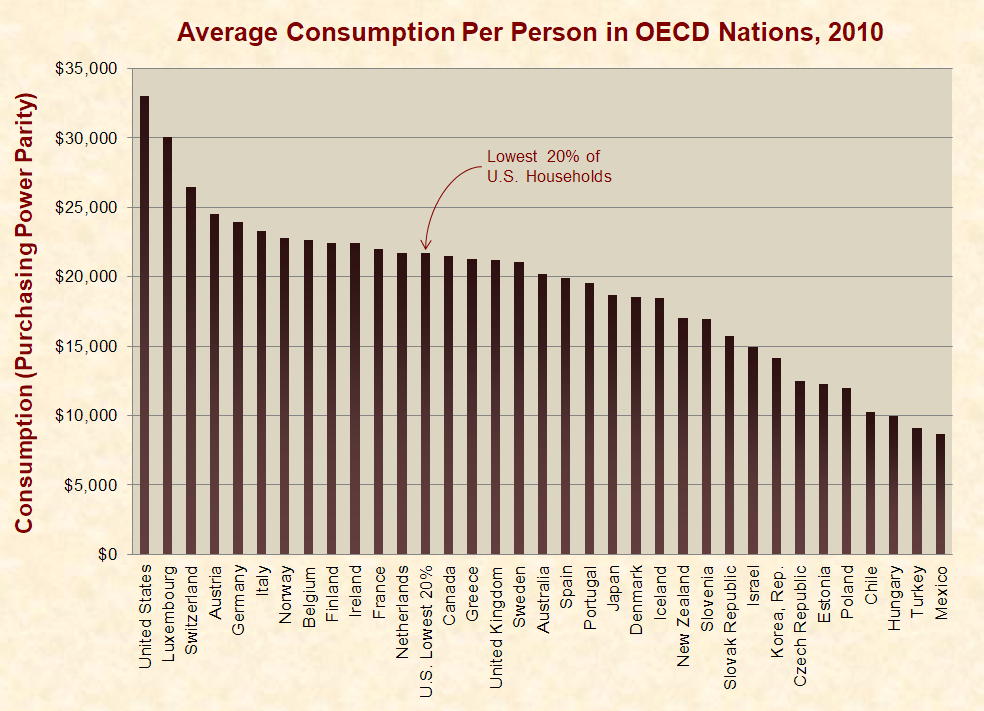
However, the U.S. Bureau of Economic Analysis published a study that provides exactly that for 2010. Combined with World Bank data for the same year, these datasets show that the poorest 20% of U.S. households have higher average consumption per person than the averages for all people in most nations of the OECD and Europe:
Average Consumption Per Person in OECD Nations, 2010
The high consumption of America’s “poor” doesn’t mean they live better than average people in the nations they outpace, like Spain, Denmark, Japan, Greece, and New Zealand. This is because people’s quality of life also depends on their communities and personal choices, like the local politicians they elect, the violent crimes they commit, and the spending decisions they make.
For instance, a Department of Agriculture study found that U.S. households receiving Food Stamps spend about 50% more on sweetened drinks, desserts and candy than on fruits & vegetables. In comparison, households not receiving Food Stamps spend slightly more on fruits & vegetables than on sweets.
Nonetheless, the fact remains that the privilege of living in the U.S. affords poor people with more material resources than the averages for most of the world’s richest nations.
Another important strength of this data is that it is adjusted for purchasing power to measure tangible realities like square feet of living area, foods, smartphones, etc. This removes the confounding effects of factors like inflation and exchange rates. Thus, an apple in one nation is counted the same as an apple in another.
To spot check the results for accuracy, Just Facts compared the World Bank consumption figure for the entire U.S. with the one from the Bureau of Economic Analysis. They were within 2% of each other. All of the data, documentation, and calculations are available in this spreadsheet.
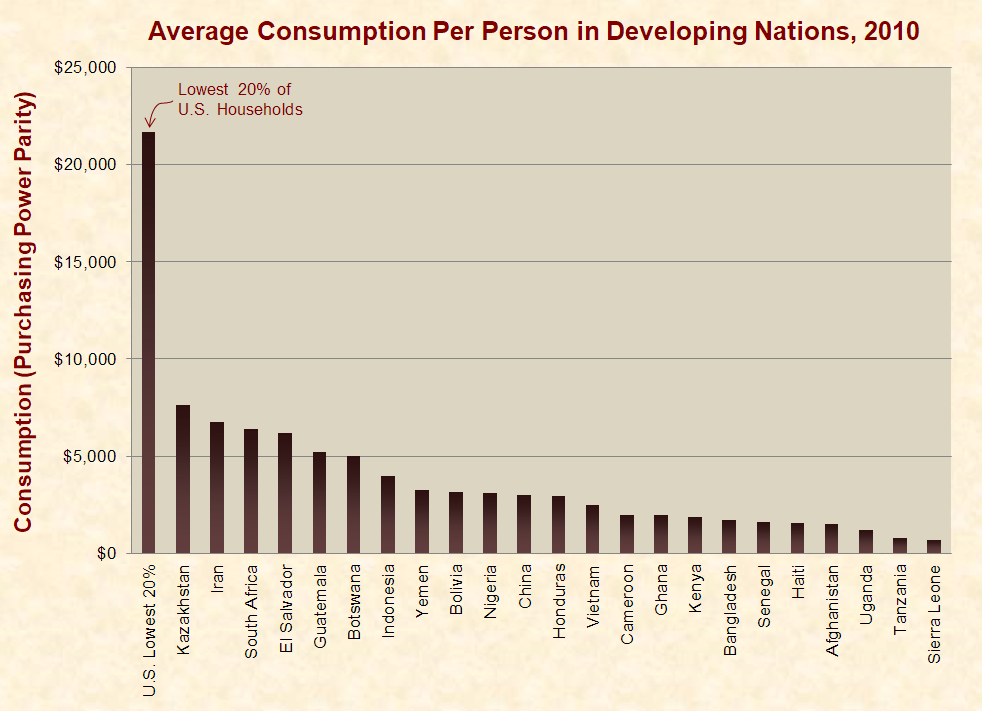
In light of these facts, the Times’ claim that the U.S. has “more in common with ‘developing countries’ than we’d like to admit” is especially far-fetched. In 2010, even the poorest 20% of Americans consumed 3 to 30 times more goods and services than the averages for all people in a wide array of developing nations around the world:
Average Consumption Per Person in Developing Nations, 2010
These immense gaps in standards of living are a major reason why people from developing nations immigrate to the U.S. instead of vice versa.

Why Is the U.S. So Much Richer?

Instead of maligning the United States, the Times could have covered this issue in a way that would help people around the world improve their material well-being by replicating what makes the U.S. so successful. However, that would require conveying the following facts, many of which the Times has previously misreported:
  • High energy prices, like those caused by ambitious “green energy” programs in Europe, depress living standards, especially for the poor.
  • High tax rates reduce incentives to work, save, and invest, and these can have widespread harmful effects.
  • Abundant social programs can reduce market income through multiple mechanisms—and as explained by President Obama’s former chief economist Lawrence Summers, “government assistance programs” provide people with “an incentive, and the means, not to work.”
  • The overall productivity of each nation trickles down to the poor, and this is partly why McDonald’s workers in the U.S. have more real purchasing power than in Europe and six times more than in Latin America, even though these workers perform the same jobs with the same technology.
  • Family disintegration driven by changing attitudes toward sex, marital fidelity, and familial responsibility has strong, negative impacts on household income.
  • In direct contradiction to the Times, a wealth of data suggests that aggressive government regulations harm economies.
Many other factors correlate with the economic conditions of nations and individuals, but the above are some key ones that give the U.S. an advantage over many European and other OECD countries.

Summary

The Times closes its video by claiming that “America may once have been the greatest, but today America, we’re just okay.” In reality, the U.S. is so economically exceptional that the poorest 20% of Americans are richer than many of the world’s most affluent nations.
Last year, the Times adopted a new slogan, “The truth is worth it.” Yet, in this case and others, it has twisted the truth in ways that can genuinely hurt people. The Times makes other spurious claims about the U.S. in this same video, which will be deflated in future articles.