SAN JOSE (KPIX 5) – The number of people packing up and moving out of the Bay Area just hit its highest level in more than a decade.
Carole Dabak spent 40 years living in San Jose and now she’s part of the mass exodus that is showing no signs of slowing down.
The retired engineer’s packing up and calling it quits about to move to the state of Tennessee.
“I loved it here when I first got here. I really loved it here. But it’s just not the same,” Dabak said.
Of course people come and go from the Bay Area all the time, but for the first time in a long time, more people are leaving the Bay Area than are coming in. And the number one place in the country for out-migration is now, right here.
Russell Hancock with Joint Venture Silicon Valley said, “Silicon Valley has been this place that is growing. And it was mostly due to people relocating here and relocating from other parts of the world. That’s changing.”
Joint Venture Silicon Valley’s own study of the out-migration says workers are moving to Sacramento, Austin, and Portland due to a number of factors. But topping the list is the high cost of housing.
“You can’t even contemplate getting into the housing market here,” Hancock said. “And I don’t mean just service workers, but highly skilled professionals. The tech elite are having a hard time affording reasonable housing in Silicon Valley. That makes it difficult for employers to recruit.”
Operators of a San Jose U-Haul business say one of their biggest problems is getting its rental moving vans back because so many are on a one-way ticket out of town.
Dabak cites crowding, crime and politics as the reasons for her own exodus.
“We don’t like it here anymore. You know, we don’t like this sanctuary state status and just the politics,” she said.
She plans to sell her home for about $1 million, buy a much larger place near Nashville for less than half that and retire closer to family and friends.
San Jose native Len Ramirez has been a news reporter for KPIX 5 News covering the Santa Clara County/South Bay Region since 1989. Prior to his arrival...More fromLen Ramirez
The pro-immigration lawyers are apoplectic, which is always a sign for celebration. As in other Trump achievements during his first year, the President is accomplishing a cutback on foreign tech workers displacing Americans entirely on his own. The Republican Congress remains stubbornly opposed to the immigration restrictions Republican voters want.
The main tool at President Trump’s disposal is the appointment of a new agency head, in this case Francis Cissna as director of the U.S. Citizenship and Immigration Services (USCIS), who came on board in October, followed in swift order by the novel idea of actually following the law and scrutinizing visa applications.
Unsurprisingly, the law calls for high-skilled visas for foreign workers to fill critical jobs. Instead, Silicon Valley and the Obama Administration abused the privilege and used it to import cheap STEM workers to replace higher-paid Americans. H-1B visas are heavily used by outsourcing firms. First, they bring a worker here to be trained by skilled Americans. Then they shut down the American facility and outsource the jobs to India. Not a nice policy for the U.S. government to actively support.
Wages in the IT industry rose rapidly throughout the 1990s, but have been essentially flat or declining in the past decade, which coincides with the rising number of guest workers on temporary visas. (snip) Companies so routinely evade protections in the visa system designed to prevent displacement of American citizens that immigration lawyers have produced videos about how it is done. For instance, tech companies that import temporary workers, mainly recent graduates from India, commonly discard more expensive, experienced employees in their late 30s or early 40s, often forcing them, as Ron Hira and other labor-force researchers note, to train their replacements as they exit. Age discrimination, Hira says, is “an open secret” in the tech world.
Controlling the abuse of H1-B visas is a core part of Trump’s agenda to bring jobs of American companies back home.
Outsourcing companies use the temporary visas to bring workers to the US to learn the jobs that the client company is planning to move to temp workers’ home country. The 10 firms with the largest number of H-1B visas, the most common visa for high-skill workers, are all in the business of shipping work overseas, and former Indian commerce minister Kamil Nath famously labeled the H-1B “the outsourcing visa.” These practices have helped to reduce incomes and career prospects in STEM fields drastically enough to produce what UC Davis’s Norman Matloff calls “an internal brain drain” of talented Americans to other, more promising career opportunities such as Wall Street, healthcare, or patent law.
Under Trump, our immigration agency is doing its job, to protect American jobs. More than a quarter of the applications are being sent back for further proof of necessity. Most of the refused visas are for programming jobs at the low end of the pay scale, unlikely to be critical skills Americans can’t supply.
More immigration restrictions are expected soon. Obama’s Immigration service automatically granted wives of H-1B visas the right to work here, taking American jobs. That regulation was challenged in court, and the Trump DOJ is expected to drop the defense and allow it to become illegal.
Obama also instituted a program giving green cards to every foreign graduate of an American college with a master’s or PhD in a STEM field -- even though hundreds of thousands of STEM graduates are unemployed or underemployed, and are being forced to leave science and engineering fields.
Two big regulatory changes are looming that would undo actions by the Obama administration that eased the way for high-skilled foreign workers… the Optional Practical Training program, which allows foreign graduates from U.S. colleges in science and technology an extra two years of work authorization, giving them time to win an H-1B visa. The Trump administration could kill that benefit or reduce the two-year window, according to people familiar with the discussions.
Including subcategories, we have 185 different visa programs, a rich field for abusing the law and American workers by large multinational and IT firms.
Another section of the swamp is being drained, one destructive regulation at a time.
Image copyrightGETTY IMAGESImage captionJeremy Corbyn has called for a high earnings cap
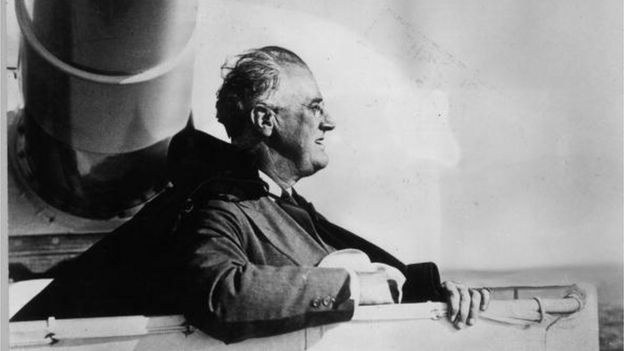
In 1942, Franklin D Roosevelt - not known as a Socialist radical, though he had his moments - proposed that anyone earning over $25,000 should be taxed at 100%.
Effectively, the President of the United States was calling for a high pay cap of, in today's money, just under $400,000 or £330,000.
Interviewed this morning on the Today programme, Jeremy Corbyn rekindled the debate on high pay, saying that a "cap" should be considered for the highest earners.
With legislation if necessary.
Image copyrightGETTY IMAGESImage captionFranklin D Roosevelt - not known as a socialist radical
Given that a direct limit (making it "illegal" for example for anyone to earn over, say, £200,000) would be almost impossible to enforce in a global economy where income takes many forms - salary, investments, returns on assets - very high marginal rates of tax could be one way to control very high levels of pay.
Another could be by imposing limits on the pay ratio between higher and lower earners in a company - possibly a more politically palatable option.
The High Pay Centre, for example, supports considering this approach.
Their research reveals the ratio has increased substantially.
"The average pay of a FTSE 100 chief executive has rocketed from around £1m a year in the late 1990s - about 60 times the average UK worker - to closer to £5m today, more than 170 times," the organisation said in 2014.
Image captionFirms have been under fire over high rates of executive pay
In its submission to the review of corporate governance by the House of Commons business select committee in October, the centre said executive pay was "out of control".
It is only relatively recently that high marginal rates of tax have been dropped as a way of limiting "out of control" pay.
Although America's Congress couldn't quite stomach the wartime 100% super tax (the actor Ann Sheridan commented "I regret that I have only one salary to give to my country") by 1945 the marginal rate on incomes over $200,000 was 94%.
Post-war, very high rates of income tax on high earners were the norm and income inequality was far lower.
By the 1970s in the UK, the marginal rate on higher incomes was 84%, a figure that rose to 98% with the introduction of a surcharge on investment income.
Denis Healey, then the Labour chancellor, famously said he wanted to "squeeze the rich until the pips squeak" - a quote he subsequently denied.
The mood changed with economic stagnation, industrial strife and the arrival of mainstream monetarism and its political leaders - Ronald Reagan and Margaret Thatcher.
Image copyrightGETTY IMAGESImage captionStrikers gather round a brazier at a picket line in London in 1979
They built an economic and political philosophy based on a belief that it wasn't the state's job to spend, in Thatcher's famous phrase, "other people's money" - it was better to allow people to retain the money they earned and spend it as they saw fit, even if it was an awful lot.
Lower levels of income tax were the result and economic growth strengthened for a period.
Income inequality also grew, maybe a price worth paying for the economic riches which, it was argued, were flowing around the country.
For many, especially since the financial crisis, the pendulum has swung back, away from lower taxes towards a more punitive approach to high incomes.
Mr Corbyn was speaking about a belief that some individuals at the top of the income scale now have far too much money to spend compared with the "just about managing" classes.
Theresa May has also made it clear that "fat cat pay" is on her radar.
The economics of high pay and whether it should be limited are based on a judgement between two competing interests.
Tax or not?
The first is summed up by the Laffer Curve, popularised by the US economist Arthur Laffer, which argues that if income taxes are too high (or pay limits in any guise too strong) they reduce the incentive to work, which ultimately affects growth, national wealth and government income.
At its most basic, under the "Laffer rules" a 0% income tax rate would collect no revenue.
And a 100% income tax rate would also collect no revenue, as no one would bother working.
Image copyrightGETTY IMAGESImage captionRonald Reagan slashed the top rates of US income tax
It has been used from Reagan onwards as the economic underpinning for an argument that lower taxes support growth.
In the 1980s, US government revenues increased as taxes were cut, although that was as much to do with general strong levels of growth as it was to do with the tax cuts themselves.
The second, contrary, economic pressure, as countless studies from the World Bank and others have shown, is that countries with high levels of income inequality have lower levels of growth.
Tackling that inequality, by whatever method, incentivises people to work more effectively.
The problem is that lifting lower wages by increasing, for example, productivity levels, could be a more effective way of reducing the gap between low and high pay, although it would take many years of concerted effort to be successful.
Since the 1970s, the notion of a government inspired "incomes policy" has been - in the popularity stakes - right up there with multi-millionaire bankers at a meeting of Momentum, the organisation that supports Mr Corbyn's Labour leadership.
But, ever since the introduction of the minimum wage in the 1990s, the government has made it clear that the amount people are paid is not simply a matter for private businesses and the free market.
Mr Corbyn has said he wants to consider a national maximum wage.
Many might nod in agreement.
How to do it, though, and whether it is economically helpful for growth, is a very different matter.
In this Dec. 15, 2009, file photo, President Barack Obama speaks about job creation and the economic recovery during a visit to a Home Depot in Alexandria, Va. (AP Photo/Susan Walsh, File)
(CNSNews.com) - Barack Obama's presidency began with a record number of Americans not in the labor force, and it's ending the same way.
The final jobs report of the Obama presidency, released Friday, shows that the number of Americans not in the labor force has increased by 14,573,000 (18.09 percent) since January 2009, when Obama took office, continuing a long-term trend that began well before Obama was sworn in.
In December, according to the Labor Department’s Bureau of Labor Statistics, a record 95,102,000 Americans were not in the labor force, 47,000 more than in November; and the labor force participation rate was 62.7 percent, a tenth of a point higher than in November.
The participation rate dropped to a 38-year low of 62.4 percent on Obama's watch, in September 2015. It was only 3-tenths of a point higher than that last month.
People over age 16 who are no longer working or even looking for work, for whatever reason (retirement, school, personal preference, or gave up), are counted as not participating in the labor force.
When President Obama took office in January 2009, 80,529,000 Americans were not in the labor force, the highest number on record. That number rose steadily during his two terms, reaching a record 95,055,000 in November 2016, then setting another record (95,102,000) in December.
BLS said the December unemployment rate increased a tenth of a point to 4.7 percent, well below the Obama-era high of 10 percent. Last month, a record 152,111,000 Americans were counted as employed, up 63,000 from November; and the number of unemployed stood at 7,529,000, an increase of 120,000 from the prior month.
But people who stop looking for a job are no longer counted as unemployed.
In an interview with a Chicago reporter yesterday, Obama said he has done "an enormous amount" to create greater economic opportunity for Americans.
"I took an economy that was about to go into a Great Depression, and we've now had a little over six years of straight economic job growth, an unemployment rate that's down below 5 percent, and incomes that have gone up and poverty that has gone down."
Obama also conceded that "there are still folks out there who struggle and communities that are still depressed." He called it an "ongoing battle."
"We have to continue to work to make sure that kids are getting the best education they can, that jobs are being located so that people in need can access them, and that's going to be something that I suspect we'll all be working on, and folks will still be working on after I'm gone."
During Obama’s two terms in office, the number of employed Americans reached its lowest point – 138,013,000 – in December 2009. Eight years later, in December 2017, 14,098,000 Americans have been added to the employment rolls.
The government collects payroll taxes from Americans who work, and some of that money is spent on government programs that support people who do not work. So the more who work, the better for the economy.
In December, the nation’s civilian noninstitutionalized population, consisting of all people age 16 or older who were not in the military or an institution, reached 254,742,000. Of those, 152,111,000 participated in the labor force by either holding a job or actively seeking one.
The 152,111,000 who participated in the labor force equaled 67.3 percent of the 254,742,000 civilian noninstitutionalized population.
According to BLS, total nonfarm payroll employment rose by a lackluster 156,000 in December. Over the past 3 months, job gains have averaged 165,000 per month.
Among the major worker groups, the unemployment rates for adult men (4.4 percent), adult women (4.3 percent), teenagers (14.7 percent), Whites (4.3 percent), Blacks (7.8 percent), Asians (2.6 percent), and Hispanics (5.9 percent) showed little change in December.
The number of long-term unemployed (those jobless for 27 weeks or more) was essentially unchanged at 1.8 million in December and accounted for 24.2 percent of the unemployed. In 2016, the number of long-term unemployed declined by 263,000.
The business and economic reporting of CNSNews.com is funded in part with a gift made in memory of Dr. Keith C. Wold.
Carly Hoilman One undergraduate student took a rather ambitious approach to his summer internship. But the young man’s attempt to reform the institution that hired him ended up backfiring big time.
This past week the intern submitted an anonymous letter explaining the situation to the advice blog, Ask a Manager.“I was able to get a summer internship at a company that does work in the industry I want to work in after I graduate,” the letter began. “Even though the division I was hired to work in doesn’t deal with clients or customers, there still was a very strict dress code. I felt the dress code was overly strict but I wasn’t going to say anything, until I noticed one of the workers always wore flat shoes that were made from a fabric other than leather, or running shoes, even though both of these things were contrary to the dress code.”
This perceived double-standard did not sit well with the young man, who approached his manager to discuss the matter. But when the conversation did not go as hoped, the undergrad student decided to solicit the support of fellow interns:
I spoke with my manager about being allowed some leeway under the dress code and was told this was not possible, despite the other person being allowed to do it. I soon found out that many of the other interns felt the same way, and the ones who asked their managers about it were told the same thing as me. We decided to write a proposal stating why we should be allowed someone leeway under the dress code. We accompanied the proposal with a petition, signed by all of the interns (except for one who declined to sign it) and gave it to our managers to consider. Our proposal requested that we also be allowed to wear running shoes and non leather flats, as well as sandals (not flip-flops though) and other non-dress shoes that would fit under a more business casual dress code. It was mostly about the footwear, but we also incorporated a request that we not have to wear suits and/or blazers in favor of a more casual, but still professional dress code.The day after the interns submitted their proposal, they were asked to attend a meeting where they would discuss the matter with company leaders. Or so they thought.
“Instead,” the student continues, “we were informed that due to our ‘unprofessional’ behavior, we were being let go from our internships. We were told to hand in our ID badges and to gather our things and leave the property ASAP.”
And the worst part? It turns out the worker who had been “breaking the rules” was actually a former solider who’d lost her leg in combat, and was therefore allowed to wear “whatever kind of shoes she could walk in.”
In response to the ex-intern’s letter, Ask a Manager blogger Alison Green noted that he and his comrades were “out of line.”
“You were interns there — basically guests for the summer,” Green wrote.
She compared the request to “being a houseguest and presenting your host with a signed petition (!) to change their rules about cleaning up after yourself.”
“You just don’t have the standing to do that,” she added.
COLORADO SPRINGS, Colo. (CBS4) – “I think it’s wrong.”
Colorado Springs residents had a lot to say after hearing that Colorado Springs police officers will no longer have to take physical fitness tests this year.
“I think it’s a mistake,” Mary Jo Piccin told CBS4’s Tom Mustin. “I think the police need to be able to chase down them criminals.”
Last Friday the Colorado Springs Police Department agreed to the demands of 12 female officers who filed a civil suit claiming the fitness tests are discriminatory. All the officers were over the age of 40.
The suit will now move to a federal court. Police Chief Pete Carey says he’s disappointed, but will abide by the judge’s decision.
“I very firmly stand behind physical fitness tests for our officers. I think what I’m asking them to do is fair and my hope is a federal judge also agrees with this,” Carey said.
The police test consists of two running exams. Officers also have to do 52 push-ups in 2 minutes, and 45 sit-ups, also in 2 minutes.
The female officers who filed suit had been moved to desk duty after failing the test.
Many residents agreed with the chief, saying the requirements of the job demand fitness.
“I remember years ago when there were no fitness standards, and they had some pretty hefty officers … male and female,” said Piccin.
Carey says the policewomen will be now be back on patrol, pending the federal decision, which could take a year or longer.
“We’ll suspend tests and hopefully in 2016 we’ll get this in front of a federal court and we’ll make a decision,” he said.
As the fitness flap moves to the federal level, resident Lolly Wood says police should be fighting criminals and not each other — and fitness should be mandatory.
“I think they should be mandated to be in fit condition to do the job,” Wood said.
The attorney for the police women declined to speak on camera.
Statement From Chief Pete Carey
For the past several years, CSPD has been involved in an extensive project to evaluate whether to adopt fitness standards for its sworn officers, validate what minimum fitness standards were job related, and develop and implement a Physical Abilities Test (PAT) that had been carefully formulated. CSPD was guided in this process by a consultant with expertise specific to physical abilities testing of police officers. To ensure officer success, CSPD called upon many resources in our community, including local healthcare and sports facilities, to provide personal training sessions and design exercise plans.
As most of you are likely aware, the City is presently defending a federal lawsuit challenging the PAT. I continue to believe that mandatory physical fitness testing is the right thing to do for our community and our officers, and is a fair and appropriate minimum qualification to expect of those selected to protect and defend. Although I feel strongly about the PAT, I welcome review of our program to ensure it is a valid reflection of minimum qualifications.
However, bearing in mind my duty to carefully steward the tax dollars and personnel entrusted to me by the community, I have decided to agree to suspend PAT testing until the outcome of the federal litigation.
Please know that this decision was not reached easily, and I recognize that our officers have embraced the culture of physical fitness. Nonetheless, I believe this is a necessary step to ensure the City obtains a full and fair review of the PAT program.
It is my hope that all officers will continue a commitment to this culture of fitness while the PAT is suspended. I certainly appreciate, and based on feedback we have received, the Colorado Springs community appreciates, that commitment.
If you have questions regarding the impact of the PAT program suspension on your particular situation, please direct those questions to your chain of command or CSPD Human Resources.
If you are scheduled to attend In-Service Training, please report to the CSPD Training Academy at 0800 hours, rather than the Global Village facility.
Keep these in mind as you contemplate the direction of the American government over the past 50 years and especially since the Obama election.
The Goals of Communism
(as read into the congressional record January 10, 1963, from "The Naked Communist" by Cleon Skousen)
1. U.S. acceptance of coexistence as the only alternative to atomic war.
2. U.S. willingness to capitulate in preference to engaging in atomic war.
3. Develop the illusion that total disarmament of the United States would be a demonstration of moral strength.
4. Permit free trade between all nations regardless of Communist affiliation and regardless of whether or not items could be used for war.
5. Extension of long-term loans to Russia and Soviet satellites.
6. Provide American aid to all nations regardless of Communist domination.
7. Grant recognition of Red China. Admission of Red China to the U.N.
8. Set up East and West Germany as separate states in spite of Khrushchev's promise in 1955 to settle the German question by free elections under supervision of the U.N.
9. Prolong the conferences to ban atomic tests because the United States has agreed to suspend tests as long as negotiations are in progress.
10. Allow all Soviet satellites individual representation in the U.N.
11. Promote the U.N. as the only hope for mankind. If its charter is rewritten, demand that it be set up as a one-world government with its own independent armed forces. (Some Communist leaders believe the world can be taken over as easily by the U.N. as by Moscow. Sometimes these two centers compete with each other as they are now doing in the Congo.)
12. Resist any attempt to outlaw the Communist Party.
13. Do away with all loyalty oaths.
14. Continue giving Russia access to the U.S. Patent Office.
15. Capture one or both of the political parties in the United States.
16. Use technical decisions of the courts to weaken basic American institutions by claiming their activities violate civil rights.
17. Get control of the schools. Use them as transmission belts for socialism and current Communist propaganda. Soften the curriculum. Get control of teachers' associations. Put the party line in textbooks.
18. Gain control of all student newspapers.
19. Use student riots to foment public protests against programs or organizations which are under Communist attack.
20. Infiltrate the press. Get control of book-review assignments, editorial writing, policymaking positions.
21. Gain control of key positions in radio, TV, and motion pictures.
22. Continue discrediting American culture by degrading all forms of artistic expression. An American Communist cell was told to "eliminate all good sculpture from parks and buildings, substitute shapeless, awkward and meaningless forms."
23. Control art critics and directors of art museums. "Our plan is to promote ugliness, repulsive, meaningless art."
24. Eliminate all laws governing obscenity by calling them "censorship" and a violation of free speech and free press.
25. Break down cultural standards of morality by promoting pornography and obscenity in books, magazines, motion pictures, radio, and TV.
26. Present homosexuality, degeneracy and promiscuity as "normal, natural, healthy."
27. Infiltrate the churches and replace revealed religion with "social" religion. Discredit the Bible and emphasize the need for intellectual maturity which does not need a "religious crutch."
28. Eliminate prayer or any phase of religious expression in the schools on the ground that it violates the principle of "separation of church and state."
29. Discredit the American Constitution by calling it inadequate, old-fashioned, out of step with modern needs, a hindrance to cooperation between nations on a worldwide basis.
30. Discredit the American Founding Fathers. Present them as selfish aristocrats who had no concern for the "common man."
31. Belittle all forms of American culture and discourage the teaching of American history on the ground that it was only a minor part of the "big picture." Give more emphasis to Russian history since the Communists took over.
32. Support any socialist movement to give centralized control over any part of the culture--education, social agencies, welfare programs, mental health clinics, etc.
33. Eliminate all laws or procedures which interfere with the operation of the Communist apparatus.
34. Eliminate the House Committee on Un-American Activities.
35. Discredit and eventually dismantle the FBI.
36. Infiltrate and gain control of more unions.
37. Infiltrate and gain control of big business.
38. Transfer some of the powers of arrest from the police to social agencies. Treat all behavioral problems as psychiatric disorders which no one but psychiatrists can understand.
39. Dominate the psychiatric profession and use mental health laws as a means of gaining coercive control over those who oppose Communist goals.
40. Discredit the family as an institution. Encourage promiscuity and easy divorce.
41. Emphasize the need to raise children away from the negative influence of parents. Attribute prejudices, mental blocks and retarding of children to suppressive influence of parents.
42. Create the impression that violence and insurrection are legitimate aspects of the American tradition; that students and special-interest groups should rise up and use united force to solve economic, political or social problems.
43. Overthrow all colonial governments before native populations are ready for self-government.
44. Internationalize the Panama Canal.
45. Repeal the Connally reservation so the United States cannot prevent the World Court from seizing jurisdiction over nations and individuals alike.









 Posts
Posts

