Tuesday, February 2, 2016
Malcolm McDowell says 'A Clockwork Orange' is becoming reality, 44 years after its release.
NEW YORK DAILY NEWS
Updated: Tuesday, February 2, 2016, 10:20 AM
Everything’s going to the droogs.
The nationwide release of “A Clockwork Orange” was 44 years ago — on Feb. 2, 1972 — but today its star, Malcolm McDowell, says the movie was more prescient than it seemed at the time.
Based on a novel by Anthony Burgess, the Stanley Kubrick film shows “a world in which all older people stayed indoors with their televisions on,” McDowell told the News. “And that’s basically what happened.
“It’s just the young people out there doing drugs — and he foretold all this before the drug explosion.”
The film, like the book, depicts a dystopian future filled with “ultra-violence,” gangs of “droogs” and depravity at every turn. The four main characters — including McDowell’s lead character Alex — spend their free time in a bar where they drink drug-laced milk in preparation for an evening filled with violence, mayhem and even rape.
The book was released in 1962 and shooting for the film began in 1969, “so this is really before huge gang violence and drugs happened,” McDowell said.
With some of the most iconic scenes set behind bars, the prison system looms large in the world of “A Clockwork Orange” — much like in modern America.
“I don’t see any aversion therapy thank god, but it’s amazing how there’s so many people incarcerated in America,” McDowell said. “We are so backward in our thinking, we are so medieval.”
Though “A Clockwork Orange” imagined an entire future world, the inspiration for it was based on a chance encounter at a Moscow coffee shop — which Burgess later recounted for McDowell.
“He told me it came to him while he was in Moscow on an exchange visit. He was sitting in a coffee bar on a warm night.” He was sitting near the window with a group of Russian friends when a menacing group of “Muscovite thugs” creepily pressed their faces against the window. That triggered the idea for the book, as well as for the creation of Nadsat, the strange English/Russian/Yiddish slang language used by the youth of “A Clockwork Orange.”
Although Kubrick brought that world to the big screen in his visually stunning retelling of the novel, McDowell says Burgess doesn’t get enough credit.
“Nobody comments about Anthony Burgess anymore but he is the real genius here,” he said.
Regardless of which genius deserves the most credit, the film didn’t garner rave reviews.
Acclaimed movie star critic, Roger Ebert, panned it with a two-star review at the time of its release. When asked about Ebert’s take on the film, McDowell sighed and murmured, “Dear Roger,” in his charming British accent.
“Just shows you how wrong the critics are,” he added.
Another critic who wasn’t a big fan was McDowell’s mother.
“I don’t think my mother ever saw the film but I do know that I made another film a couple of years later and my mother said, ‘I don’t know why you don’t play more nice parts. Those other films that you do are so awful.’”
Good ol’ mom’s opinion notwithstanding, McDowell said he knew he’d made a good movie when “A Clockwork Orange” was completed — but had no idea how transcendent it would become. It became so popular, in fact, that it annoyingly overshadowed all his other roles.
“I’d make a new movie and they’d only want to talk about ‘Clockwork Orange’ which was a little frustrating,” he said.
For 44 years now, he’s faced the same litany of questions about the film. The most persistent and annoying of those repeat questions, he said, is what Kubrick was like.
“Well, do we have a year?” he quipped.
“He was extraordinary man… a lot of fun to be with.”
He also had a distinct sense of humor that informed his work.
“As a person he had an extremely black sense of humor which comes out in the film,” McDowell said. “It wasn’t supposed to be a humorous film at all but both my and his sense of humor was very dark.
“The other time that happened was in (‘Dr. Strangelove’) with Peter Sellers. I don’t think that was supposed to be a comedy when they first started out.”
Because of his work on films like “A Clockwork Orange” and “Caligula,” McDowell became best known for his depraved characters in dark movies — but today he’s in comedy.
“I’m doing a show for Amazon called ‘Mozart in the Jungle’ which I’m very proud of — it just won a Golden Globe for best comedy,” he said.
The show follows a New York orchestra’s struggles to adapt to a new director, and the show’s ad-line is “Sex, Drugs and Classical Music.”
“That was the exact ad-line for ‘A Clockwork Orange’ when it came out,” McDowell said. “Somebody pointed this out to me and I had forgotten and I just went, ‘Oh my god.’”
Labels:
crime,
drugs,
moral relativism,
violence
As Feds Plan to Cut Border Monitoring, Texas Officials Ask Why
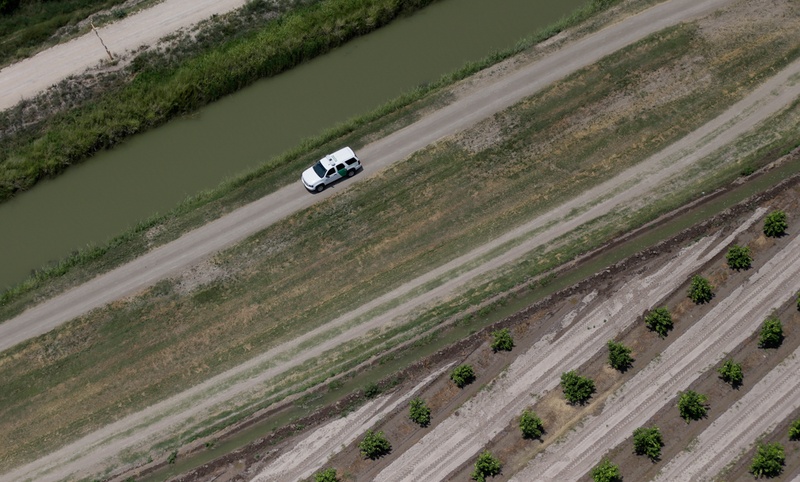
EnlargePhoto by Eric Gay / AP Photo
A Customs and Border Protection vehicle patrols on the Texas border near the Rio Grande, Thursday, July 24, 2014, in Mission, Texas. Texas is spending $1.3 million a week for a bigger DPS presence along the border.
Gov. Greg Abbott and U.S. Rep. Henry Cuellar, a Laredo Democrat, pressed the U.S. Department of Homeland Security on Monday to explain why the agency plans to reduce its aerial surveillance on the Texas-Mexico border.
In a letter to DHS Secretary Jeh Johnson, the lawmakers said the cut to a requested 3,850 hours of aerial detection and monitoring in 2016 amounts to 50 percent less coverage than recent years.
“Given the recent surge of migrants from Central America and Cuba along the southern border, we believe DHS should request more surveillance and security resources, not fewer,” Abbott and Cuellar wrote in a letter.
The pair also reminded Johnson that in September, Abbott’s office asked the DHS for more aerial resources and U.S. Border Patrol agents but that the request was never acknowledged.
A DHS spokesperson said the agency would respond "directly" to the governor and the congressman.
Monday’s request comes as CBP is reporting a new surge in the number of undocumented immigrants crossing the Rio Grande. From October to December of 2015, about 10,560 unaccompanied minors entered Texas illegally through the Rio Grande Valley sector of the U.S. Border Patrol. That marks a 115 percent increase over the same time frame in 2014. The amount of family units, defined as at least one child and adult guardian or parent, has increased by 170 percent to 14,336 in the Rio Grande Valley.
The El Paso sector also saw 1,030 unaccompanied minors, an increase of almost 300 percent.
In Monday’s letter, the pair also requested a detailed breakdown of how the DHS determined the reduction in aerial surveillance was warranted and information on how staffing and operation levels would be affected.
While Abbott has spoken extensively about illegal immigration from Mexico and Central America, the letter marked the first time Abbott has referenced a recent surge of Cubans coming into Texas.
Abbott visited the island nation last year to explore expanding trade between Cuba and Texas. During that trip, he spoke about the current trade embargo but not the migrant issue.
During the 2015 fiscal year, about 28,400 Cubans entered Texas through U.S. Customs and Border Protection's Laredo field office, which extends from Del Rio to Brownsville. That’s compared to about 15,600 in 2014.
The surge came after the Obama administration announced in 2014 its plans to re-establish ties with Cuba, leaving many Cubans fearing they will lose a special designation that allows them to apply for legal residency status, or a “green card,” after living in the country for a year. Cuellar and U.S. Sen. John Cornyn, R-Texas, have called for the repeal of that designation.
Labels:
illegal immigration,
Obama's chaos
Monday, February 1, 2016
Chicago sets homicide record for January...
Chicago records 51 homicides in January, highest toll since 2000
CHICAGO — The nation's third largest city recorded 51 homicides in January, the highest toll for the month since 2000.
Gang conflicts and retaliatory violence drove the "unacceptable" increase in homicides, the police department said in a statement. But the rise in violence also notably comes as the Chicago Police Department faces increased scrutiny following the court-ordered release of a police video showing a white police officer fatally shooting a black teenager 16 times, and as the department implements changes in how it monitors street stops by officers.
Chicago routinely records more homicides annually than any other American city, but the grim January violence toll marks a shocking spike in violence in a city that recorded 29 murders for the month of January last year and 20 murders for the month in 2014. In addition to the jump in killings, police department said that it recorded 241 shooting incidents for the month, more than double the 119 incidents recorded last January.
The rise in violence comes after the Chicago Police Department reported 468 murders in 2015, a 12.5% increase from the year before. There were also 2,900 shootings, 13% more than the year prior, according to police department records.
In recent weeks, the police department pushed back against the notion that the rise in homicides could be due to cops becoming less aggressive due to the negative attention the department has received in the aftermath of the release of the police video showing the shooting of Laquan McDonald. The city saw several weeks of largely peaceful protests after the release of the video. The U.S. Justice Department has launched a civil rights investigation of the city.
Mayor Rahm Emanuel , who faced fierce backlash in the city's African-American community over his handling of the McDonald case, fired his police superintendent, Garry McCarthy , after the video's release.
Interim Superintendent John Escalante expressed frustration earlier this month as the homicide toll climbed, but said it was due mainly to gang activity. He also said he was concerned about social media fueling gang disputes, with fatal incidents starting as a war of words on the Internet.
"It's the new way of taunting, challenging other gangs," Escalante told reporters. "It's the modern way of gang graffiti."
St. Louis saw a dramatic increase in the number homicides following the August 2014 police shooting death of Michael Brown in nearby Ferguson, which spurred months of angry protests. And Baltimore saw a spike in homicides following the death of Freddie Gray in Baltimore in April, an incident that sparked unrest in the Charm City. In both Baltimore and St. Louis, the rise in violent crime began to increase prior to the high-profile incidents and accelerated afterward.
The department says it has seen a decrease in investigative stops by cops on the streets after new rules went into effect Jan. 1 requiring the police department to bolster the monitoring of stops and protective pat downs known as "stop-and-frisk."
The police department entered an agreement with the American Civil Liberties Union to record contact cards for all street stops after the organization criticized the the city's police for disproportionately targeting minorities for questioning and searches. In the past, police officers were required only to fill out cards for stops that didn't result in an arrest. The new contact cards also require police officers to offer greater detail about the stops than they have in the past.
The police department says it recently moved 350 police officers and 31 sergeants from foot patrols into vehicles to help increase visibility in communities hardest hit by the rise of shootings and to improve their ability to quickly respond to incidents.
The department says it has also conducted a series of raids in areas of the city it knows are problematic. One raid last week netted 64 arrests, including 40 suspects who are documented gang members, and the seizure of over $200,000 worth of drugs. Police say they also seized 19 weapons in the raid.
The department has also asked the Cook County Sheriff's Department to step up enforcement of individuals on supervised release and act on outstanding arrest warrants.
Labels:
anti-gun laws,
crime,
murder
America’s Economic Freedom Has Rapidly Declined Under Obama
America’s declining score in the index is closely related to rapidly rising government spending, subsidies, and bailouts. (Photo: Kevin Lamarque/Reuters/Newscom)
Labels:
anti-Business,
Obama History,
Obama's chaos,
obamanomics
Subscribe to:
Posts (Atom)
It is painfully clear that our economy has been performing far below its potential, with individuals, families, and entrepreneurs being squeezed by the proliferation of big-government bureaucracy and regulations.