
CDC estimates* that, from October 1, 2019, through February 22, 2020, there have been:
32,000,000 – 45,000,000
flu illnesses

14,000,000 – 21,000,000
flu medical visits

310,000 – 560,000
flu hospitalizations

18,000 – 46,000
flu deaths

*Because influenza surveillance does not capture all cases of flu that occur in the U.S., CDC provides these estimated ranges to better reflect the larger burden of influenza. These estimates are calculated based on CDC’s weekly influenza surveillance data and are preliminary.
On This Page
This web page provides weekly, preliminary estimates of the cumulative in-season numbers of flu illnesses, medical visits, hospitalizations, and deaths in the United States. CDC does not know the exact number of people who have been sick and affected by influenza because influenza is not a reportable disease in most areas of the U.S. However, CDC has estimated the burden of flu since 2010 using a mathematical model that is based on data collected through the U.S. Influenza Surveillance System, a network that covers approximately 8.5% of the U.S. population (~27 million people).
Limitations
The estimates of the cumulative burden of seasonal influenza are subject to several limitations.
First, the cumulative rate of laboratory-confirmed influenza-associated hospitalizations reported during the season may be an under-estimate of the rate at the end of the season because of identification and reporting delays.
Second, rates of laboratory-confirmed influenza-associated hospitalizations were adjusted for the frequency of influenza testing and the sensitivity of influenza diagnostic assays. However, data on testing practices during the 2019-2020 season are not available in real-time. CDC used data on testing practices from the past influenza seasons as a proxy. Burden estimates will be updated at a later date when data on contemporary testing practices become available.
Third, estimates of influenza-associated illness and medical visits are based on data from prior seasons, which may not be accurate if the seriousness of illness or patterns of care-seeking have changed.
Frequently Asked Questions
What does the cumulative burden of influenza for the 2019-2020 season mean?
The cumulative burden of influenza is an estimate of the number of people who have been sick, seen a healthcare provider, been hospitalized, or died as a result of influenza since October 01, 2018. CDC does not know the exact number of people who have been sick and affected by influenza because influenza is not a reportable disease in most areas of the United States. However, these numbers are estimated using a mathematical model, based on observed rates of laboratory-confirmed influenza-associated hospitalizations.
How does CDC estimate the cumulative burden of seasonal influenza?
Preliminary estimates of the cumulative burden of seasonal influenza during the 2019-2020 season in the United States are based on crude rates of laboratory-confirmed influenza-associated hospitalizations, reported through the Influenza Hospitalization Surveillance Network (FluSurv-NET), which were adjusted for the frequency of influenza testing during recent prior seasons and the sensitivity of influenza diagnostic assays. Rates of hospitalization were then multiplied by previously estimated ratio of hospitalizations to symptomatic illnesses, and frequency of seeking medical care to calculate symptomatic illnesses, medical visits, and deaths associated with seasonal influenza, respectively.
Why does the estimate of cumulative burden change each week?
The estimates of cumulative burden of seasonal influenza are considered preliminary and may change each week as new laboratory-confirmed influenza-associated hospitalizations are reported to CDC. New reports include both new admissions that have occurred during the reporting week and also patients admitted in previous weeks that have been newly reported to CDC.
How does the number of flu hospitalizations estimated so far this season compare with previous end-of-season hospitalization estimates?
The number of hospitalizations estimated so far this season is lower than end-of-season total hospitalization estimates for any season since CDC began making these estimates. This table also summarizes all estimated influenza disease burden, by season, in U.S. from 2010-11 through 2017-18.
Preliminary Cumulative Estimates of Hospitalizations in the U.S. 2019-2020 Flu Season
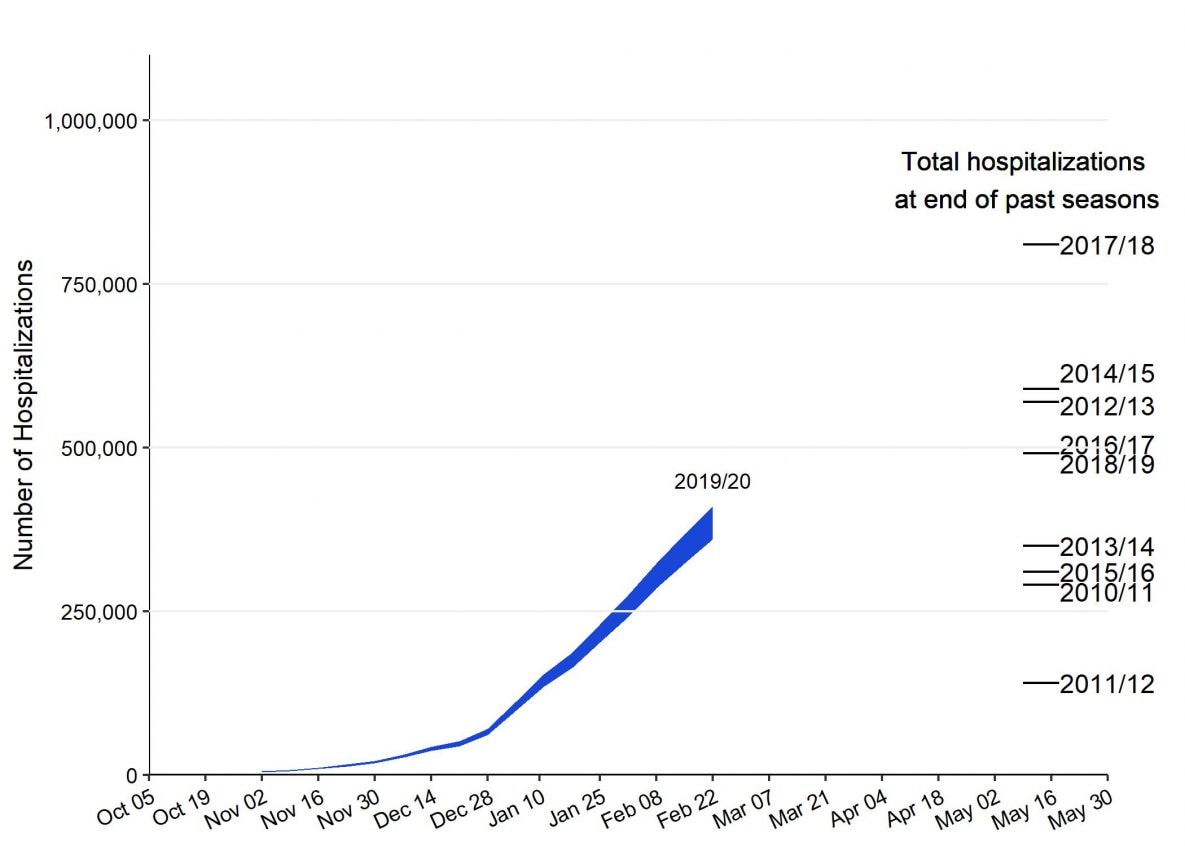
*These estimates are preliminary and based on data from CDC’s weekly influenza surveillance reports summarizing key influenza activity indicators.
Estimated number of influenza-associated hospitalizations
The y-axis extends from 0 to 1 million.
The x-axis is a timeline starting October 5, 2019 and extending to May 30, 2020.
There is a single blue-shaded curve labeled with “2019/20”.
There are several other lines on the right side of the graph under Total hospitalizations at end of past seasons. The lines are labeled, from top to bottom, as 2018/19, 2017/18, 2014/15, 2016/17, 2012/13, 2013/14, 2015/16, 2010/11, and 2011/12 and represent the estimated burden for these seasons. This allows for the comparison of the current season to past seasons.


 Posts
Posts


No comments:
Post a Comment