Norman Seabrook, the former head of the city jails union, must surrender to prison in December after being convicted of steering union funds to a shoddy investment firm in exchange for bribes.
Lawyers for Seabrook had requested that he be given until December to surrender because of the coronavirus pandemic that has ravaged some federal prison facilities.
“In a time when inmates are being released from [Bureau of Prisons] facilities in light of COVID-19, it makes little sense to require a non-violent defendant to surrender to such a facility,” his lawyers wrote in a filing.
On Friday, a Manhattan federal judge responded to the request by ordering Seabrook to surrender to Otisville prison Dec. 29.
Earlier this month, Seabrook lost his appeal to get his conviction tossed, in part because a three-judge panel ruled he’d knowingly made a risky union investment to line his pockets.
“The record contained evidence that Seabrook hid from the [Correction Officers’ Benevolent Association] board communications from its counsel discussing the specific risk of losing the investment,” Judge Rosemary Pooler wrote in her opinion for the three judges who shot down Seabrook’s appeal.
“That this concern materialized tended to show that Seabrook intended to subject the organization to a risky investment in order to enrich himself,” she said.
Seabrook — who was president of COBA for 21 years — was convicted of accepting a $60,000 cash bribe in a Ferragamo bag in exchange for steering the union’s money into the since-defunct hedge fund Platinum Partners.
There are few bright sides to life in Lebanon, where the economy is verging on complete breakdown. But while some have shown sympathy with those committing "hunger crimes," others have taken to barter and banter to cope.
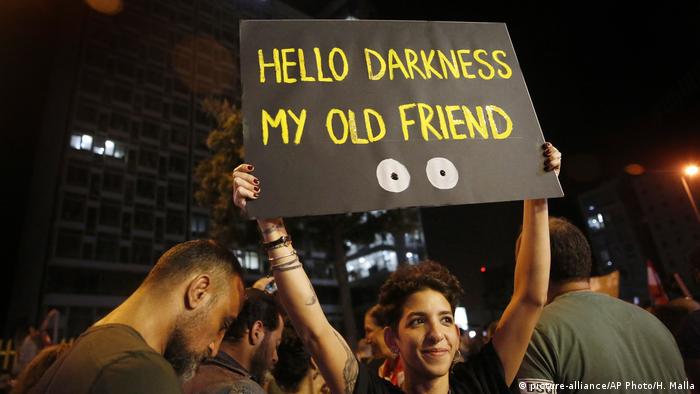
The first signs of Lebanon's coming collapse appeared when its banks started limiting withdrawals amid nationwide protests late last year. By May it was clear the country's financial system was crumbling. The currency was in free fall and with it the nation's economy. Demonstrators responded with typical dark humor, carrying the Lebanese lira off in a coffin, echoing Ghanaian pallbearers.
"When people want to laugh about something, that's because oftentimes they probably can't do anything to change the reality," Hussein Yassine, a writer at the Lebanese outlet The961, told DW. "It's not just ridiculing an idea without understanding its dire consequences, but it's one way to cope."
That humor has long been a marker of resilience in a country where the lira has now lost around 80% of its value. Food, fuel and medicine are all disappearing from the market as foreign currency to buy vital imports has evaporated.
As well as the impact of business closures due to the new coronavirus, unemployment has skyrocketed, the poverty rate is nearing 50% and the middle class is being wiped out.
French Foreign Minister Jean-Yves Le Drian visited Beirut this week to discuss reforms that might have enabled a bailout, including changes to the ailing electricity sector, the modernization of some laws and a reduction the country's public debt. But the talks appear to have failed.
This led to another joke among finance observers — that blackmailing French President Emmanuel Macron by threatening an invasion of hummus was now one of the government's plans to end the crisis.
People have protested the Lebanese electricity company headquarters over allegations of corruption and power cuts
Lebanese barter baby formula for blankets
As well as humor, people are finding other ways to show solidarity. Supermarkets have been forced to constantly change the prices of the few goods they can still stock, and some customers hoard what food is available. In response, Facebook groups like "Lebanon barters," set up to help facilitate the exchange of household goods such as blankets, watches and shoes for food, diapers and baby formula, have seen a massive increase in members.
By bartering, people are able to get what they need without being forced to sell belongings below their value, said Nour Haidar, one of the volunteers running the group. Users are asked not to post just requests, but also to make an offer, in order to protect their dignity.
With some hospitals and pharmacies reporting a scarcity of medicine, many group members are offering what they have for free.
"People are trying to stand up for each other. Solidarity has shown very clearly in this situation," Haidar told DW.
The Central Bank of Lebanon has been a focal point for people's anger as the currency has collapsed
'Hunger is heresy'
But a rise in "hunger crimes" shows others aren't coping as well.
Police are seeing "a new kind of theft that involves mainly baby milk, food, and medicine," an unnamed security official told news agency AFP last week.
Last week, one Beirut resident said a man who wanted food for his family robbed him at knifepoint but then turned around, apologized and tried to return the stolen money, explaining he had lost his job and couldn't pay rent, according to AFP.
"I told him that I forgave him, and then he went away," Zakaria al-Omar told AFP. "I was scared but I also felt sad for that man breaking down in front of me."
Two weeks ago, a man killed himself on Beirut's main shopping street after reportedly posting his clean criminal record and a note to a tree that read: "I am not a heretic." The quote comes from a popular song that continues, "but hunger is heresy." A relative of the man blamed the country's rulers for the hardship that led to his death, according to Reuters.
Syrian refugees who have found shelter in Lebanon are unable to leave
Refugees trapped as Lebanese look for exit
Similar tragedies have struck the most marginalized in Lebanon.
Foreign domestic workers have been forced onto the streets as employers cancelled their contracts, sometimes without pay, and many cannot find the funds to travel home. Some find shelter with charities, while others camp out in front of their embassies.
Some 50% of Lebanese people worry they will not have enough to eat for the month, but that number rises to 63% for Palestinians and 75% for the roughly 1.5 million Syrian refugees in the country, according to a June report by the World Food Program. While many Lebanese are trying to leave the country if they can, most refugees have no such option.
"The first opportunity I get, I'm going to leave for sure," said Hussein Yassine in the southern city of Tyre. "It's not easy to cope because there's no solution on the horizon.
"It's a very harsh reality that we're living in right now and it's probably going to get worse in the coming months. This is what really scares me."
But the dark jokes will remain a staple. "In any conversation there has to be humor, otherwise it's just considered a bad conversation by our standard," Yassine said. "You're always going to find humor while Lebanese are suffering."
Watch video04:29
Lebanon faces its worst crisis since the civil war
Former GE CEO Jeffrey Immelt extracted millions from a company founded by Thomas Edison and J.P. Morgan -- and left it in dire financial straits, write Thomas Gryta and Ted Mann.Getty Images; Alamy
Jeff Bornstein could not control his emotions.
“I love this company,” began the tough-talking, hard-driving chief financial officer of one of the world’s most storied corporations.
Then he broke down in tears.
It was August 2017, less than a month after John Flannery, the brand-new CEO of General Electric, had taken the reins. Flannery and Bornstein had both devoted their entire careers to GE, like most of those present for this moment at the annual summer meeting for top executives in Crotonville, NY, a leafy campus where the company’s professionals spend months being indoctrinated in the corporation’s proud culture.
But what should have been a celebration felt more like a wake.
Days earlier, the two men had met in Schenectady to examine the books at GE Power, the century-old company’s most venerable and profitable division — and had found a dry well where they expected cash.
Power’s “solid profits … were illusory,” write Thomas Gryta and Ted Mann in “Lights Out: Pride, Delusion, and the Fall of General Electric” (Houghton Mifflin), out July 21. “The accounting tricks that looked like profits were actually just borrowing from the company’s future earnings.”
At that earlier meeting, Flannery wheeled on his CFO and tried to tamp down his rising panic.
“Did you f–king know about this?” he demanded.
Founded in 1892 by Thomas Edison, J.P. Morgan and several partners, General Electric’s corporate pedigree had been peerless. The company was a charter member of the Dow Jones Industrial Average, on board at its creation in 1907 and the only one that remained there 110 years later.
GE grew from the nation’s premier power and lighting company into a behemoth. By the turn of the 21st century it was valued at $600 billion, encompassing media, plastics, aerospace, energy, digital, financial services and more.
But in the months after the retirement of Jeffrey Immelt, Flannery’s predecessor, all its apparent wealth began to evaporate.
Enlarge Image Disgraced CEO Jeffrey Immelt would travel with not one private jet but two — just in case — and would stock his planes with both lobster and steak as he drained the company’s coffers.Alamy; Shutterstock
In Flannery’s first year on the job, more than $140 billion in value vanished from GE’s stock price — bigger by far than the losses incurred by the epic collapses of firms like Enron and Lehman Brothers. GE was unceremoniously booted off the Dow.
It turned out the problems at Power were not unique. For years, GE’s profits had been a mirage built on whirlwind mergers and accounting sleight of hand. The funds that had been doled out to shareholders as fat dividends — and had covered its managers’ lavish perks and pay — had largely been borrowed on the strength of the company’s golden credit.
The book’s authors paint a damning portrait of Immelt’s 16 years at the helm of GE, where a rubber-stamp board of directors allowed him to hemorrhage money almost unchecked.
Immelt was just 45 when he ascended to the top spot in September 2001, succeeding business legend Jack Welch. A charismatic, natural-born salesman, Immelt’s boundless optimism fueled a strategy of continual expansion, as he went fad-surfing after the buzziest new ventures.
At Immelt’s urging, GE’s many arms “overpaid for businesses they didn’t understand and then [were] crushed by the market,” Gryta and Mann write.
On his watch, GE bumbled into the subprime mortgage business shortly before the 2008 crash, leading to deep losses that pushed its stock into single-digit territory. Immelt spent $14 billion on an aggressive expansion of GE’s oil and gas holdings — just as the fracking boom cratered the price of crude oil. The digital division he set up in Silicon Valley and showered with $5 billion of capital never managed to produce the machine-learning platform he touted.
The board didn’t entirely understand how GE worked, and … Immelt was just fine with that.
- from “Lights Out,” on Jeffrey Immelt’s mishandling of GE
Meanwhile, GE’s corporate structure placed Immelt at the top of its board of directors, essentially making him his own boss.
“The board didn’t entirely understand how GE worked, and … Immelt was just fine with that,” the authors write. The well-compensated board members were chosen for their willingness to cheer Immelt on — and he readily ejected directors who objected to his plans.
At the same time, GE’s established divisions were expected to meet earnings goals far removed from reality. “Under Immelt, the company believed that the will to hit a target could supersede the math,” Gryta and Mann report.
It was a recipe for a disaster. Up-and-coming middle managers knew that a missed goal could stymie their climb up GE’s ladder; division heads “didn’t necessarily know how his underlings got to the finish line and it didn’t really matter,” the authors write.
Those toxic incentives drove the debacle that Flannery uncovered at GE Power. The division made its money not on the generators and turbines it built, but on the service contracts it sold to maintain the machines.
All a manager had to do was tweak the future cost estimates on those decades-long contracts to jack up profits as needed — and to paper over real losses from unsold inventory and declining demand.
All the while, as the Wall Street Journal reported, Immelt often jet-setted around the world with two corporate aircraft — one that actually carried him, the other flying just behind as a backup “shadow plane” on the off chance that a mechanical problem might delay his busy schedule. His aircraft was rumored to stock both lobster and steak so the boss could choose his midflight meal. Over his last dozen years as GE’s CEO, Immelt raked in an estimated $168 million.
At age 61, after a 35-year GE career, Immelt announced his retirement. He had long planned to depart at the end of 2017, and the board had been conducting an internal audition process for months. But after a contentious investors conference that May, when Immelt was forced to admit that the oil unit would likely drag down GE’s annual profits, he sped up the timeline.
In August 2017, Flannery took the reins. (His CFO Bornstein, who had apparently been unaware of the fiscal games that divisions like Power had been playing, had also been on the four-man shortlist.)
It took months for Flannery to take a complete inventory. Once he did, he ripped off the bandages with a public reveal at an investors update meeting that November.
“We’ve been paying a dividend in excess of our free cash flow for a number of years now,” Flannery confessed to a crowd of stock analysts and financial reporters in Midtown Manhattan. He revealed that Immelt had spent more than $150 billion on stock buybacks that artificially nudged GE’s per-share earnings higher, burnishing the company’s image on Wall Street — but had actually borrowed to pay out dividends.
GE would miss its annual earnings target by a shocking $5 billion that year, Flannery announced — and would slice its dividend in half. It was a cold splash of reality in the face of a stock market accustomed to Immelt’s breezy promises of boundless gains. Almost all of that year’s losses stemmed from the black hole at the heart of GE Power.
The truth hurt — and sent GE’s stock price plummeting. But in the next few months, not even a wholesale housecleaning of the board and the removal of Flannery’s top deputies, including Bornstein’s ouster that October, was enough to turn the ship around.
The new board of directors voted to fire Flannery after just 14 months on the job, replacing him with the first-ever GE CEO to be trained outside its corporate culture.
New honcho Larry Culp promptly shed several divisions, including Immelt’s ruinous oil and gas venture. But GE’s slow bleed continues. In October, Culp froze pension contributions for 20,000 employees. In March, he promised to give up his 2020 salary while announcing a 10 percent layoff in the Aviation division. The company’s shares are still publicly traded on the New York Stock Exchange, but at less than a quarter of their former value.
Since leaving GE, Immelt, now 64, dove into venture capital, working with tech startups in California and chairing the board of a medical software company in Boston.
But he has been named in at least two shareholder lawsuits filed by angry investors who accuse him and other former GE execs of covering up its liabilities.
“GE still weighs on him,” Mann and Gryta report. “He feels misunderstood and unfairly portrayed” — and as he often reminds interviewers, he has held onto his GE shares, hoping against hope for an epic comeback.
Soon after Immelt stepped down, he published a self-congratulatory 6,000-word valediction in the Harvard Business Review titled “How I Remade GE.”
–– ADVERTISEMENT ––
“It will take years for GE to fully reap the benefits of the transformations,” he wrote with his signature sanguine obliviousness. “I’m confident that I’m handing over a company that will flourish in the 21st century.”
Gary Jones, the former United Auto Workers president who stepped down last November amid growing suspicion of wrongdoing, pleaded guilty Wednesday to involvement in a racketeering scheme that saw UAW officials soak themselves in funds earmarked for workers.
Jones is the biggest fish thus far caught in a wide net cast by federal investigators — a net that’s captured nearly a dozen current or former UAW execs with their hands in the till. In the former UAW prez’s case, more than a million dollars’ worth of union dues flowed not into training programs or other benefits, but into lavish living and high-priced toys.
Will Jones see a lengthy term in the clink, you ask? What do you think?
As reported by The Detroit News, prosecutors could have gone for a 5-year term, but instead suggested a jail sentence of up to 57 months. Jones’ cooperation in the ongoing probe into union corruption earned him a shot at a reduced sentence.
Federal agents arrested Jones in early March, charging him with embezzlement, racketeering, and tax evasion. With the assistance of four co-conspirators, prosecutors say Jones conspired to divert funds earmarked for workers towards trips, expensive villas, golf equipment, cigars, and high-end (up to $400 a bottle) booze. Jones and others hid the goodies in the expenses of official UAW conventions and certainly didn’t inform the IRS of the side income at tax time.
From The Detroit News:
Jones admitted wrongdoing after federal prosecutors and a team of investigators from the FBI, Internal Revenue Service and Labor Department portrayed him as a thief who tried to convince an underling to take the blame while obstructing the investigation. Investigators spent years building a case against him with undercover recordings, bank records and a team of former confidantes and senior UAW officers who cooperated with the government.
Prosecutors claim Jones’ malfeasance ran from 2010 until September 2019, just two months before he resigned after being named in the trial of another UAW official. Jones’ tenure as president lasted only 16 months.
Appearing via video from an undisclosed location, Jones said, “I apologize to my UAW family for this betrayal of trust and pray that they will forgive me.”
Whether or not that happens, Jones’ fate will be decided by U.S. District Judge Paul Borman. He’ll also forfeit more than $151,000.
In a statement, current UAW president Rory Gamble said, “Former President Gary Jones and others abused their high-ranking positions and violated the trust of our members. Their actions were selfish, immoral, and against everything we stand for as a union.”
[Image: UAW]
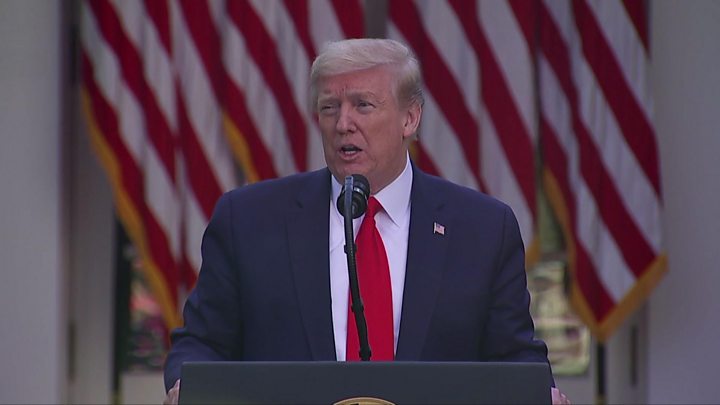
President Donald Trump has been criticised at home and abroad after announcing he is ending US ties with the World Health Organization (WHO).
The EU urged him to reconsider the decision, while Germany's health minister called it a "disappointing setback for international health".
The head of the US Senate's health committee, a Republican like Mr Trump, said now was not the time to leave.
Mr Trump said the WHO had failed to hold China to account over coronavirus.
The WHO, a UN agency that helps countries promote healthcare and tackle outbreaks of disease, has faced regular criticism from the US president over its handling of the outbreak.
He suspended US funding to the WHO last month and on Friday permanently halted the payment, which last year stood at more than $400m (£324m; €360m), the largest single contribution at around 15% of its total budget.
What has the response been to the US move?
European Commission President Ursula von der Leyen and top EU diplomat, Josep Borrell, said in a statement: "In the face of this global threat, now is the time for enhanced co-operation and common solutions. Actions that weaken international results must be avoided.
"We urge the US to reconsider its announced decision."
German Health Minister Jens Spahn described the setback as "disappointing" although he accepted the WHO "needs reform".
"The EU must take a leading role and engage more financially," he said.
Image copyrightEPAImage captionMr Trump says the WHO has been a "puppet of China"
A spokesperson for the UK said: "Coronavirus is a global challenge and the World Health Organization has an important role to play in leading the international health response. We have no plans to withdraw our funding."
The chair of the US Senate Health Committee, Lamar Alexander, said the move could hamper the discovery of a vaccine against Covid-19 and urged a reversal of the decision in the "strongest terms possible".
"Certainly there needs to be a good, hard look at mistakes the World Health Organization might have made in connection with coronavirus, but the time to do that is after the crisis has been dealt with, not in the middle of it," he said.
Ex-presidential candidate and US Senator Elizabeth Warren tweeted: "President Trump's decision to leave the @WHO during a global pandemic alienates our allies, undermines our global leadership, and threatens the health of the American people."
Anders Nordstrom, a former WHO acting director general, said he was "deeply concerned" the move would increase political tension at a time when "we need to have global solidarity".
South African Health Minister Zweli Mkhize called the decision "unfortunate".
WHO member states agreed on 19 May to set up an independent inquiry into the global response to the pandemic.
What was behind Trump's decision?
Speaking at the White House, Mr Trump said: "Because they have failed to make the requested and greatly needed reforms, we will be today terminating our relationship with the World Health Organization and redirecting those funds to other worldwide and deserving urgent global public health needs."
It is not clear when any US withdrawal might take place. A 1948 agreement between the US and WHO allows for one year's notice before pulling out.
Mr Trump has accused China of trying to cover up the outbreak of coronavirus, which occurred in the city of Wuhan late last year.
He also says that "China has total control over the World Health Organization".
The president accused China of pressurising the WHO to "mislead the world" about the virus, without elaborating.
Media captionMr Trump has repeatedly criticised China's early handling of the outbreak
"The world is now suffering as a result of the malfeasance of the Chinese government," he said.
The US will redirect its funds for the WHO to other health groups.
More than 102,000 people in the US have lost their lives to Covid-19 - by far the biggest death toll in the world.
Opponents say Mr Trump is trying to deflect criticism of his handling of the pandemic ahead of his re-election bid this year.
Meanwhile, Chinese Foreign Ministry spokesman Zhao Lijian has said that Mr Trump is trying to mislead the public, smear China and "shift the blame for [the US's] own incompetent response".
What is the WHO - and who funds it?
Founded in 1948 and based in Geneva, Switzerland, it is the UN agency responsible for global public health
Has 194 member states, and aims to "promote health, keep the world safe and serve the vulnerable"
Involved in vaccination campaigns, health emergencies and supporting countries in primary care
Funded by a combination of members' fees based on wealth and population and voluntary contributions
Keep these in mind as you contemplate the direction of the American government over the past 50 years and especially since the Obama election.
The Goals of Communism
(as read into the congressional record January 10, 1963, from "The Naked Communist" by Cleon Skousen)
1. U.S. acceptance of coexistence as the only alternative to atomic war.
2. U.S. willingness to capitulate in preference to engaging in atomic war.
3. Develop the illusion that total disarmament of the United States would be a demonstration of moral strength.
4. Permit free trade between all nations regardless of Communist affiliation and regardless of whether or not items could be used for war.
5. Extension of long-term loans to Russia and Soviet satellites.
6. Provide American aid to all nations regardless of Communist domination.
7. Grant recognition of Red China. Admission of Red China to the U.N.
8. Set up East and West Germany as separate states in spite of Khrushchev's promise in 1955 to settle the German question by free elections under supervision of the U.N.
9. Prolong the conferences to ban atomic tests because the United States has agreed to suspend tests as long as negotiations are in progress.
10. Allow all Soviet satellites individual representation in the U.N.
11. Promote the U.N. as the only hope for mankind. If its charter is rewritten, demand that it be set up as a one-world government with its own independent armed forces. (Some Communist leaders believe the world can be taken over as easily by the U.N. as by Moscow. Sometimes these two centers compete with each other as they are now doing in the Congo.)
12. Resist any attempt to outlaw the Communist Party.
13. Do away with all loyalty oaths.
14. Continue giving Russia access to the U.S. Patent Office.
15. Capture one or both of the political parties in the United States.
16. Use technical decisions of the courts to weaken basic American institutions by claiming their activities violate civil rights.
17. Get control of the schools. Use them as transmission belts for socialism and current Communist propaganda. Soften the curriculum. Get control of teachers' associations. Put the party line in textbooks.
18. Gain control of all student newspapers.
19. Use student riots to foment public protests against programs or organizations which are under Communist attack.
20. Infiltrate the press. Get control of book-review assignments, editorial writing, policymaking positions.
21. Gain control of key positions in radio, TV, and motion pictures.
22. Continue discrediting American culture by degrading all forms of artistic expression. An American Communist cell was told to "eliminate all good sculpture from parks and buildings, substitute shapeless, awkward and meaningless forms."
23. Control art critics and directors of art museums. "Our plan is to promote ugliness, repulsive, meaningless art."
24. Eliminate all laws governing obscenity by calling them "censorship" and a violation of free speech and free press.
25. Break down cultural standards of morality by promoting pornography and obscenity in books, magazines, motion pictures, radio, and TV.
26. Present homosexuality, degeneracy and promiscuity as "normal, natural, healthy."
27. Infiltrate the churches and replace revealed religion with "social" religion. Discredit the Bible and emphasize the need for intellectual maturity which does not need a "religious crutch."
28. Eliminate prayer or any phase of religious expression in the schools on the ground that it violates the principle of "separation of church and state."
29. Discredit the American Constitution by calling it inadequate, old-fashioned, out of step with modern needs, a hindrance to cooperation between nations on a worldwide basis.
30. Discredit the American Founding Fathers. Present them as selfish aristocrats who had no concern for the "common man."
31. Belittle all forms of American culture and discourage the teaching of American history on the ground that it was only a minor part of the "big picture." Give more emphasis to Russian history since the Communists took over.
32. Support any socialist movement to give centralized control over any part of the culture--education, social agencies, welfare programs, mental health clinics, etc.
33. Eliminate all laws or procedures which interfere with the operation of the Communist apparatus.
34. Eliminate the House Committee on Un-American Activities.
35. Discredit and eventually dismantle the FBI.
36. Infiltrate and gain control of more unions.
37. Infiltrate and gain control of big business.
38. Transfer some of the powers of arrest from the police to social agencies. Treat all behavioral problems as psychiatric disorders which no one but psychiatrists can understand.
39. Dominate the psychiatric profession and use mental health laws as a means of gaining coercive control over those who oppose Communist goals.
40. Discredit the family as an institution. Encourage promiscuity and easy divorce.
41. Emphasize the need to raise children away from the negative influence of parents. Attribute prejudices, mental blocks and retarding of children to suppressive influence of parents.
42. Create the impression that violence and insurrection are legitimate aspects of the American tradition; that students and special-interest groups should rise up and use united force to solve economic, political or social problems.
43. Overthrow all colonial governments before native populations are ready for self-government.
44. Internationalize the Panama Canal.
45. Repeal the Connally reservation so the United States cannot prevent the World Court from seizing jurisdiction over nations and individuals alike.











 Posts


