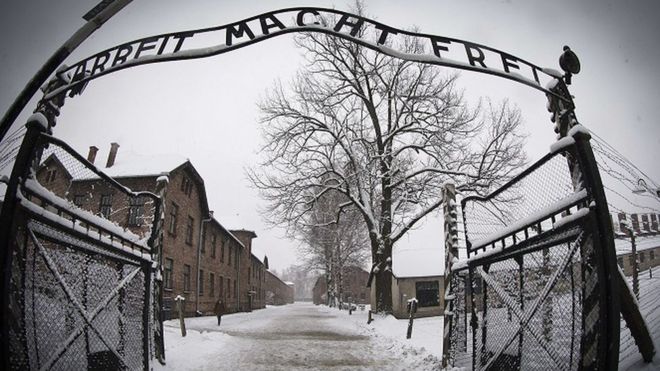
Image copyrightAFPImage captionSome 1.1 million people were killed by the Nazis at Auschwitz
Several Jewish groups have criticised Amazon for fictitious depictions of the Holocaust in its new series Hunters.
The online retail giant has also been denounced for allowing the sale of anti-Semitic propaganda books.
Amazon did respond immediately to criticism of Hunters but told the BBC it was "listening to feedback" about controversial book sales.
Hunters, a 10-part drama series, follows a team of Nazi hunters in 1970s America.
The show, starring Al Pacino, has been accused of bad taste and "Jewsploitation" for its depiction of fictional atrocities during the Holocaust. Around six million Jews were killed across Nazi-occupied Europe during the period from 1941-45.
In one scene, inmates of Auschwitz concentration camp are forced to kill each other while being used in a game of human chess.
Auschwitz Memorial, a charity that maintains the former camp as a historical site, accused the programme makers of "inventing a fake game of human chess" in an act of "dangerous foolishness".
Karen Pollack, chief executive of the Holocaust Educational Trust, told the BBC such portrayals risked fuelling Holocaust denial, and lent a tone of "flippant entertainment" to the programme.
"We have a real responsibility to protect the truth of the Holocaust," said Mrs Pollack, "particularly as we're moving away from living history, the survivors are few and frailer."
"We can't do this alone," she added. "We have to rely on other people in society who want to do good."
About 1.1 million people, most of them Jews, were murdered at Auschwitz.
Amazon has recently come under fire for selling anti-Semitic books, including The Jewish Question in the Classroom by Nazi propagandist Julius Streicher.
On Friday, Auschwitz Memorial retweeted a letter, written by the Holocaust Educational Trust, asking Amazon to remove books by Streicher from sale.
"When you decide to make a profit on selling vicious antisemitic Nazi propaganda published without any critical comment or context, you need to remember that those words led not only to the #Holocaust but also many other hate crimes," it said.
"As a bookseller, we are mindful of book censorship throughout history, and we do not take this lightly," Amazon said in response. It added that it was investing "significant time and resources" in ensuring products on sale met its guidelines.
In December, after complaints by Auschwitz Memorial, Amazon withdrew several items from its website, including Christmas decorations depicting Auschwitz.
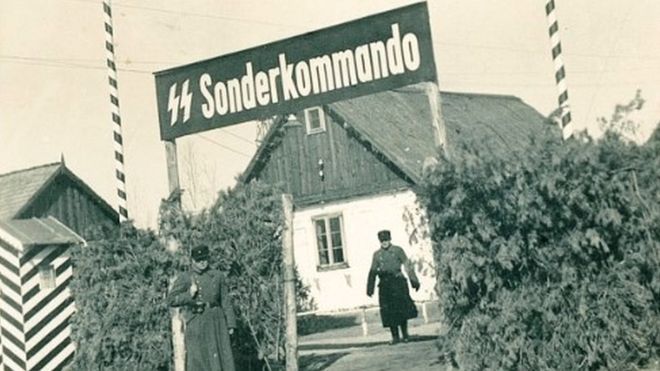
Image copyrightUSHMMImage captionA Sobibor gateway says "SS Sonderkommando" - the name for special death camp units
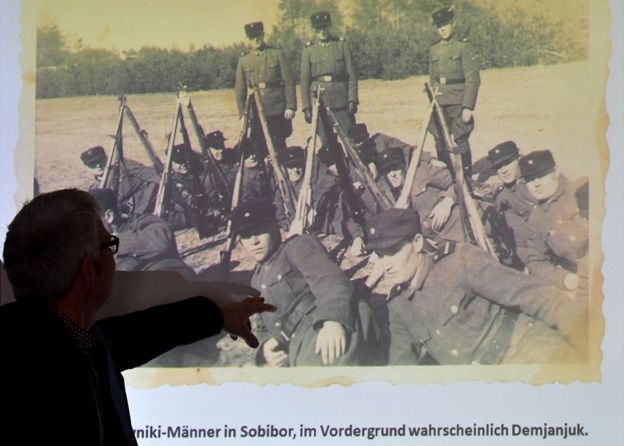
Previously unseen photos from the Sobibor death camp in Nazi-occupied Poland have been unveiled, including two purported to show notorious guard John Demjanjuk.
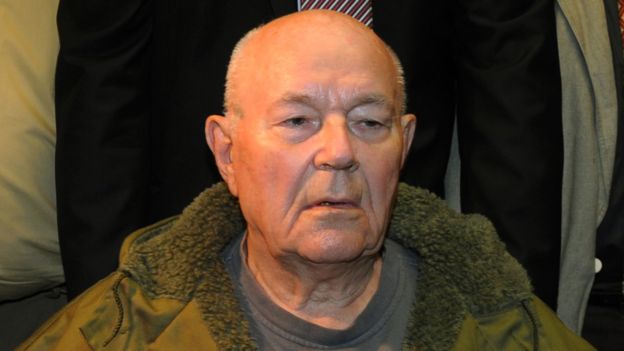
The Ukrainian was jailed in Munich in 2011 as a war criminal, but died in 2012, aged 91, while appealing.
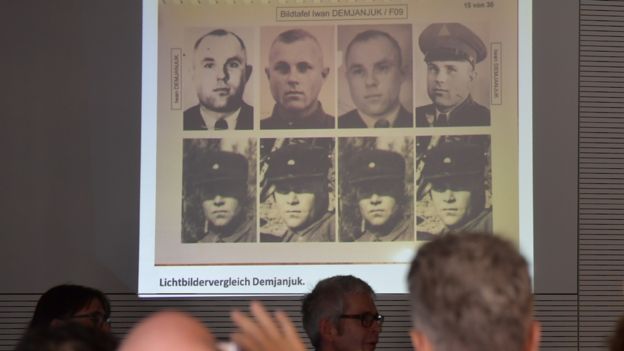
Two photos, out of 361 from Sobibor and other camps, show Demjanjuk, a German Holocaust research centre says.
About 1.7 million Jews were murdered at Sobibor and two other camps in 1941-43.
Gas chambers were used at Sobibor, Treblinka and Belzec to kill Jews from ghettos in occupied Poland, in what Nazi Germany called "Operation Reinhard".
Hardly any photos of Sobibor existed previously, so the find provides a wealth of new details about Nazi atrocities.
Image copyrightAFPImage captionA researcher points to a man believed to be Demjanjuk, among SS death camp auxiliaries
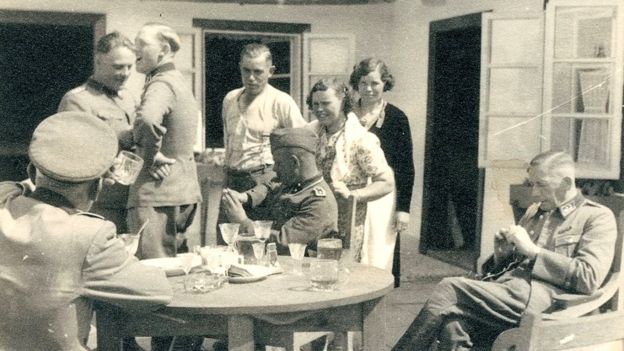
Some photos show SS guards relaxing with alcohol and entertainment at Sobibor - not far from where Jews were being slaughtered.
The photos chart Niemann's Nazi career, including places where disabled people were murdered, in the so-called T4 "euthanasia" programme, and the Sachsenhausen and Belzec camps.
Niemann was killed by an axe-wielding Jewish inmate during a prisoner uprising in October 1943. The SS later destroyed Sobibor to wipe out evidence of their mass murder.
Image copyrightUSHMMImage captionSS guards are seen here having fun at Sobibor, not far from the gas chambers
The photo presentation comes just a day after international commemorations for the 1.1 million people - mostly Jews - murdered by the Nazis at Auschwitz. Soviet troops liberated Auschwitz-Birkenau death camp 75 years ago.
Demjanjuk was found guilty in 2011 of involvement in the murders of 28,000 Jews at Sobibor. He denied having served there, or having had any role in the Holocaust.
Image copyrightAFPImage captionDemjanjuk leaving court on 12 May 2011 after being jailed for involvement in mass murder
He had spent decades working as a car mechanic in the US before being extradited - first to Israel, then to Germany.
The SS trained auxiliaries from occupied Ukraine and other parts of the former Soviet Union to assist in the mass murder of Jews and other minorities.
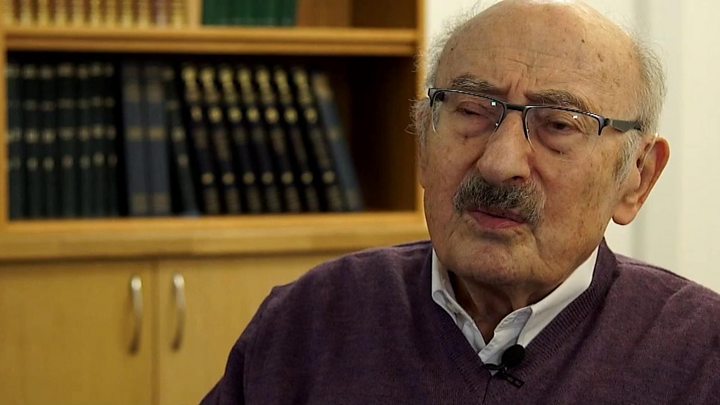
Media caption"I was a skeleton" - Henri Kichka lost his whole family in Auschwitz
An Israeli court sentenced Demjanjuk to death in 1988, but the verdict was overturned by Israel's Supreme Court in 1993 because of doubts about his identity.
But investigators were not convinced by Demjanjuk's claims, and in 2009 he was extradited from the US to Germany, where he was found guilty and jailed.
Image copyrightAFPImage captionResearchers are sure that new photos from Sobibor (bottom row) show Demjanjuk
Ahead of this week’s visit to Israel, comedian who became a corruption-battling president discusses everything from Babi Yar, the Holocaust and the Holodomor, to Putin… and Trump
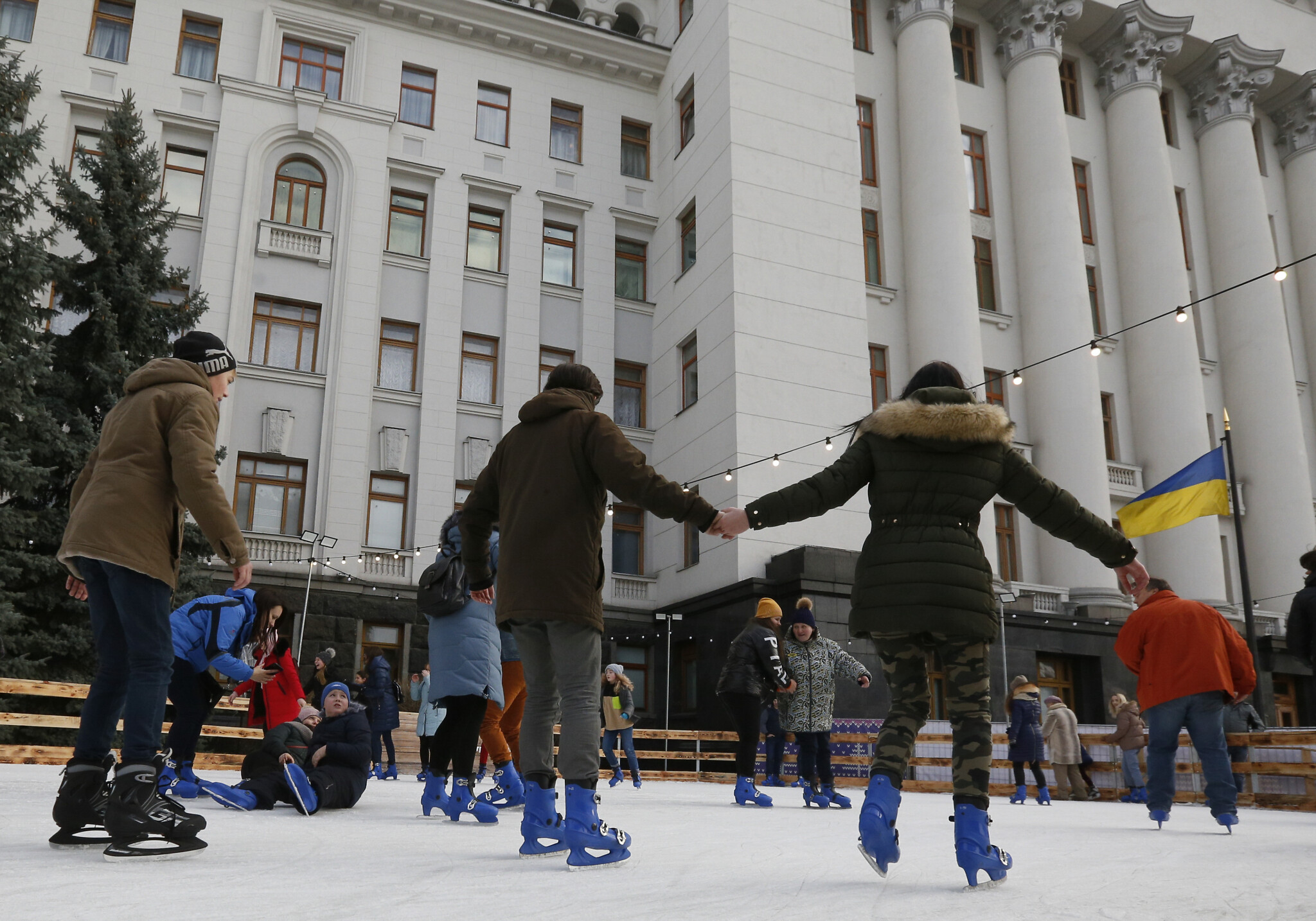
KYIV — The first thing you see when you arrive at the office of the president of Ukraine is an ice rink. An ice rink slap outside the main entrance to the presidential offices.
Boisterous young Ukrainian kids, colorfully scarfed, woolly-hatted and well-wrapped on a relatively mild (by Kyiv standards) afternoon, are doing circuits, with and without parents, directly in front of Volodymyr Zelensky’s office, as the president works inside.
The Israeli mind boggles at the potential security risks, just as American, British and other minds would. But this, of course, is not your typical president.
Zelensky, who turns 42 this coming Saturday, is the comedian who played the president of Ukraine in a TV sitcom called “Servant of the People” and last April was elected president of Ukraine in the real world, defeating the incumbent by a landslide 73-25%.
And who then further proved his appeal and cemented his authority when his political party, also called Servant of the People, won a parliamentary majority three months later.
And who a day before I met him had rejected his prime minister’s offer to resign (after a leaked recording in which the PM apparently derided Zelensky’s understanding of the economy), saying the country could not afford the destabilization that his resignation would cause.
People skate at a free ice rink set up outside the Ukrainian president’s office in Kyiv, Ukraine, Wednesday, Jan. 15, 2020. (AP Photo/Efrem Lukatsky)
Zelensky’s challenge is mind-boggling. He seeks to root out corruption in a country sunk in it, and is doing so by trying to rebuild law-enforcement hierarchies top down and bottom up.
He seeks to delicately extricate Ukraine from the bear hug of the incomparably more powerful Russian superpower with which it is mired in conflict, and has started negotiations with the formidable President Vladimir Putin, who is said to have previously referred to Ukraine as, well, not actually a country.
He is trying to move his country away from extremism and cynicism to greater internal harmony and widened opportunity, even as many of the countries who might until recently have served as role models in this quest are heading in the opposite direction
He oversees a nation — the largest in Europe — whose people’s foundational attitudes to its past, present and future, whose aspirations and sense of identity, vary, sometimes diametrically, as you move from west to east.
He’s trying to move his country away from extremism and cynicism to greater internal harmony and widened opportunity, even as many of the countries who might until recently have served as role models in this quest are heading in the opposite direction.
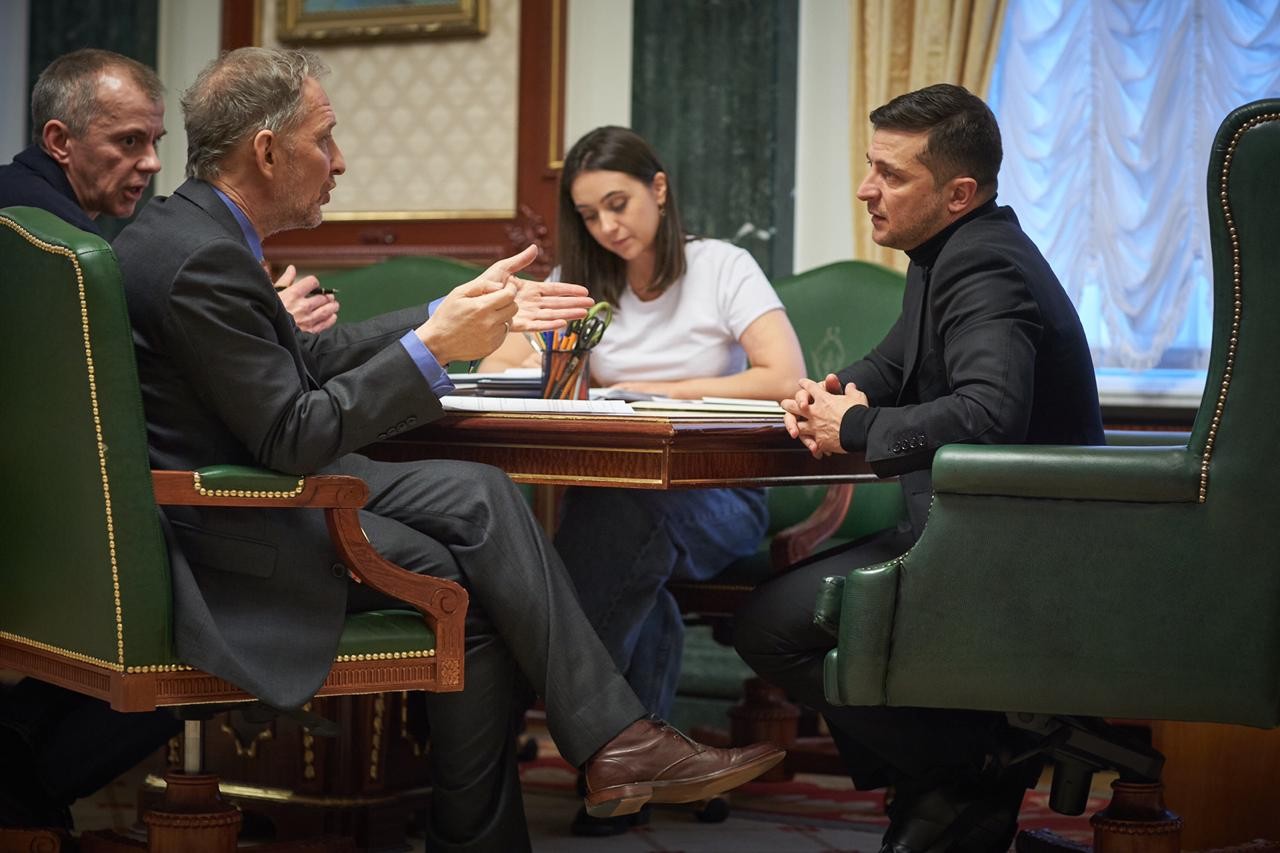
Ukraine President Volodymyr Zelensky, interviewed in his office in Kyiv, on January 18, 2020. Right to left: Zelensky, presidential press secretary Iuliia Mendel, Times of Israel editor David Horovitz, translator. (Press service of the Office of the President of Ukraine)
Yet he seems to be wearing the challenge impressively well. Trim and friendly, he welcomes me to his office with a warm handshake, and sits with me for 50 minutes — dealing with my questions carefully, sensitively, and when appropriate, with humor.
He speaks at length about the Holodomor, the Soviet-imposed deliberate famine of 1932-33, which killed millions, and with great respect for the victims of the Holocaust — and the need to bring a belated, honest historical account of these events into the open. He acknowledges but says less on the issue of Ukrainians’ participation in Holocaust crimes, preferring to highlight the actions of Ukraine’s Righteous Gentiles, and the relative marginality of overt anti-Semitism in modern Ukraine.
A partial view of a display case on Babi Yar, including a Siddur, at Kyiv’s National Museum of the History of Ukraine in the Second World War (The Times of Israel)
(Later in the day, when I visited the National Museum of the History of Ukraine in the Second World War — built in the Soviet era as the Museum of the Great Patriotic War — an English-language guide at the section on the Babi Yar massacre was, significantly, telling her group that while others were killed there, “only Jews were killed for being Jews.” This simple, terrible truth contrasts with the norm in the Soviet era, when the fact that the Jews were targeted by the Nazis for genocide was not acknowledged. The Soviet memorial at Babi Yar, where 33,771 Jews were marched from their homes to be shot dead in the ravine on September 29-30, 1941, commemorates atrocities carried out against the Soviet people in general.)
Zelensky will be coming to Israel later this week, to attend the ceremonies marking the 75th anniversary of the liberation of Auschwitz. He only formally confirmed his attendance on Sunday, a delay which gave rise to rumors he was considering staying away in protest at not being invited to speak at the main event. His Polish counterpart is boycotting the gathering for just this reason. Zelensky clarified in our conversation, however, that while he thinks he should indeed be asked to speak, he always intended to come — to honor the memory of the victims. He was, however, also grappling with the fallout from Iran’s mistaken downing of a Ukrainian airliner with the loss of all 176 lives, and needed to be sure that the bodies of the Ukrainian victims would be returned and that he could fulfill his responsibilities.
Zelensky speaks pretty good English, but answered much of the time in Ukrainian, using a translator and with input from his press secretary. (Given the potential for things to get lost in translation, and the sensitivities of some of the issues we discussed, I have confirmed the accuracy of the quotes with Zelensky’s office.) What follows is a transcript of our interview, edited for clarity.
The Times of Israel: I brought you some chocolates from Israel. I left the price on them. They are good, but you can see they’re quite cheap.
President Volodymyr Zelensky: Yes, that’s good. I see you understand things. (Laughs.)
Yes. Let nobody accuse me or you of bribery. Thank you for your time. Have you been to Israel in the past?
Oh, I was there many times. I have relatives there — an aunt of my mother, and her relatives. They moved to Israel, some of them, about 10-15 years ago. Maybe longer. At the end of the ’90s.
So I was in Israel many times. For meetings, business meetings, TV meetings and concerts — in my previous life.
You did comedy in Israel?
Yes. In Tel Aviv, in Beersheba, in Haifa, in Jerusalem. In so many cities. So I know Israel. I know people there.
And this week, are you coming to Israel [for the events marking the 75th anniversary of the liberation of Auschwitz]?
Yes, of course!
I didn’t know ‘of course.’
Nobody knew. I will tell you why. We had the dreadful tragedy in Iran. That’s why I couldn’t tell Israel, the government of Israel, if I was coming, because I didn’t know when we would get the bodies of our people [returned from Iran]. That’s the main thing. If we get them tomorrow [Sunday], I will be able to go. [On Sunday, Zelensky’s office indeed confirmed that he will be coming.]
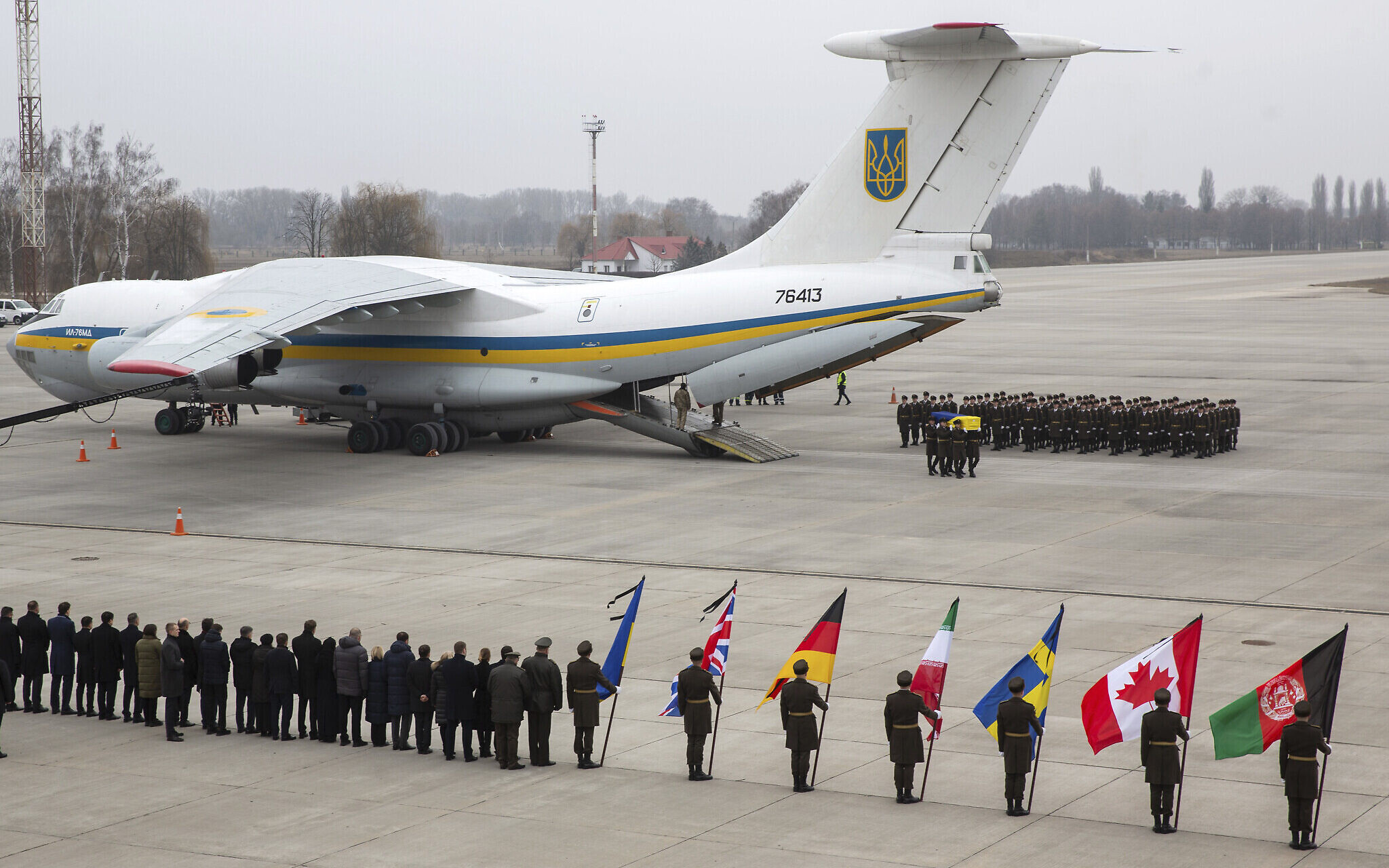
An honor guard carries a coffin of one of the eleven Ukrainian victims of the Ukrainian 737-800 plane that was shot down in error by Iran on the outskirts of Tehran, at Borispil international airport outside Kyiv, Ukraine, January 19, 2020. (Ukrainian Presidential Press Office via AP)
Are you going to give a speech at the main event? The Polish president decided not to go because they didn’t let him speak.
The most important thing for each country is to honor the memory of its Holocaust victims. It’s very important to go, whether we [leaders] speak or not.
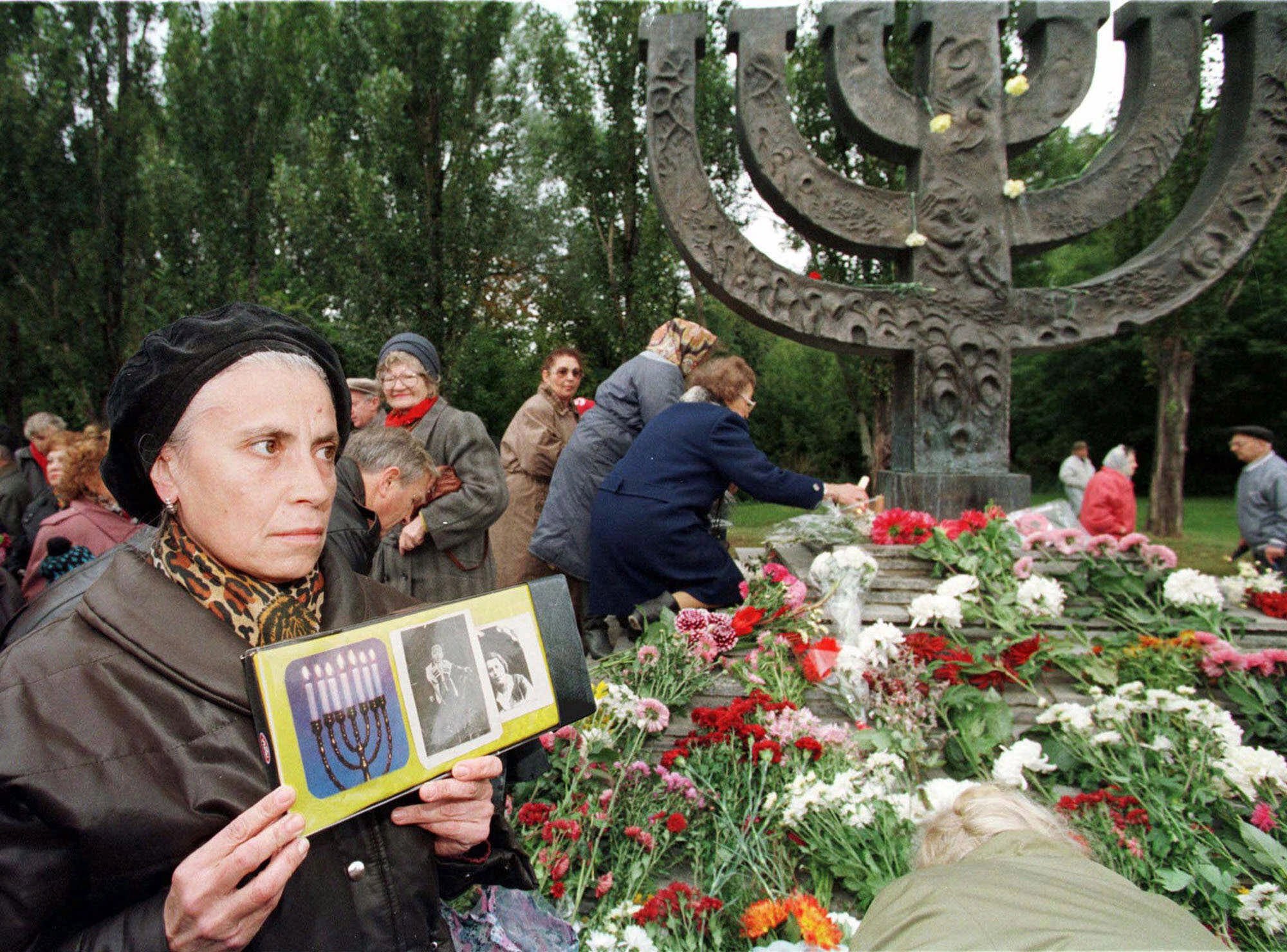
A woman holds photos of her brother and aunt, who were killed by the Nazis in 1941 at Babi Yar, the site of the Nazi massacre of more than 33,000 Jews, in Ukraine’s capital Kyiv, in this Sept. 28, 1997 photo. In the background people lay flowers at the 3.5 meter (10-foot) high menorah monument, which was opened in 1991. (AP Photo/Efrem Lukatsky,)
For me personally, it doesn’t matter whether I speak. But so many people who died in this tragedy [of the Holocaust] were Ukrainian Jews — starting with Babi Yar, where 150,000 Ukrainian Jews were executed. The statistical information that we have shows that one in four of the Jews who were killed in the Holocaust were Ukrainian. That is why, for Ukrainians, it is very important to honor the victims of the Holocaust. I think it would be fair, therefore, that the president of Ukraine would give a speech.
For me personally, it doesn’t matter whether I speak. But so many people who died in this tragedy [of the Holocaust] were Ukrainian Jews — starting with Babi Yar… One in four of the Jews who were killed in the Holocaust were Ukrainian. That is why, for Ukrainians, it is very important to honor the victims of the Holocaust. I think it would be fair, therefore, that the president of Ukraine would give a speech
I know the Israeli side has a different format; we were not invited to speak. But in any case, I will attend this ceremony.
You still hope that maybe they will let you speak?
It’s not about hope. I think I should, but I will go anyway. It is very important to honor the memory of the Holocaust victims.
The question of the Holocaust for Ukraine is so complicated. In a way, the Holocaust began here — with maybe a million Jews or more killed, mostly not in the camps, but in the “Holocaust of the bullets,” including at Babi Yar.
More than 1 million.
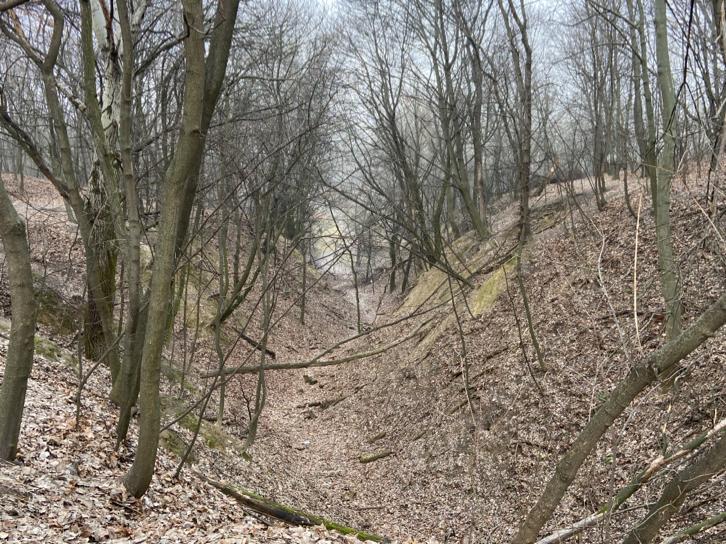
Babi Yar, January 17, 2020 (The Times of Israel)
How is Ukraine dealing with the memory, and honoring the Jewish victims? How are you trying to memorialize the Holocaust in Ukraine?
First, we honor the memory of the Holocaust victims. Second, this year, we start the construction of the memorial at Babi Yar. Third, we have a project in Uman, where as you know, a lot of Jews from all around the world travel there to pay respect to renowned Jews: In the city we are starting to construct a “Little Jerusalem.” So we have decided to construct a historical museum, to create a big park and to reconstruct the synagogue. We want to make an authentic little town. We created the name “Little Jerusalem” as an idea, to make it very authentic, in a very professional way.
I want to ask you about Babi Yar. You say that you’ve already started a project. Are you talking about the Holocaust Memorial Center? This is a very sensitive issue, as you know. Is it going to focus on the Jewish victims of Babi Yar? Or on all the victims who were killed at Babi Yar? Or all of Ukraine’s World War II victims? What is your vision of the memorial at Babi Yar?
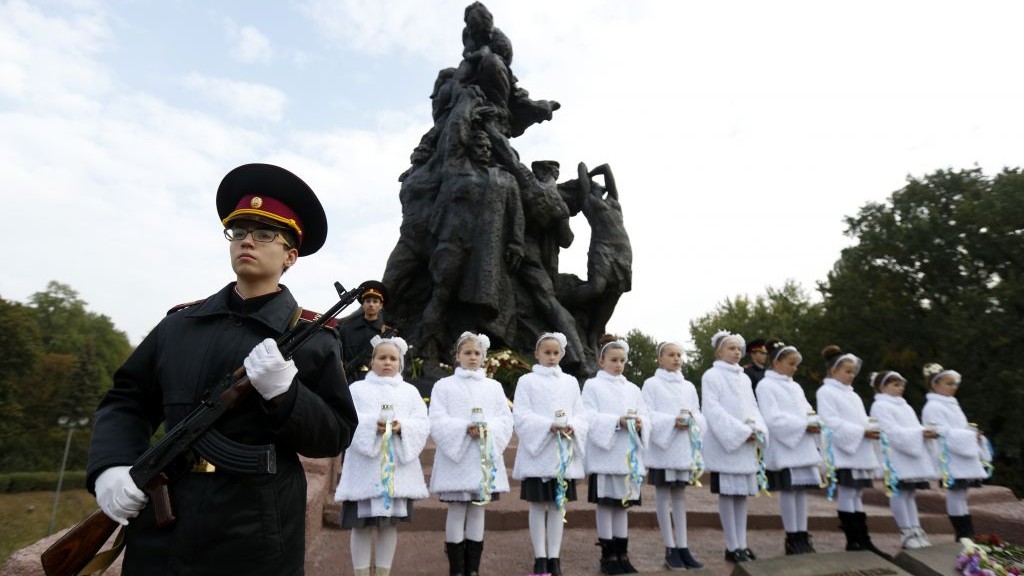
A Cadets honor guard takes part in commemorative events at the Soviet monument to the victims of Babi Yar, September 29, 2016. This official memorial was erected in 1976, and dedicated to Soviet victims. Several attempts were made in the Soviet era, in vain, to erect a memorial to commemorate the fate of the Jewish victims. (AP/Sergei Chuzavkov)
First, a memorial will be constructed for all the Jews executed at Babi Yar. This is a large project, which includes a historical museum, where the whole story of the 150,000 Jews who were executed at Babi Yar will be told.
We should also remember that more than 2,500 Ukrainians were recognized by Yad Vashem as Righteous Gentiles. Many of them are no longer alive. But some of them are still with us. Many of those people saved Jews, hid them, helped them to escape from the procession that went to Babi Yar. So we will definitely find a place in the memorial for them.
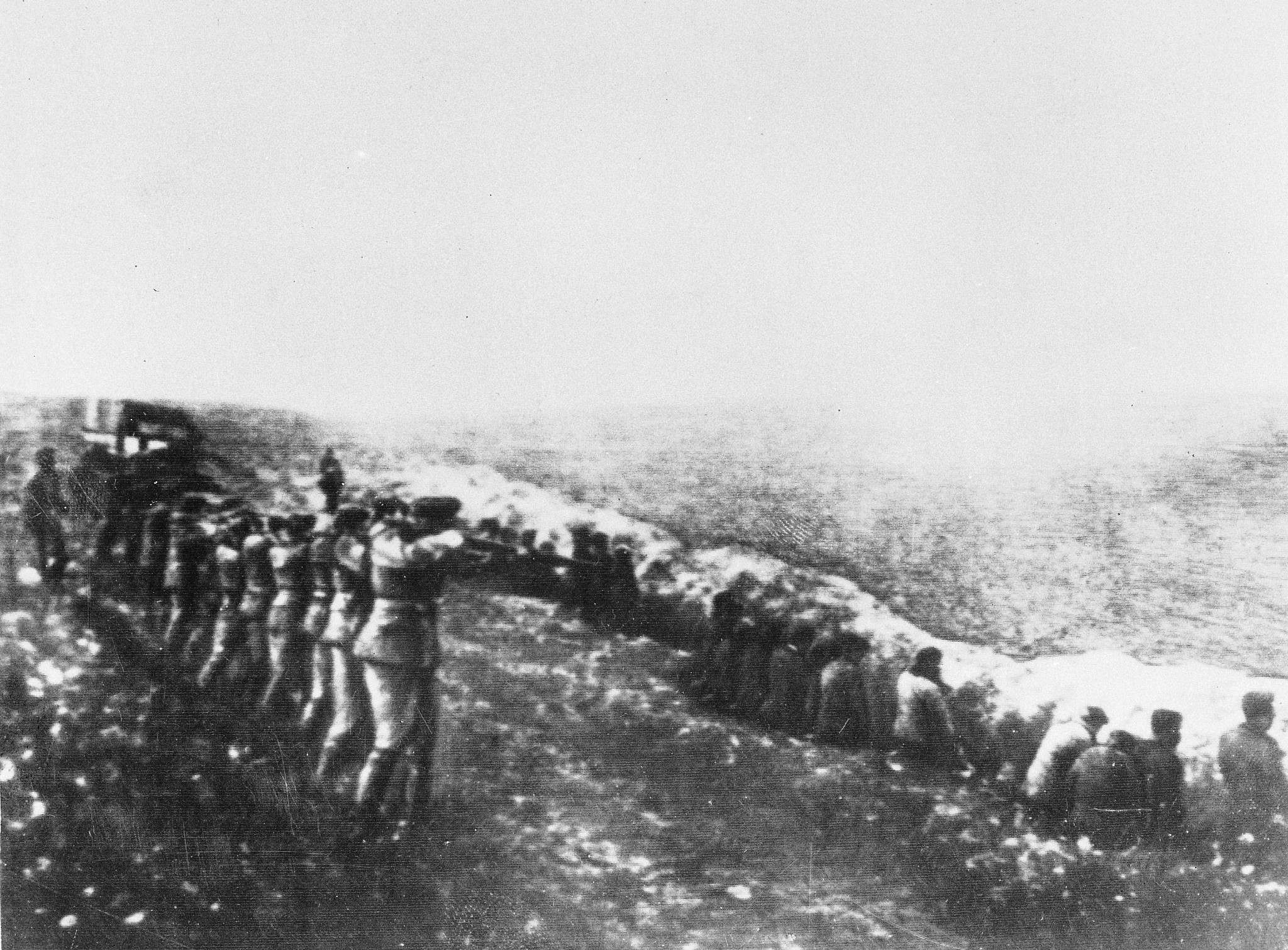
Photo taken from the body of a dead German officer killed in Russia, showing a Nazi firing squad shooting Jews in the back as they sit beside their own mass grave, in Babi Yar, Kiev, 1942. (AP Photo, file)
The project at Babi Yar is the one that Natan Sharansky spoke to you about?
Yes, yes. We spoke to each other. We asked the rabbis why it was not done before. There had been various different ideas for projects. But now it is finalized and we decided that this year the actual building work will begin.
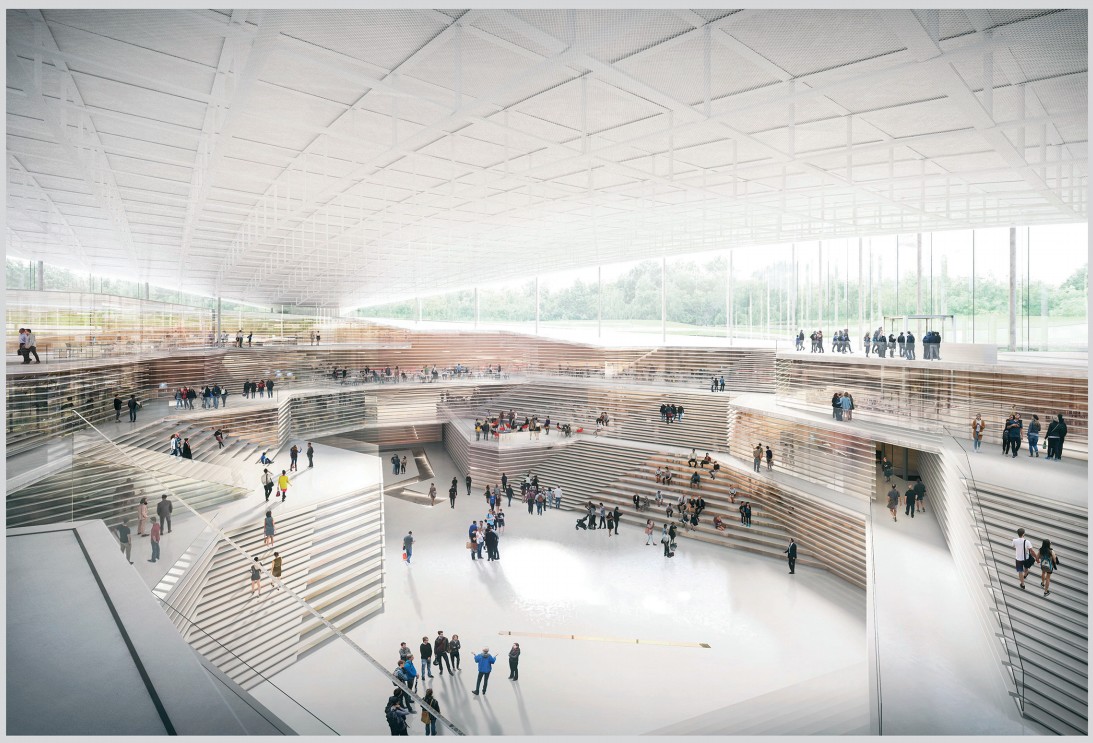
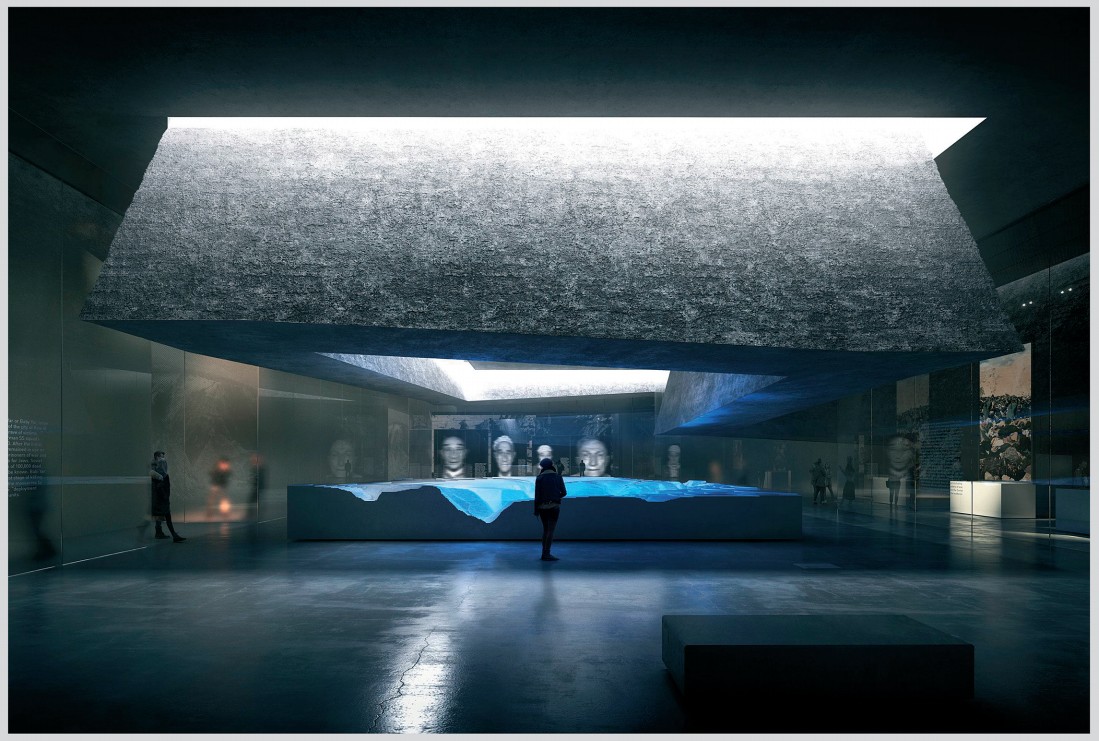
Artist’s sketch of planned Babi Yar Holocaust Memorial Center (Courtesy)
Are you worried that for some Ukrainians, there will be a concern that they are being blamed for the killings of Jews? Ukrainian forces did not kill Jews at Babi Yar, but they helped the Nazis to round them up and to direct them to Babi Yar, to give just one example. So are you worried about Ukrainian nationalists being upset with the honoring of the Jewish victims? (There was “considerable” involvement by Ukrainians in the Nazi genocide, according to Efraim Zuroff, who heads the Israel office of the Simon Wiesenthal Center. “Thousands of Ukrainians participated in Holocaust crimes,” he noted, notably including as death camp guards. And none were ever prosecuted. The center’s Operation Last Chance was not even attempted in Ukraine, Zuroff said, because it was impossible to set up any kind of credible mechanism to obtain information. — DH)
We have very interesting statistical information, that will be very interesting for Israel. There is a published Pew Research Center poll from 2018, that assessed the level of anti-Semitism in Europe. And the lowest level of anti-Semitism was in Ukraine.
Artist’s sketch of planned Babi Yar Holocaust Memorial Center (Courtesy)
I went yesterday to two synagogues here in Kyiv. There was less security there than almost anywhere in the world. I met some young local Jewish people there, and I asked, Where are the guards? And they said to me, There’s no anti-Semitism here.(A more recent pollhighlighted a fall in anti-Semitic incidents, but there are certainly isolated cases, including the vandalizing with swastikas of a monument to Sholem Aleichem in Kyiv in November, and the vandalizing days ago of a monument to Holocaust victims near Zelensky’s parents’ home. These incidents were highlighted by Israel’s Ambassador to Ukraine, Joel Lion, who has frequently urged the authorities, thus far in vain, to bring the perpetrators to justice. — DH)
There isn’t. That’s true. And you know that I have Jewish blood. And I’m president.
And nobody cares, right?
Nobody cares. Nobody asks me about it.
Of course, in Ukraine, like everywhere in the world, now and in the past, there is some percent of people who don’t see anyone else except their nation. The same happened during the Second World War, and during the occupation by fascist Germany of Ukraine. The same kind of complicated attitude was demonstrated to Jewish people during Soviet times. We all know this. But right now we also know perfectly well that the lowest level of anti-Semitism is in Ukraine.
We also need to understand that during those times, during the Second World War, there were people in France, Poland, Germany, Belarus, Ukraine, saving Jews from the Nazis. But at the same time there were people who collaborated with the Nazis and were actually turning in the Jews.
We are very proud of the fact that we have such a low level of anti-Semitism — such a low level of anti-Semitism in independent Ukraine, which started its life in 1991. We have the percentage of radical people of course, but it is very small. And that is why I’m not afraid [of any resistance to our memorial plans].
How is your relationship with President Putin?
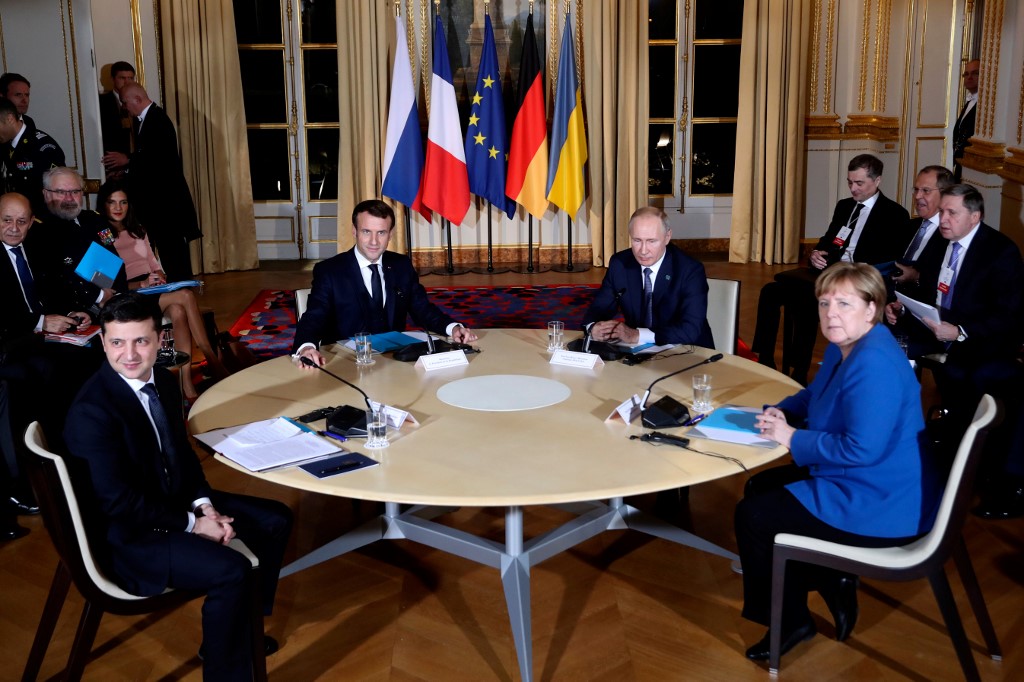
With the president of the Russian Federation, today, our dialogue has started. We had a number of phone calls. We constructed a format for our dialogue that resulted in some sensitive decisions. We have returned our prisoners, our ships. After three years without meetings, we managed to agree on the Normandy Format. After that, there was a second exchange of prisoners — the biggest such exchange.
(From L) Ukrainian President Volodymyr Zelensky, French President Emmanuel Macron, Russian President Vladimir Putin, and German Chancellor Angela Merkel attend a meeting on Ukraine at the Elysee Palace,in Paris, on December 9, 2019. (Thibault Camus/ POOL/ AFP)
Was the first meeting after a three year pause. It was the first meeting within the Normandy Format.
He once said that Ukraine is not a country. Does he still think that Ukraine is not a country?
I don’t know what he’s thinking about. He didn’t tell me. I think he understands my attitude: Ukraine is an independent country. We are a big country, the biggest in Europe. I think he understands. What he thinks about it? That’s in his head.
You have a vision that maybe you can achieve peace in the east. Is it possible?
I would never have sought the presidency without having such a goal.
Is it making progress?
I would like it to be much quicker. There are very complicated questions. I can see the progress, because the number of exchanges of fire is significantly reduced. But it is still present.
The naming of streets after Ukrainian nationalist heroes has been quite controversial. What are you doing about that?
This applies not only to streets but also to monuments. It’s a question of how people with different history, with different attitudes, can live together in practice.
Let’s find those people whose names do not cause controversy in our present and in our future
It is a very complicated and sensitive issue. There are heroes that are honored in the west and in the center of Ukraine, and there are other Ukrainians that have their own heroes and think otherwise. And I understand the different feelings. And that’s why I’ve said several times, very clearly: When we have so complicated a history, let’s build a common history. Let’s find those people whose names do not cause controversy in our present and in our future. Let’s name the monuments and streets for those people whose names do not provoke conflict.
Nowadays, we have our own modern heroes — people who have made history, scientists, people in space exploration, great sportsmen, many writers… people who are widely respected in all parts of Ukraine. Let’s keep politics out of this issue.
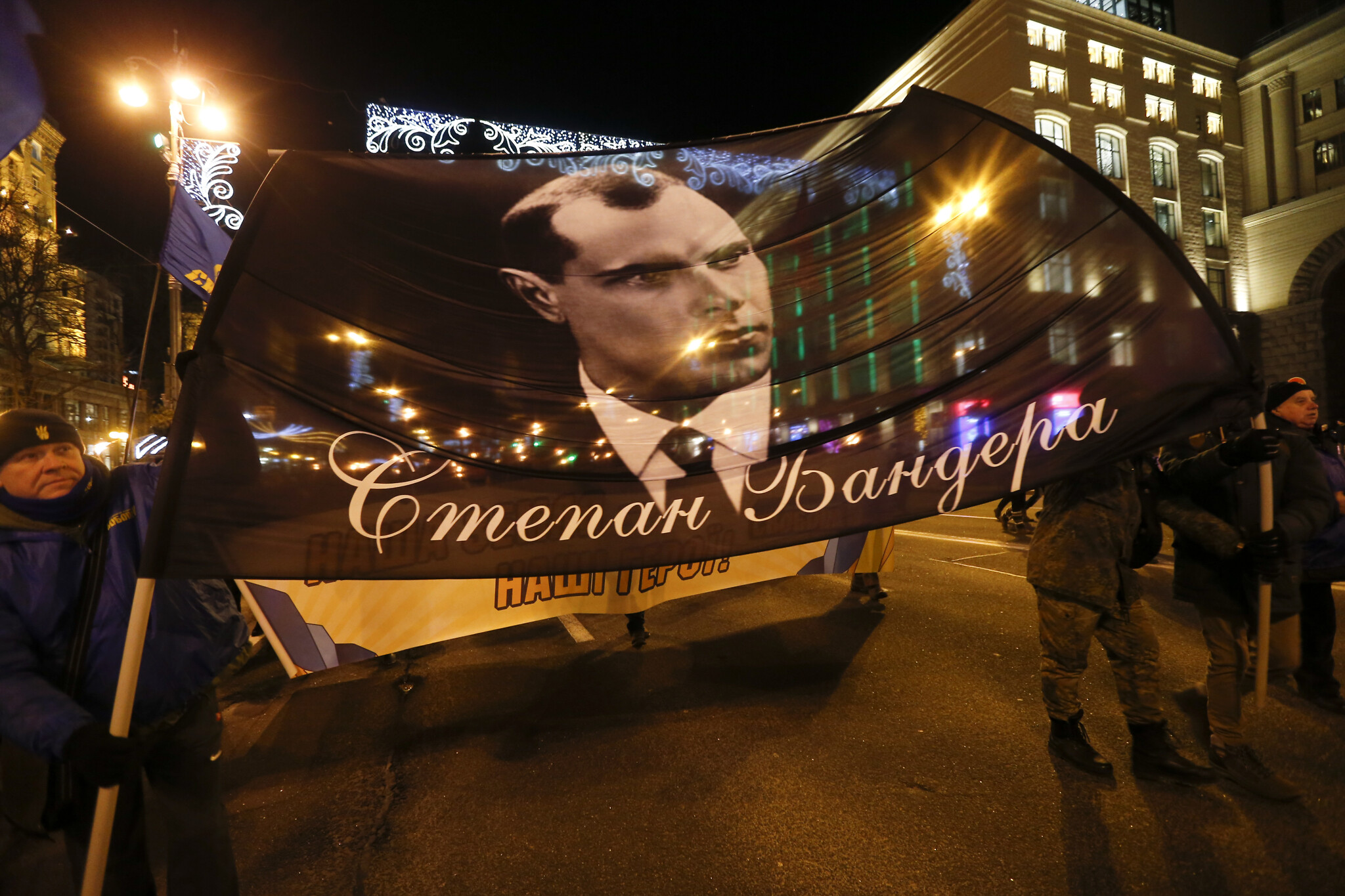
Activists of various nationalist parties carry torches and a portrait of Stepan Bandera during a rally in Kyiv, Ukraine, Wednesday, Jan. 1, 2020. The rally was organized to mark the birth anniversary of Stepan Bandera, founder of a Ukrainian nationalist and independence movement that fought against the Soviet regime and who in the 1940s encouraged members to ‘destroy’ Jews (AP Photo/Efrem Lukatsky)
This issue just recently caused a bit of a row with Israel — where the Israeli ambassador here was protesting, and your ambassador in Israel was saying, stay out of it. (Israel’s ambassador to Ukraine, Joel Lion, and his Polish counterpart Bartosz Cichocki wrote officials an open letter condemning the government-sponsored honoring of Stepan Bandera and Andryi Melnyk, two collaborators with the Third Reich. — DH) Overall, how is the relationship with Israel?
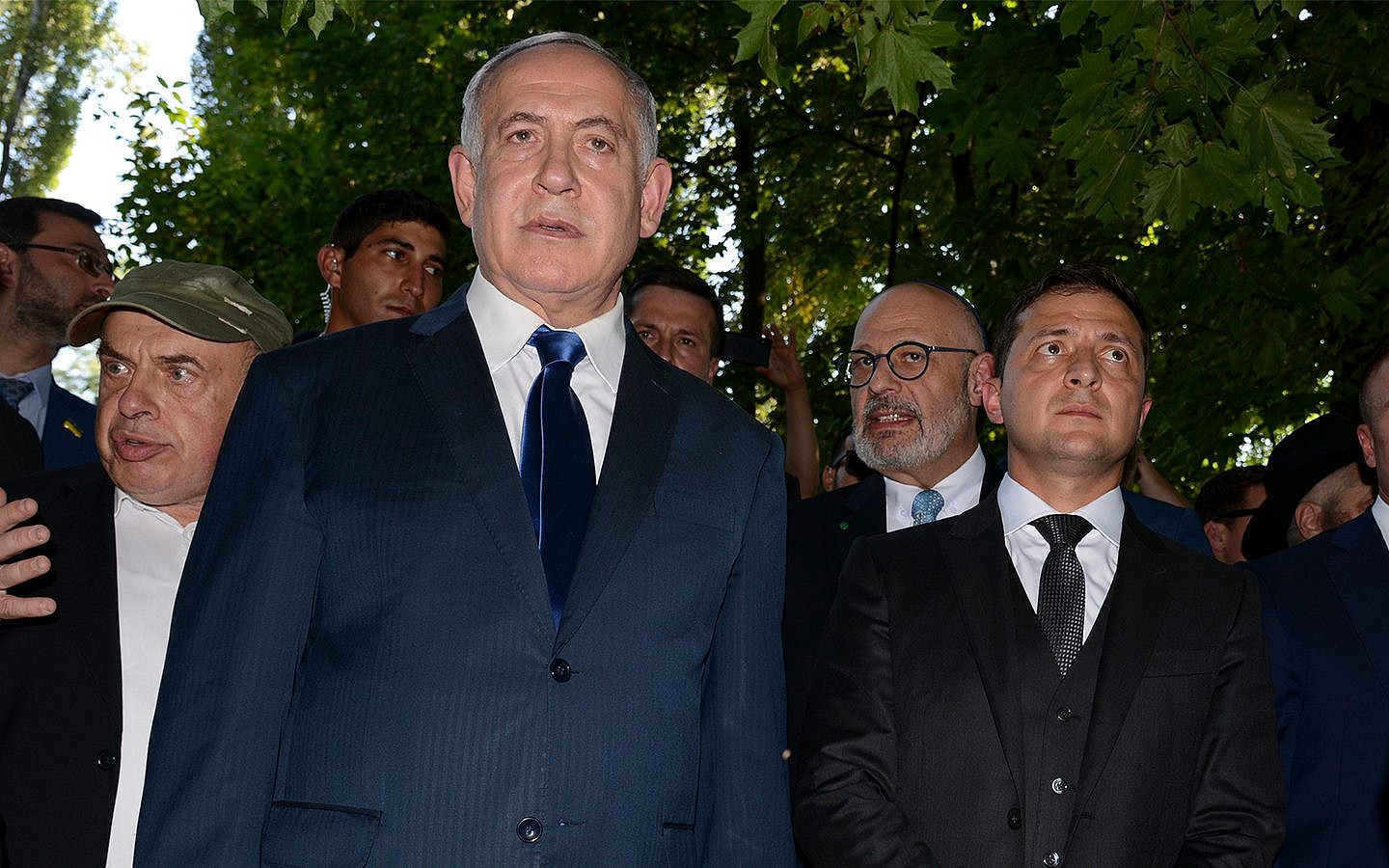
I think we have good relations. For example, my own relationship with Netanyahu: I met him in Ukraine; he made an official visit here. We spoke. I know your government is being created right now. I know he’s busy right now.
Prime Minister Benjamin Netanyahu, left, and Ukrainian President Volodymyr Zelensky, right, stand at Babi Yar ravine where Nazi troops murdered tens of thousands of Jews during WWII, in Kyiv, Ukraine, August 19, 2019. At left is Natan Sharansky. Second from right is Israeli Ambassador Joel Lion (AP Photo/Zoya Shu)
We have many elections!
Yes, I know. You are champions. (Laughs.) Historically, Ukraine and Israel have good relations and good connections. As you know, many Ukrainian Jewish people helped to build the new Israel. They are very famous in Israel and very famous in Ukraine. Relations are very strong. When Ukrainians and Israelis speak to each other, each side respects the other.
Israel and Ukraine exchange technologies, there are exchanges of knowledge.
On the Holodomor, what do you seek from Israel? Again, there are sensitivities in some quarters about recognizing it as a genocide — some say it is a kind of socio-cide, not a national targeting… (and they note that Jews and Russians and Belorussians also died in it — DH).
A lot of people were destroyed. A lot of things were taken from them — their homes, their land, their cattle, everything was taken from them. And if they were not providing their assets, then they were killed. They were shot. Millions of people died.
In the future, every part of the world will recognize that Holodomor is a huge tragedy for Ukraine, and was actually the destruction of Ukrainian people
Many countries have recognized that Holodomor is a genocide. And I know that Israel understands this, and understands that Ukraine has recognized the Holocaust as genocide. For Ukraine, it’s not a social or economic tragedy. It’s a genocide. Millions of Ukrainians were destroyed.
I’m sure that in the future, every part of the world will recognize that Holodomor is a huge tragedy for Ukraine, and was actually the destruction of Ukrainian people. There was a lot of silence in different media because of the policies of the USSR, because the USSR was hiding all the information. It was hiding the records, it was hiding the locations of mass graves. There was not enough information about this. That’s how the history was made. So we understand that there are different histories. But I am sure that in the future, people will understand what is the history of Ukraine and what are the real facts. Millions of Ukrainians were destroyed during Holodomor.
We all were born during the USSR era, and there were a lot of things that happened that were good. There were a lot of people who were world famous, who did a lot of great things. So there was a lot of good. But also, of course, there were a lot of tragedies like, for instance, this one tragedy.
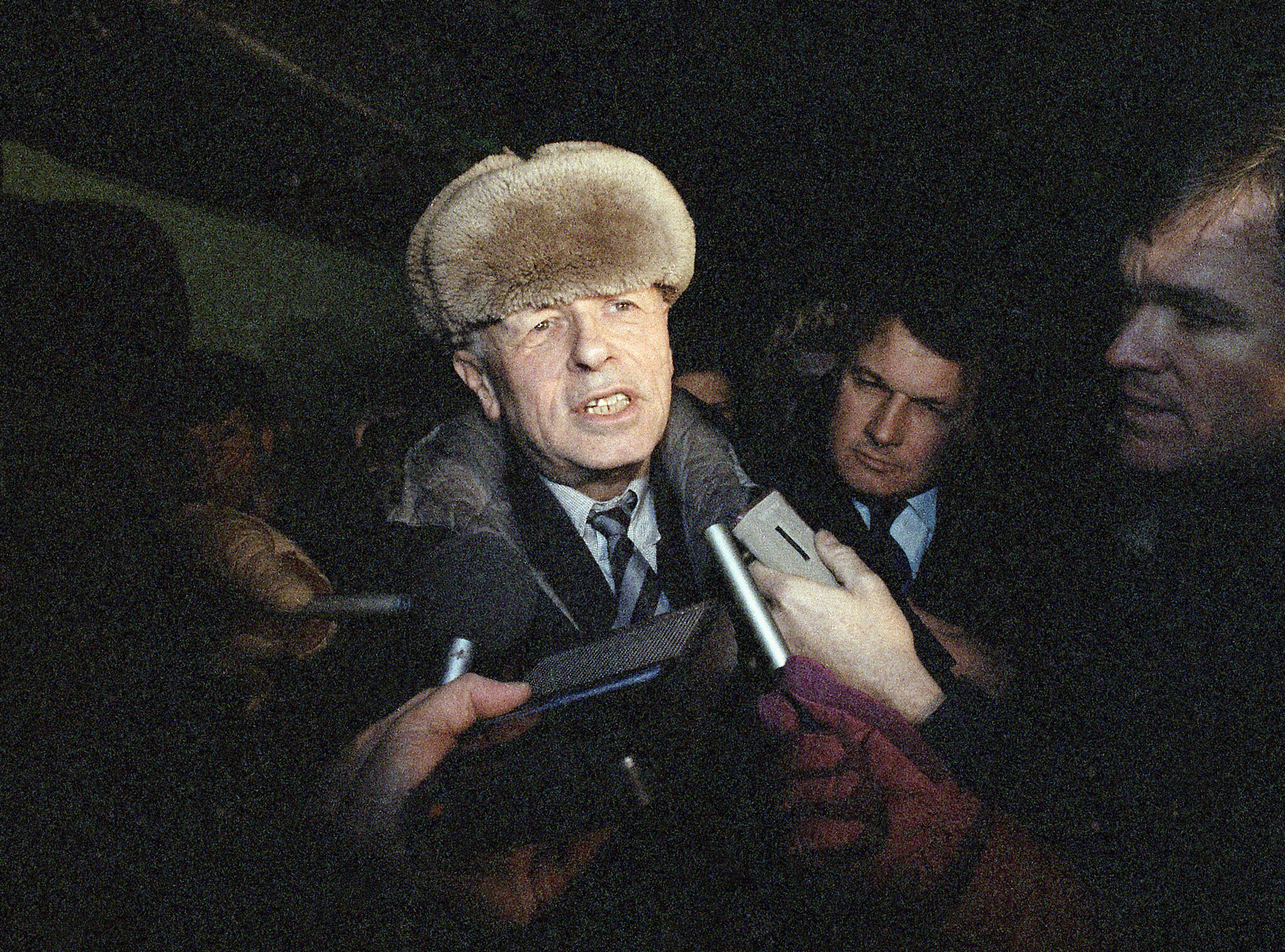
Soviet dissident Andrei Sakharov arrives at Moscow train station Tuesday, Dec. 23, 1986. This was Sakharov’s first time in Moscow in nearly seven years. (AP Photo)
You know, today we still don’t have statistics to tell us how many Jews died [in the Soviet era] and what exactly happened to them — how many of them were killed, how many of them were taken away, exiled. How many of them became dissidents… Take the case of Andrei Sakharov, who managed to tell his story to the world. But how many Jews did not manage to do that? We do not have this history.
And you’re trying to find this history.
We have to.
I want to ask you a little bit about your personal Jewish history — your background, your family.
On my father’s side, my grandfather and his three brothers were all on the front [in the Red Army] in World War II and only he returned.
My grandmother was living in Kryvi Rih, in a part of south Ukraine which was occupied by the fascists. They killed all the Jews who remained. She had left in an evacuation of Jews to Almaty, Kazakhstan. Many people fled to there. She studied there. She’s a teacher. After World War II, she came back. That’s where I was born.
What kind of Jewish home was yours? Orthodox, not at all Orthodox?
Not Orthodox. An ordinary Soviet Jewish family. Most Jewish families in the Soviet Union were not religious. You know religion didn’t exist in the Soviet state as such.
Of course, I believe in God. But I speak with him only in those moments which are personal for me
Is religion important to you now?
(Pauses.) I had one attitude when I was a boy, and another now. I never speak about religion and I never speak about God because I have my own personal opinion about it. Of course, I believe in God. But I speak with him only in those moments which are personal for me, and important, and where I feel comfortable in those places.
The Jews managed to build a country, to elevate it, without anything except people and brains
What do you think of Israel, what are your feelings for Israel?
I respect Israel as hugely special, especially given all the sensitivities around it — the unity of Israel, the unity of the nation. The Jews managed to build a country, to elevate it, without anything except people and brains. The Jewish people in Israel is a unique people, a unique population. It has economic strength. There are many countries in the world that can protect themselves, but Israel, such a small country, can not only protect itself, but facing external threats, can respond.
It’s a united, strong, powerful people. And despite being under the threat of war, they enjoy every day. I’ve seen it.
You became president, in large part, to try to fight corruption.
That’s right.
How is it going?
It’s complicated. First, we’re reforming the state prosecution. Several thousand prosecutors were fired. Several hundred prosecutors are being required to re-qualify — about a six-month process.
Second, we are now legislating to reform the security services. Again, it’s a long process.
When we’ll have these strong institutions, we will stop all the corruption
We appointed a new head of the state investigation bureau, and she will reform the hierarchy. We introduced an anti-corruption court in September. There are many problems with it, as with the entire judicial process in Ukraine. It’s a long battle. But when we’ll have these strong institutions, we will stop all the corruption.
In Israel, Netanyahu is fighting corruption charges. If you are charged in Ukraine with corruption, do you have to step down, or can you carry on [as he is trying to]?
(Laughs.) Let’s start at the beginning: Why do you think I will be charged with corruption?
I hope not.
Or maybe you know something I don’t know. (Laughs.)
If I was to be charged with some genuine corruption — not some kind of political thing — something that really happened, then according to the constitution, I would have to step down.
Ukraine got drawn into the controversy surrounding President Trump…
I love all the questions about the USA and Trump. (Laughs.)
In this photo from September 25, 2019, US President Donald Trump and Ukrainian President Volodymyr Zelensky meet on the sidelines of the United Nations General Assembly in New York. (Saul Loeb/AFP)
What can you tell me? Did you do anything illegal; were you asked to do anything illegal?
I didn’t do anything illegal. I had phone calls with the president of the United States. As the president of Ukraine, I did what I could do as the president of Ukraine to have a good, reliable and strong relationship with one of our strategic partners, the United States of America.
I used to behave like this, and I still behave like this — to avoid any involvement or engagement of Ukraine, or of every single Ukrainian, in the political situation of the United States of America. It is their country, and they treat their country the way they like it. And I do not want them to involve us in any case related to their internal politics.
Finally, your story: You’re an actor playing the president in a TV show.
Yeah.
And then you become the president. How did this happen? It’s unprecedented, extraordinary.
It has never happened before in the world, you’re right.
The Ukrainian people wanted this. They had the desire to change everything, not merely to change one group of politicians for another. They wanted to change the situation absolutely. And they did it.
Keep these in mind as you contemplate the direction of the American government over the past 50 years and especially since the Obama election.
The Goals of Communism
(as read into the congressional record January 10, 1963, from "The Naked Communist" by Cleon Skousen)
1. U.S. acceptance of coexistence as the only alternative to atomic war.
2. U.S. willingness to capitulate in preference to engaging in atomic war.
3. Develop the illusion that total disarmament of the United States would be a demonstration of moral strength.
4. Permit free trade between all nations regardless of Communist affiliation and regardless of whether or not items could be used for war.
5. Extension of long-term loans to Russia and Soviet satellites.
6. Provide American aid to all nations regardless of Communist domination.
7. Grant recognition of Red China. Admission of Red China to the U.N.
8. Set up East and West Germany as separate states in spite of Khrushchev's promise in 1955 to settle the German question by free elections under supervision of the U.N.
9. Prolong the conferences to ban atomic tests because the United States has agreed to suspend tests as long as negotiations are in progress.
10. Allow all Soviet satellites individual representation in the U.N.
11. Promote the U.N. as the only hope for mankind. If its charter is rewritten, demand that it be set up as a one-world government with its own independent armed forces. (Some Communist leaders believe the world can be taken over as easily by the U.N. as by Moscow. Sometimes these two centers compete with each other as they are now doing in the Congo.)
12. Resist any attempt to outlaw the Communist Party.
13. Do away with all loyalty oaths.
14. Continue giving Russia access to the U.S. Patent Office.
15. Capture one or both of the political parties in the United States.
16. Use technical decisions of the courts to weaken basic American institutions by claiming their activities violate civil rights.
17. Get control of the schools. Use them as transmission belts for socialism and current Communist propaganda. Soften the curriculum. Get control of teachers' associations. Put the party line in textbooks.
18. Gain control of all student newspapers.
19. Use student riots to foment public protests against programs or organizations which are under Communist attack.
20. Infiltrate the press. Get control of book-review assignments, editorial writing, policymaking positions.
21. Gain control of key positions in radio, TV, and motion pictures.
22. Continue discrediting American culture by degrading all forms of artistic expression. An American Communist cell was told to "eliminate all good sculpture from parks and buildings, substitute shapeless, awkward and meaningless forms."
23. Control art critics and directors of art museums. "Our plan is to promote ugliness, repulsive, meaningless art."
24. Eliminate all laws governing obscenity by calling them "censorship" and a violation of free speech and free press.
25. Break down cultural standards of morality by promoting pornography and obscenity in books, magazines, motion pictures, radio, and TV.
26. Present homosexuality, degeneracy and promiscuity as "normal, natural, healthy."
27. Infiltrate the churches and replace revealed religion with "social" religion. Discredit the Bible and emphasize the need for intellectual maturity which does not need a "religious crutch."
28. Eliminate prayer or any phase of religious expression in the schools on the ground that it violates the principle of "separation of church and state."
29. Discredit the American Constitution by calling it inadequate, old-fashioned, out of step with modern needs, a hindrance to cooperation between nations on a worldwide basis.
30. Discredit the American Founding Fathers. Present them as selfish aristocrats who had no concern for the "common man."
31. Belittle all forms of American culture and discourage the teaching of American history on the ground that it was only a minor part of the "big picture." Give more emphasis to Russian history since the Communists took over.
32. Support any socialist movement to give centralized control over any part of the culture--education, social agencies, welfare programs, mental health clinics, etc.
33. Eliminate all laws or procedures which interfere with the operation of the Communist apparatus.
34. Eliminate the House Committee on Un-American Activities.
35. Discredit and eventually dismantle the FBI.
36. Infiltrate and gain control of more unions.
37. Infiltrate and gain control of big business.
38. Transfer some of the powers of arrest from the police to social agencies. Treat all behavioral problems as psychiatric disorders which no one but psychiatrists can understand.
39. Dominate the psychiatric profession and use mental health laws as a means of gaining coercive control over those who oppose Communist goals.
40. Discredit the family as an institution. Encourage promiscuity and easy divorce.
41. Emphasize the need to raise children away from the negative influence of parents. Attribute prejudices, mental blocks and retarding of children to suppressive influence of parents.
42. Create the impression that violence and insurrection are legitimate aspects of the American tradition; that students and special-interest groups should rise up and use united force to solve economic, political or social problems.
43. Overthrow all colonial governments before native populations are ready for self-government.
44. Internationalize the Panama Canal.
45. Repeal the Connally reservation so the United States cannot prevent the World Court from seizing jurisdiction over nations and individuals alike.
 AFP
AFP




 Posts
Posts

