
Suspected ISIS Bomber Lived In UK Taxpayer Hotel After Small Boat Arrival
Authored by Steve Watson via Modernity.news,
Reports have emerged of a suspected ISIS operative and alleged rapist being housed in a taxpayer-funded hotel following his illegal arrival in the UK.
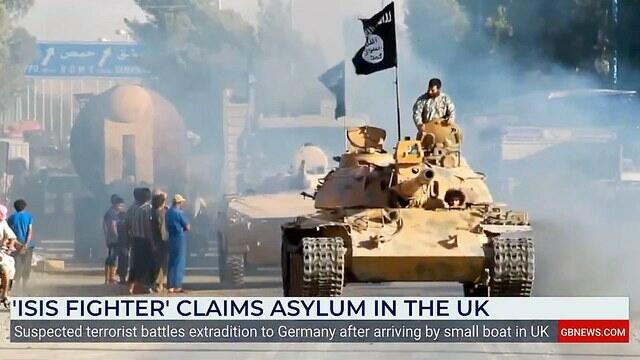
"Britain is getting the dregs," GB News presenter Patrick Christys urged, reacting to the case of an Iraqi man who crossed the Channel, gave a false name, and lived undetected for weeks before German authorities tipped off the UK National Crime Agency.
Layth Ibrahim Mohammed, 39, is accused of links to Islamic State in Iraq during the 2010s, including making booby-trapped bombs and teaching the children of ISIS fighters at a school run by the group.
'Britain is getting the dregs.'
— GB News (@GBNEWS) October 13, 2026
@PatrickChristys is disgusted after a suspected ISIS fighter and rapist has been found living in a migrant hotel. https://t.co/JTpccqb2Pf
He arrived by small boat from France in August 2025, claimed asylum, and was placed in a Home Office hotel in Oldham, Greater Manchester. NCA officers arrested him there in October 2025, but only after Germany flagged his background.
He is now fighting extradition to face terrorism-related charges and an allegation of raping a German woman. The allegations have not been established in court.
His lawyer, Joanna Curtis, told a Westminster hearing that extradition would be inhumane because "he has significant mental health issues, including severe anxiety, as well as depression." She linked the trauma to a bomb attack in Iraq that killed his son and even laughably cited symptoms of "pins and needles."
This is not an isolated failure. Earlier this year, another ISIS-linked man reached Britain the same way after social media reassured him the UK takes everyone.
Mohammed Yaseen, previously convicted in Germany for ISIS membership, attended beheadings and floggings in Iraq, then crossed after watching TikTok videos claiming Britain "accepts everyone and respects human rights."
He gave false details, was processed, and only later identified by biometrics. Prosecutors described him as high risk.
The pattern is clear: people with documented extremist histories clear the Channel, destroy or withhold documents, and enter the asylum system before any meaningful check occurs.
The scale makes individual cases inevitable. Small-boat arrivals since Labour took office have already surpassed the strength of the British Army.
More than 83,000 crossed between July 2024 and September 2026, exceeding the Army's roughly 83,000 regulars and outnumbering the Navy and RAF combined.
Total arrivals since 2018 top 200,000. The vast majority are military-aged men. Shadow Home Secretary Chris Philp called it "completely bonkers," noting Labour had "let an entire army-sized population cross the Channel illegally."
Reform leader Nigel Farage has repeatedly warned the crossings represent a national security emergency.
At this week's Prime Minister's Questions he pressed Andy Burnham directly: "Every week there are young, unidentified males from Iran coming into this country, some of whom pose a genuine security threat to our nation. Is it not time the Government recognises that what is going on in the English Channel is a national security emergency?"
Burnham replied that crossings were "coming down" and removals were up, while acknowledging more needed to be done. Farage has described the situation as an "out-of-control disaster."
The numbers are not sustainable on any measure. Settlement grants alone have reached one every minute.
Home Office data show 140,000 grants of settlement or citizenship in a single three-month period. Asylum system costs hit £4.3 billion in one year. Fewer than 5 percent of Channel arrivals since 2018 have been removed.
Foreign nationals are disproportionately represented in certain offence categories, including sexual offences. The system continues to grant status and benefits while the backlog of appeals grows.
Much of this rests on claims that officials themselves describe as fraudulent. A Home Office caseworker with years of experience processing thousands of applications stated that "at best 1 per cent of asylum seekers are genuine."
Identical "package claims," recycled stories, and fabricated evidence are routine. Networks coach applicants for thousands of pounds. Staff are instructed to treat claimants as "customers." Modern slavery claims are nearly impossible to disprove and routinely succeed.
The result is a system that rewards illegal entry while genuine refugees and British citizens compete for housing, healthcare, and public resources.
Local authorities have responded to public concern by locking down entire towns rather than stopping the boats. In Gosport, police used multiple public-order powers to restrict residents, ban face coverings, and disperse gatherings so that hundreds of unvetted men arriving on mega-dinghies could be moved in luxury coaches.
Anti-migrant protesters faced arrests; an activist who slashed a dinghy was remanded in custody for months. The contrast with the rapid bail of terrorism suspects elsewhere is stark. Residents are treated as the problem while arrivals with unknown backgrounds are protected and housed.
These cases - ISIS suspects in hotels, arrivals outnumbering the Army, a system insiders call a scam, and towns placed under lockdown to facilitate landings - are not separate scandals. They are the predictable outcome of a policy that prioritises processing over screening, accommodation over removal, and international obligations over the security of the existing population.
Farage has called for the Royal Navy in the Channel and a pause on asylum claims. Successive governments have preferred payments to France and further hotel contracts.
The result is visible on the Kent coast, in Oldham hotels, and in the courtrooms where extradition is contested on mental-health grounds after the individual has already lived at public expense.
Britain cannot indefinitely absorb unvetted military-aged men, some with documented terror links, while maintaining public safety, housing stock, and basic services.
British society rests on a basic social contract: the state collects taxes and enforces laws in return for protecting the people who already live here. That bargain is rapidly fraying in real time.
The patience that has sustained decades of mass illegal entry is not unlimited. Once enough people conclude the state will not prioritise their safety, their housing, or their taxes, the remaining consent that keeps the system functioning quickly erodes. That is the edge the current policy has reached.


 Posts
Posts


No comments:
Post a Comment