Showing posts with label Religion. Show all posts

Monday, July 27, 2020

Can Lebanon be saved from clutches of Iran?

Hezbollah’s historical repression of Lebanese neutrality may be coming to an end

The patriarch of Lebanon’s Maronite Church Beshara Al-Rai joined a growing roster of Lebanese leaders who think that the main culprit behind the country’s free-falling economy is Hezbollah and its endless wars.
In a visit to President Michel Aoun, Al-Rai called for restoring regional neutrality, a policy the country used in the past, during which Lebanon saw its “golden years” between 1949 and 1969. Al-Rai also said that national defense should be the job of the Lebanese Army alone.
In a follow-up statement, Al-Rai said that Lebanon used to be “the hospital of the Arabs, the hotel of the Arabs, the tourism of the Arabs,” and that it was Lebanon’s neutrality that allowed it to play such roles.
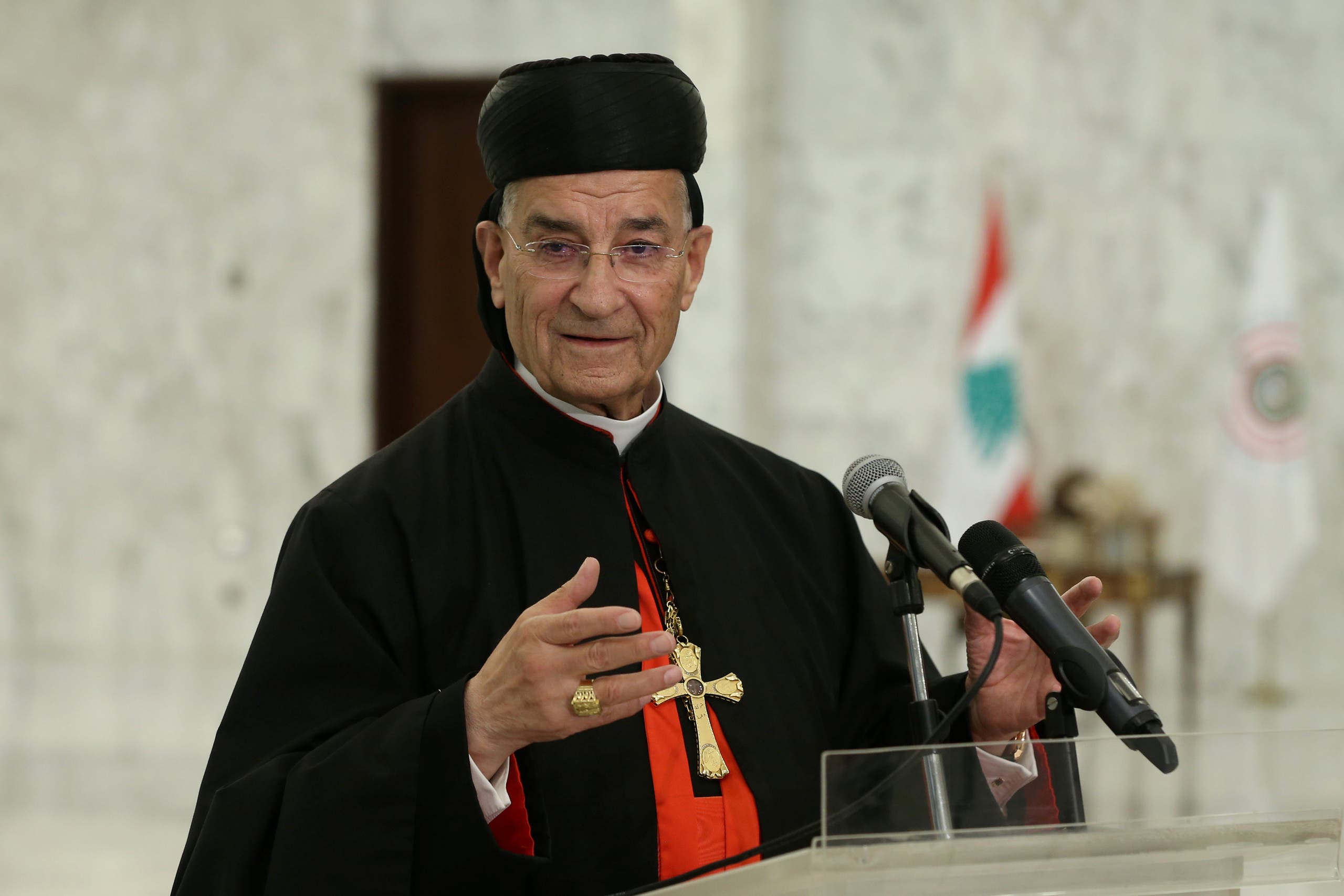
Lebanese Maronite Patriarch Bechara Boutros Al-Rai speaks after meeting with Lebanon's President Michel Aoun at the presidential palace in Baabda, Lebanon July 15, 2020. (Reuters)
“But when we joined alliances and [militias] and military engagements, we became completely isolated from the Arabs and the West, and we became alone, like a ship in a stormy sea.” The patriarch concluded that “neutrality is the source of national unity and stability, which leads to [economic] growth and prosperity.”
Hezbollah has repressed the debate over its arms and Lebanese neutrality ever since it lost its raison d’ĂȘtre when Israel withdrew from southern Lebanon in 2000. At first, the pro-Iranian militia tried to continue warring with Israel over a tiny strip of land known as Shebaa Farms whose ownership is claimed by Syria. But the narrative of “liberating the Shebaa Farms” never gained traction.
Realizing that Hezbollah had become an obstacle to economic growth, late Lebanese Prime Minister Rafic al-Hariri held rounds of talks with its chief Hassan Nasrallah. Al-Hariri offered Hezbollah a face-saving exit strategy that would have seen the militia transformed into a political group.
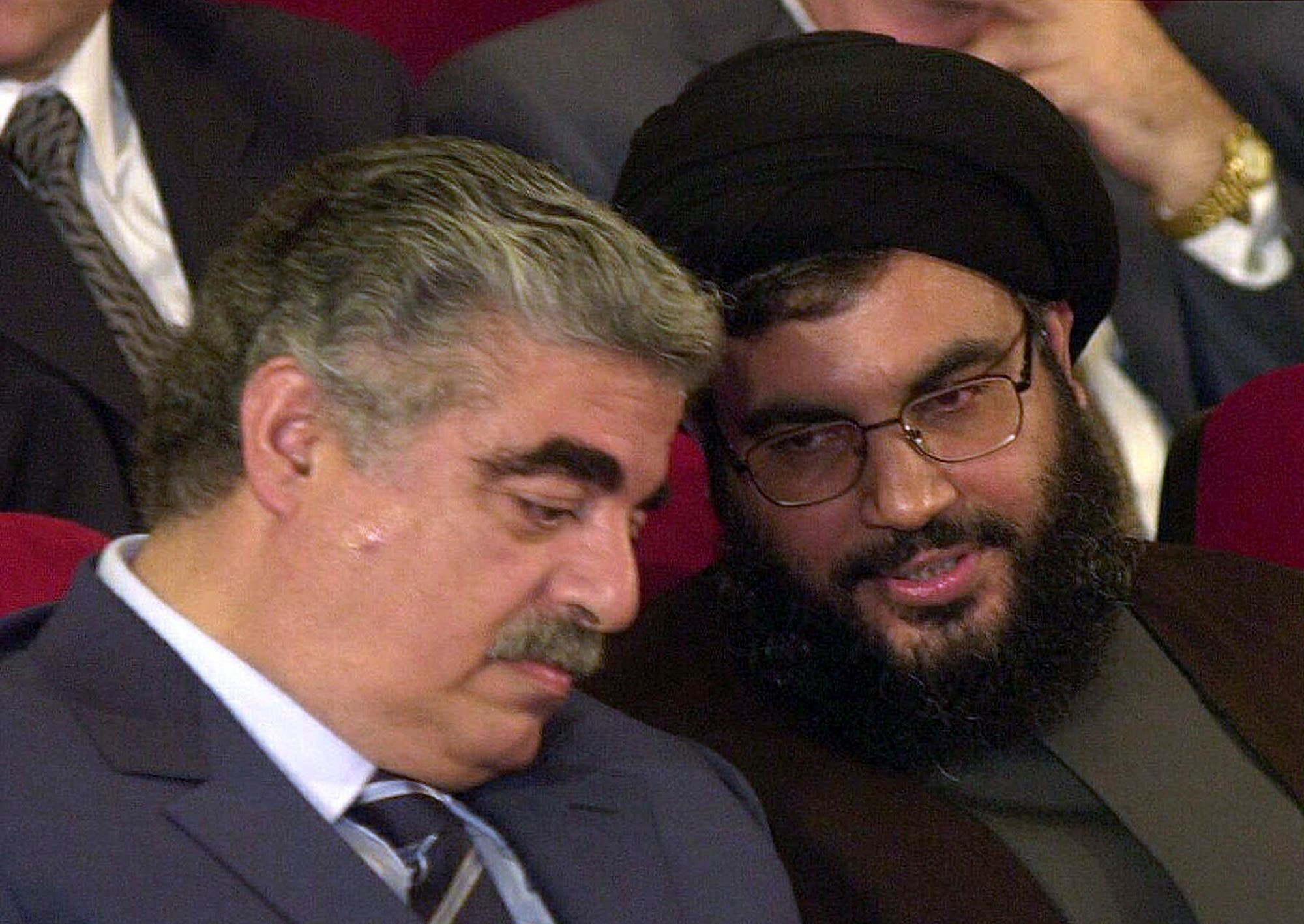
The late Lebanese Prime Minister Rafik Hariri, left, talks with Hezbollah leader Hassan Nasrallah, right, during an official ceremony on May 25, 2001 in Beirut. (File photo: AP)
When Hezbollah refused, Al-Hariri lobbied Arab and world capitals. The UN passed Security Council resolution 1559, which called for Hezbollah’s disarmament. Months later, Hariri was assassinated, and a UN special tribunal indicted Hezbollah operatives for the killing.
Al-Hariri’s death, however, did not end calls for Hezbollah’s disarmament, but only intensified them. A coalition of pro-Hariri Sunnis, Maronite Christians under Aoun and his rival Samir Geagea, and Druze under Walid Jumblatt, coalesced around Resolution1559, forcing Syrian President Bashar al-Assad to withdraw his forces from Lebanon, 29 years after having entered it.
Hezbollah, for its part, laid low, and pretended to join in the national unity. In reality, the militia lurked around waiting to break its opponent coalition.
Applying carrots and sticks, Hezbollah lured Aoun away and later helped make him president, while assassinations continued to take down national anti-Hezbollah figures. The party tried to renew its war credentials by starting what it called a defensively preemptive war with Israel in 2006, which resulted in so much destruction that, instead of winning regional and national support, Hezbollah almost lost its Shia base.
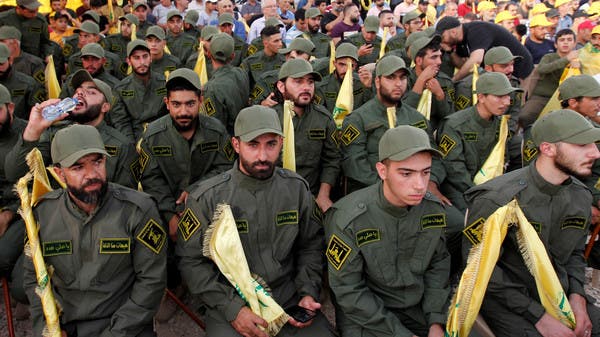
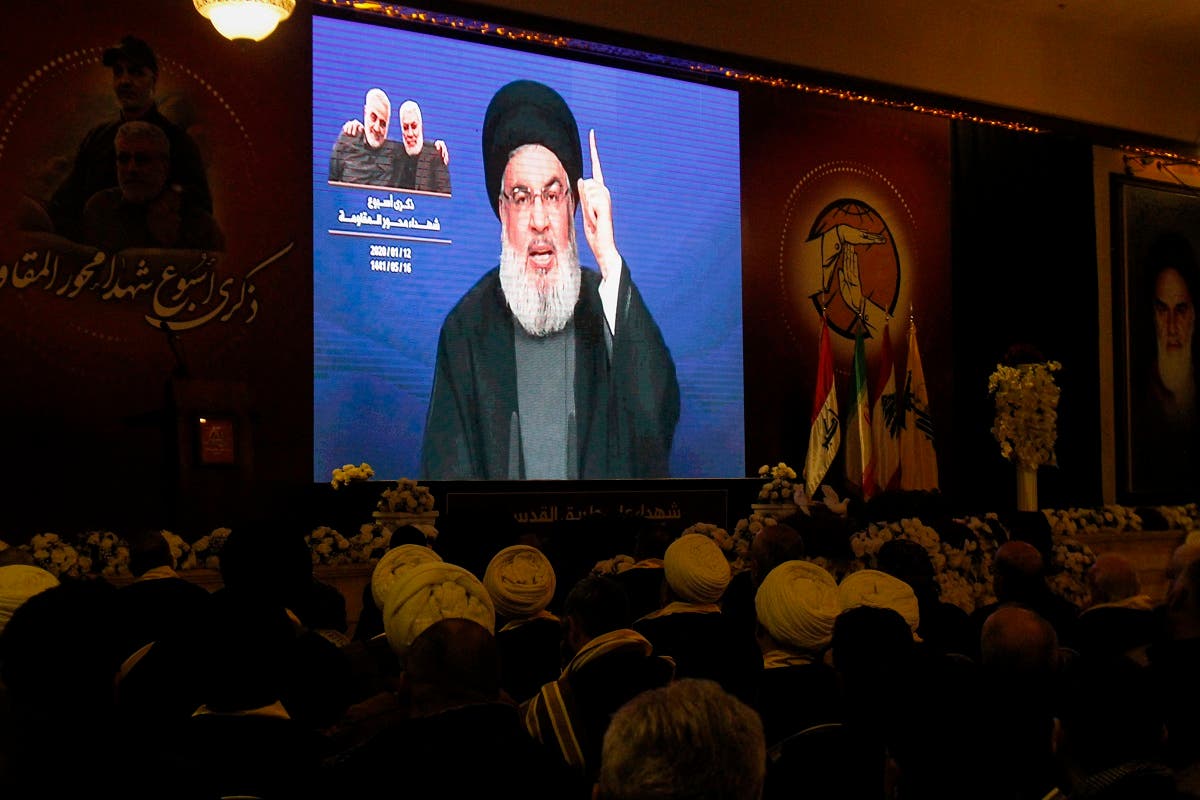
Hezbollah supporters watch as the group's leader Hasan Nasrallah delivers a speech on a screen in the southern Lebanese city of Nabatieh on January 12, 2020. (AFP)
Again, the coalition for disarming Hezbollah came to the rescue, holding indirect negotiations with Israel through the UN to end the war, and soliciting reconstruction money from friends of Lebanon. Gulf capitals proved especially generous in preventing a Lebanese economic collapse. Lebanon was set to implement Security Council resolution 1701, which Hezbollah had agreed to, a resolution that reaffirmed 1559 and called for UN-mediated talks with Israel and Syria to end border disputes and demarcate the borders.
But like always, Hezbollah reneged on what it had agreed to. Hence, with its majority, the coalition to disarm Hezbollah went for one last gasp: It ordered the army to dismantle the militia’s telecom network, perhaps as a prelude to disbanding the militia.
Hezbollah responded with brute force, sending its fighters to invade neighborhoods and villages, and killing many.
The terms to end Hezbollah’s mini civil war in 2008 stipulated, yet again, neutrality. Michel Suleiman, who was elected president by consensus, summoned the oligarchs and Hezbollah to agree on neutrality, and encoded the agreement in the Declaration of Baabda 2012. Next, Hezbollah went after Suleiman, slandering him until his term ended.
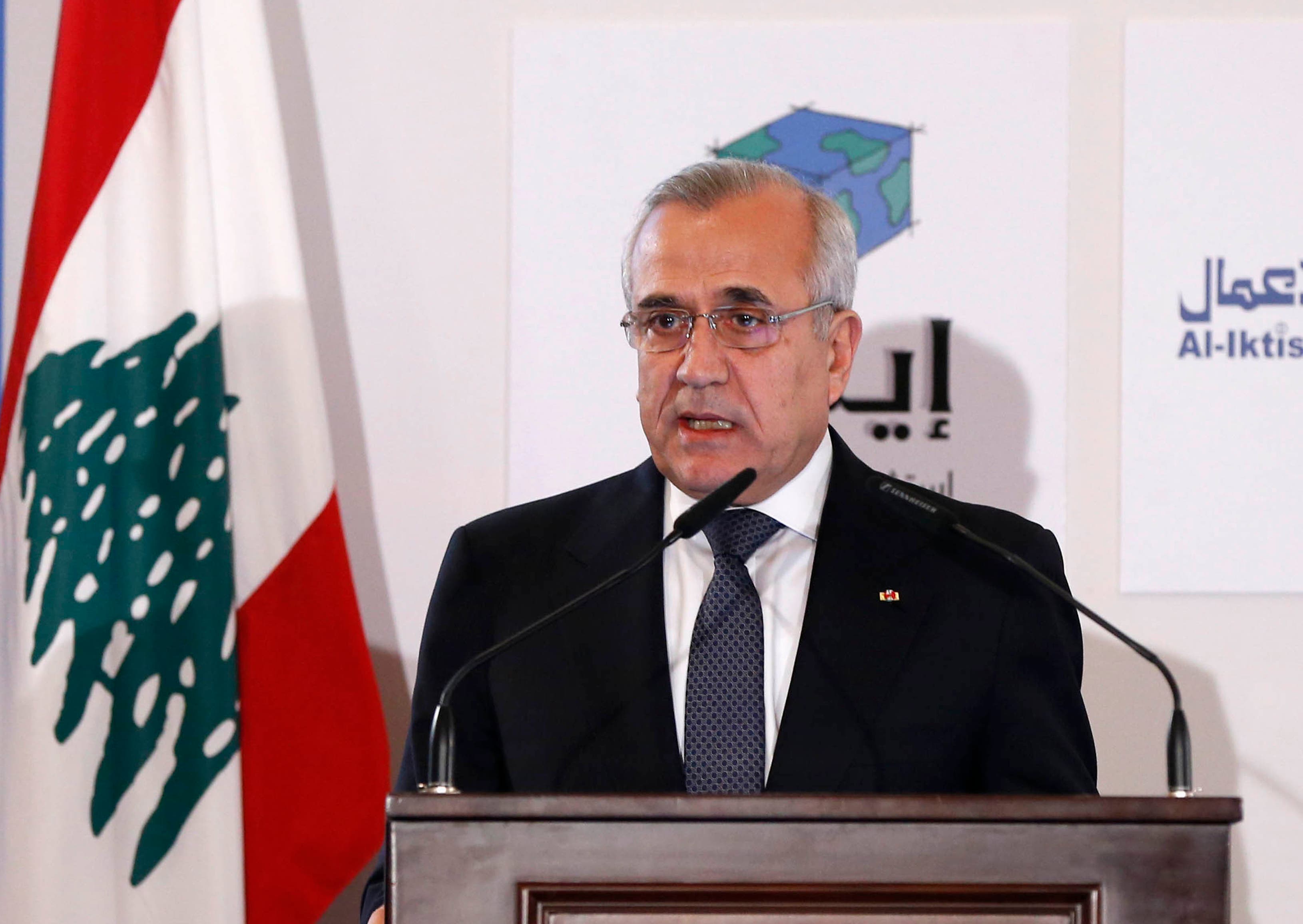
Lebanon's President Michel Suleiman speaks during the third Lebanon Economic Forum in Beirut March 8, 2014. (File photo: Reuters)
After Suleiman, Hezbollah was determined to install a loyalist president who would never call for disarmament or neutrality. Aoun obliged. But by controlling all levers of power, the world realized that Lebanon was now in Hezbollah’s pocket. The country thus lost its international friends. It’s economy started its decline.
A free-falling economy convinced Al-Rai, who had been on the fence, to join the chorus calling for Hezbollah’s disarmament and Lebanese neutrality. Al-Rai’s position surprised the pro-Iranian militia, whose early reaction included defaming the patriarch.
But the head of the Maronite Church is a heavyweight in Lebanese politics, and his call for neutrality started snowballing.
Hezbollah is on the back foot again, and will probably revert to its usual playbook: Try to divide and conquer its opponents with violence and promises of senior state jobs. Whether the party succeeds in repressing calls for its disarmament, like it did in the past, is anybody’s guess.
The only difference today is that the party will have to play its game unlike anytime before: Against the background of an unfolding Lebanese famine.
________________
Hussain Abdul-Hussain is an Iraqi-Lebanese columnist and writer. He is the Washington bureau chief of Kuwaiti daily al-Rai and a former visiting fellow at Chatham House in London. He tweets @hahussain.
Last Update: Wednesday, 22 July 2020 KSA 21:57 - GMT 18:57
Disclaimer: Views expressed by writers in this section are their own and do not reflect Al Arabiya English's point-of-view.

Sunday, July 12, 2020

Funny that there is no mention of the fires origin

Fire ravages 249-year-old Spanish mission in Southern California


The San Gabriel Mission was founded in 1771 by Franciscan priest Junipero Serra, who has become a flashpoint for activists denouncing colonialism and systemic racism.
Image:
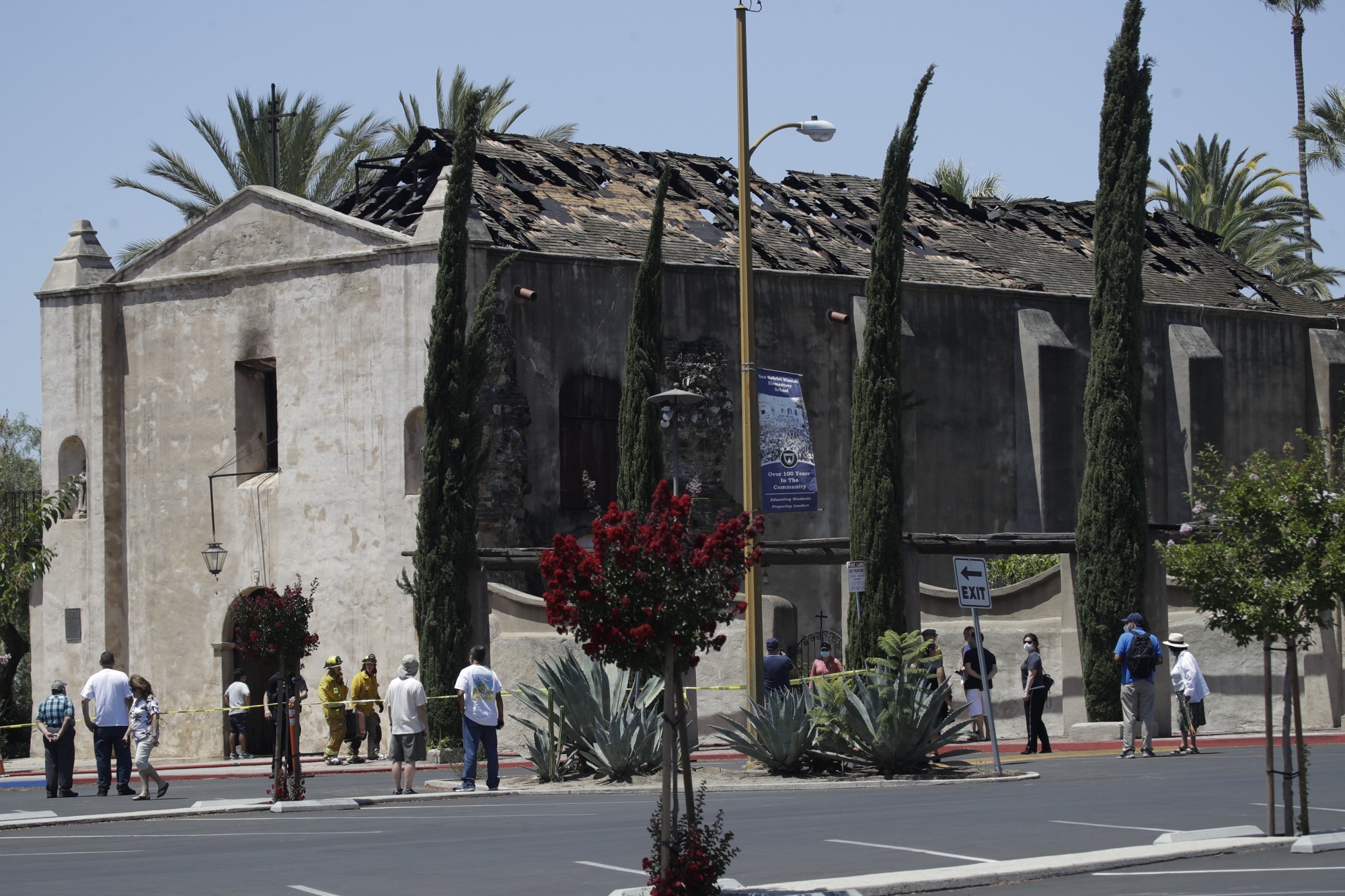
Onlookers stand outside the San Gabriel Mission after a Saturday morning fire in San Gabriel, California. The fire destroyed the rooftop and most of the interior of the 249-year-old church that was undergoing renovation.Marcio Jose Sanchez / AP
By Alicia Victoria Lozano
A nearly 250-year-old Spanish mission in California containing artifacts dating back to the late 1700s was ravaged by fire early Saturday morning.
The roof of the Roman Catholic church at the San Gabriel Mission and much of its interior was destroyed. Capt. Antonio Negrete, public information officer for the San Gabriel Fire Department, called the scene "heartbreaking," NBC Los Angeles reported.
Jose Gomez, archbishop of Los Angeles, tweeted photos of the damage Saturday, asking for prayers as the mission begins its slow path to recovery.
No injuries were reported, and fire officials were trying to determine what caused the fire.
Founded in 1771 by Franciscan priest Junipero Serra, from Spain, the San Gabriel Mission is considered a historical landmark for many faithful in Southern California.
But Serra's legacy remains a flashpoint for many Native Americans and Latinos who condemn the colonization and brutalization of Indigenous populations in the region.
Last month, demonstrators toppled Serra's statue in downtown Los Angeles. In 2016, a statue of the priest in Monterey was beheadedand a similar incident occurred the previous year in Carmel.
Earlier this year, following widespread protests against systemic racism, the San Gabriel Mission removed his statue from the front of the church to a less public part of its campus.
"Whereas ... the historical truth is that St. Serra repeatedly pressed the Spanish authorities for better treatment of the Native American community," the mission said in a statement, "we recognize and understand that for some he has become a symbol of the dehumanization of the Native American community."
Despite Serra's checkered legacy, many residents consider the San Gabriel Mission an architectural marvel.
The altar, which was not damaged in the fire, was handcrafted in Mexico City and brought to California in the 1790s. Six wooden statues, which were hand-carved in Spain and brought to the U.S. in 1791, were restored in 1987 after an earthquake.

Living in an Islamic State.

Sudan scraps apostasy law and alcohol ban for non-Muslims

  • 1 hour ago
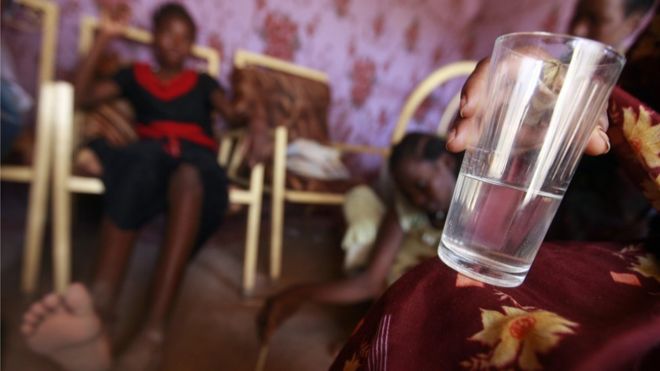
Sudanese Zakia (R), 23-years-old, who sells alcohol, holds a cup of her brew at her home in Halfaya near Khartoum on June 28, 2008.Image copyrightAFP
Image captionSudanese drinkers have had to secretly make their own alcohol until now
After more than 30 years of Islamist rule, Sudan has outlined wide-reaching reforms including allowing non-Muslims to drink alcohol, and scrapping the apostasy law and public flogging. 
"We [will] drop all the laws violating the human rights in Sudan," Justice Minister Nasredeen Abdulbari said.
A raft of new laws were passed last week but this is the first public explanation of their contents.
Sudan has also banned female genital mutilation (FGM).
Under the new laws, women no longer need permission from a male relative to travel with their children.
The reforms come after long-time ruler Omar al-Bashir was ousted last year following massive street protests.
The current government is an uneasy mixture of those groups which ousted Mr Bashir and his former allies in the military, who ultimately staged a coup against him.

What is the new law on alcohol?

Non-Muslims are now allowed to consume alcohol in private, however the ban on Muslim drinking remains, Mr Abdulbari told state TV.
Non-Muslims could still be punished if they are caught drinking with Muslims, the Sudan Tribune reports him as saying.
He explained that the government was trying to safeguard the rights of the country's non-Muslims, who constitute an estimated 3% of the population.They are now allowed to drink, import and sell alcohol.
"We are keen to demolish any kind of discrimination that was enacted by the old regime and to move toward equality of citizenship and a democratic transformation," he said.
The laws were initially approved in April but the BBC's Mohamed Osman in Khartoum says they have only now taken effect.

What about the other changes?

Until now, anyone convicted of renouncing Islam, or apostasy, could face the death penalty.
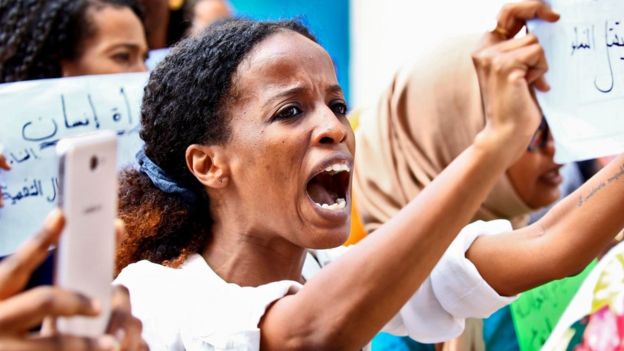
Women chant slogans during a demonstration calling for the repeal of family law in Sudan, on the occasion of International Women's Day, outside the Justice Ministry headquarters in the capital Khartoum on March 8, 2020.Image copyrightAFP
Image captionWomen's groups have been campaigning for an easing of various Sudanese laws
The best known case was of Meriam Yehya Ibrahim Ishag, a pregnant woman who was sentenced to be hanged after she married a Christian man in 2014. 
She managed to flee the country but the apostasy law - targeting those deemed to have abandoned Islam - has remained on the statute books until now.
The declaration that someone was an apostate was "a threat to the security and safety of society," Mr Abdulbari said.
Under Mr Bashir, the morality police would often carry out public flogging for various misdemeanours but Mr Abdulbari said this punishment had now been abolished.
The latest changes come after a restrictive public order law that controlled how women acted and dressed in public was repealed in November.
The imposition of strict Islamist laws in the 1980s was a key factor in the long-running civil war which eventually led to independence for South Sudan, where the majority of people are Christian or follow traditional religions.

Tuesday, June 23, 2020

Berman refused to criticize de Blasio over social distancing rules for religious gatherings, not protests: report


Geoffrey Berman, the former U.S. attorney for the Southern District of New York, refused to sign a letter criticizing New York Mayor Bill de Blasio (D) for okaying protests but not religious gatherings a day before Attorney General William Barr announced he would be replaced, The Wall Street Journal reported Monday.

Justice Department supervisors asked both Berman and Eric Dreiband, the head of the agency's civil rights division, to sign the letter, but after a brief back-and-forth, Berman objected to its characterization of de Blasio’s handling of the protests as a double standard and said signing the letter would hurt relations between the city and his office, the newspaper reported, citing people familiar with the matter. The letter was never sent.
It is unclear whether the episode contributed to the Justice Department’s removal of Berman.
The agency announced late Friday that Berman would step down as U.S. attorney, after which Berman denied resigning, leading Barr to announce that President Trump had fired him.
The people familiar with the matter said Barr had no direct role in discussions over the letter with Berman. Justice Department officials and Barr associates denied Berman, who was reported to be investigating close Trump associates including Rudy Giuliani, was removed over any single incident.
However, two people familiar with the matter told the Journal that the incident compounded Barr’s existing frustration with Berman. 
These sources told the Journal that Barr already viewed Berman as stubborn and difficult to work with. Barr had already been in search of a replacement for Berman and acted once he learned that Securities and Exchange Commission Chairman Jay Clayton was interested in the position.
The Hill has reached out to the Justice Department for comment.  

Sunday, May 17, 2020

Democrat tyrants will not relinquish power to the people: Mayor’s Office Bans Parking On Ravenswood Streets Near Church That Plans To Hold Sunday Services


CHICAGO (CBS) — People heading to Philadelphia Romanian Church in Ravenswood on Sunday might have a hard time finding a parking spot.
Ald. Matt Martin (47th) said no-parking signs have been put up for several surrounding blocks near the church at 1713 W. Sunnyside Ave. The signs have been mounted on Sunnyside Avenue between Greenview and Ravenswood avenues, and Paulina Street between Lawrence and Berteau avenues, Martin’s office said.
The parking ban is in effect from 7 a.m. to 9 p.m. Sunday, according to Martin’s office.
Martin said the signs were put up at the direction of the Mayor’s office, in response to plans by the church to hold one or more religious services – in violation of the stay-at-home order for the coronavirus pandemic.
The church’s pastor, the Rev. Florin T. Cimpean, took aim at Mayor Lori Lightfoot in response to the parking ban.
“The police called me to inform us that they were asked by the mayor to put up the signs. It is completely ridiculous,” Cimpean said in the statement. “The mayor is inciting hate against the church which is very sad. A lot of our members risked their lives to escape Communism, only to find it germinating in 2020 under mayor Lightfoot in Chicago.”
Cimpean continued: “We prayed for the mayor and the governor almost every evening since March 19. We will continue to pray for them. Yet, we are also aware of our constitutional rights. Their effort to intimidate us will make us stronger.”

Tuesday, January 21, 2020

San Antonio has spent more than $300K trying to keep Chick-fil-A out of its airport...more leftist bigotry


And the fight isn't over


The city of San Antonio has spent more than $300,000 in its effort to prevent a Chick-fil-A restaurant from opening in its airport because of the company's alleged "legacy of anti-LGBTQ behavior," according to KENS-TV.
Since the city council voted to exclude Chick-fil-A from airport plans last March, the city has been hit with two lawsuits and an investigation by the state's attorney general.
In response to the original decision to ban Chick-fil-A, Texas lawmakers passed a "Save Chick-fil-A" law, which "prohibits government entities from taking "adverse actions" against businesses or individuals because of their religious beliefs or moral convictions," according to NBC News.
Texas Gov. Greg Abbott, in addition to signing the "Save Chick-fil-A" bill, supported state attorney general Ken Paxton in opening an investigationinto potential religious discrimination by the San Antonio City Council.
"The Constitution's protection of religious liberty is somehow even better than Chick-fil-A's chicken," Paxton wrote in a letter to the council. "Unfortunately, I have serious concerns that both are under assault at the San Antonio airport.
At issue is Chick-fil-A's Christian principles, which led it to donate to organizations that are deemed by some to be anti-LGBTQ, such as the Salvation Army or the Fellowship of Christian Athletes.
Chick-fil-A recently ended its support for the groups in question, sparking criticism from supporters that the company was caving in to liberal demands and abandoning Christian organizations.
CEO Dan Cathy later expressed regret that the move was interpreted as discrediting Christian organizations, and claimed that the company was not abandoning its long-held values.
"We understand how some thought we were abandoning our longstanding support of faith-based organizations," Cathy wrote in a letter. "We inadvertently discredited several outstanding organizations that have effectively served communities for years. Some also questioned if our commitment to our Corporate Purpose was waning. Let me state unequivocally: It is not."

Friday, January 17, 2020

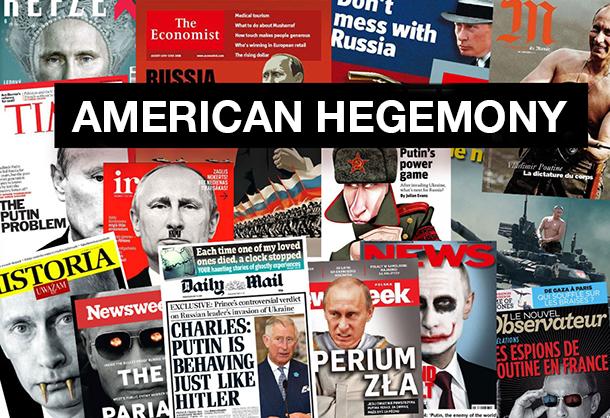
Western Media Coverage Of Russia As An Exercise In Propaganda


The notion of “fake news” has entered our vocabulary as a pejorative term for dissemination of bogus information, usually by social media, sometimes by traditional print and electronic channels which happen to hold positions contradicting the tenets of our conventional wisdom, i.e., liberal democracy. The term has been applied to Russian state owned media such as RT to justify denying such outlets normal journalistic credentials and privileges.
In this essay, I will employ the more traditional term propaganda, which I take to mean the manipulation of information which may or may not be factually true in order to achieve objectives of denigrating rivals for influence and power in the world, and in particular for denigrating Russia and the “Putin regime.”
The working tools of such propaganda are
  • tendentious determination of what constitutes news, which build on the inherent predisposition of journalism to feature the negative and omit the positive from daily reporting while they carry this predisposition to preposterous lengths
  • the abandonment of journalism’s traditional “intermediation,” meaning provision of necessary context to make sense of the facts set out in the body of a news report. In this regard, the propagandistic journalist does not deliver the essential element of paid-for journalism which should distinguish it from free “fake news” on social media and on the internet more broadly
  • silence, meaning underreporting or zero reporting of inconvenient news which contradicts the conventional wisdom or might prompt the reader-viewer to think for himself or herself. As a colleague and comrade in arms, professor Steve Cohen of Princeton and NYU, has said in his latest book War with Russia?: the century old motto of The New York Times “All the news that’s fit to print” has in our day turned into “All the news that fits.”
Demonstrations of the arguments I present here could easily fill a book if not a library shelf. However, I think for purposes of this essay, it suffices to adduce several examples of the three violations of professional journalism giving us a constant stream of propaganda about Russia and its political leadership by offering a few reports drawn from the very cream of our print and electronic media.
In particular, I have chosen as markers the Financial Times and the BBC. The use of propaganda methods in their coverage of Russia is all the more telling and damaging, given that in a great many domains these channels otherwise represent some of the highest quality standards to be found in reporting anywhere today and consequently enjoy the respect of their subscribers and visitors, who little suspect they could be so prejudicial in their coverage of select domains like Russia.
*  *  *
As 2019 drew to a close, many of our media outlets drew attention to two Russia-related anniversaries: the just celebrated thirtieth anniversary of the fall of the Berlin Wall with the retreat of Soviet armed forces from Eastern Europe that it touched off; and the soon to be celebrated twentieth year of Vladimir Putin’s hold on power in the Kremlin. Both subjects may be fairly called news worthy and so fully correspond to traditional journalistic values. What has been exceptional and unacceptable has come in the second category of violations listed above – lack of context.
Starting in October 2019, the BBC’s Moscow correspondent Steve Rosenberg did several programs dedicated to the fall of the Berlin Wall. During the Christmas to New Year’s period, the BBC aired one program which consisted of two parts. In the first half, Rosenberg considered the impact of the withdrawal of Russian forces from East Germany on the Russians themselves and interviewed the former chief of those forces, who explained at length how they “came home” to shocking living conditions in the provinces, how they were abandoned to their fate by their own government. The tone of the reporting was sympathetic to Russians’ hardships and it was good that their side of the story from the ground up was given the microphone. What implied criticism there was of the powers that be came from a patriotic source. However, the second half of the program was turned over to a certain Lydia Shevtsova, a very outspoken Putin-hater, formerly with the Carnegie Center Moscow, till she was finally booted out and moved to a more congenial and supportive think tank, Chatham House, in London, where her anti-Russian vitriol is encouraged and disseminated by her co-author, ex-British ambassador to Moscow Sir Andrew Wood. Among the gem quotations which Shevtsova delivered was the claim that Russia under Putin is a declining power which is capable only of disrupting the world order, a spoiler not capable of any creative or productive contribution. Of course, Shevtsova has a right to her opinions, however the BBC had an obligation to its audience to explain exactly who the lady is and, if they wanted to practice fair play, to offer an alternative interpretation of what Vladimir Putin’s Russia stands for on the global stage today. They did not do either. The result was pure propaganda not news and analysis.
As for violations in the categories one and two above, a very good example arose following the recent publication of a study performed by the Levada Center public opinion polling organization in Moscow during October which showed that “53 per cent of 18-to-24 year-olds wanted to leave the country.” This was written about by many of our news peddlers, including FT. The decision to feature this factoid and use it to support claims that the Putin regime’ is a failure fits well with tendentiousness of our news coverage. Meanwhile, nearly all coverage of that study, including in the Financial Times, offered no contextual information whatsoever, when the context was begging to be told.
The article in FT which carried the Levada Center findings was published on 9 January as “Generation Putin: how young Russians view the only leader they’ve ever known.” The remarks on Levada followed directly on another statement begging for context: “Youth unemployment in Russia is more than three times the rate of the total population, according to 2018 data, compared with just twice the rate in 2000.”
First, as regards those 53% would-be “leavers,” one might ask: and so, why don’t they just leave? Russia today is truly a free country: anyone other than convicted felons who wants a passport can get it, and get it rather quickly. And thanks to the efforts of their remarkably hardworking Ministry of Foreign Affairs, most of the world welcomes Russian travelers without a visa requirement. But for that matter, getting a Schengen visa for the EU is not so complicated either.
However, those 53% are, in fact, not going anywhere. They are just sounding off about their youthful disgruntlement with a world created and run by their parents.
At the same time, as the Financial Times editorial board knows full well, young, middle-aged and even old have been leaving the Baltic States, Bulgaria, Romania and other former Soviet Bloc countries in droves, for the past thirty years up to the present day. That was the subject of an article published in the FT on the next day, 10 January 2020 under a title which speaks for itself: “Shrinking Europe.” The states I mentioned here have seen 25 and 30% loss of their population to citizens voting with their feet and departing the shrinking economies and personal prospects which result directly from deindustrialization and economic colonization by Germany and other founding Member States of the EU since 1991. The issue appears in the news now because, as the FT explains, “Andrej Plenkovic, the Croatian prime minister, has decided to elevate population decline to the top of his agenda as Zagreb assumes the EU’s rotating presidency.” Good for him! Now that the skeleton has finally come out of the EU closet, all the stories about Russia’s demographic crisis can be put in context – by those few who wish to do so.
Second, as regards unemployment in Russia today, I believe that similar ratios of youth unemployment to the general population unemployment can be found most everywhere in Western Europe if not in the world at large. The fact that this ratio has worsened comparatively in Russia since 2000 may be explained by the anomalous situation in Russia prevailing throughout the 1990s in step with the economic collapse that accompanied the transition to a market economy. Precisely the older generations, those over 40, were thrown into the street and their children or grandchildren were the first to be hired by the newly emerging industrial conglomerates, not to mention by Western multinationals settling in. What has happened since 2000 is merely a reversion to more normal distribution of employment and unemployment in the population as the Russian economy stabilizes.
Moreover, it would have been helpful had the author named the current level of youth and general unemployment in Russia. In fact, the general unemployment in Russia stands at something like 5%, so youth unemployment would be 15% by his reckoning. I assure you that there are many EU Member States that would be delighted to have similarly low unemployment rates. Here in Brussels the general rate has been over 20% for ten years or more, while youth unemployment has always been considerably higher.
Dear Reader!
For those who find my examples above too subtle to support my argument for egregious propagandistic treatment of Russia in our media, allow me to introduce violation number three, silence, in a way that should sweep away all objections to my thesis.
I draw your attention to an event that occurred in the past week about which you probably know nothing, or perhaps a wee bit from the odd man out reporting in the Wall Street Journal and a few other outlets. I am talking about the visit of Vladimir Putin to Damascus on Tuesday, 7 January. To their credit, the WSJ carried a short article in their 8 January edition, but went no further than to note this was the second visit by Putin since the Russians joined the fight in support of President Bashar Assad back in September 2015, turning the tide in the civil war his way. That is true, but only represents a tiny slice of what all our journalists, including the WSJ’s could have and possibly did learn from watching Russian state television on the 7th. What our media chose not to report was passed over in silence because it shows the complexity of Russia’s policy in the Middle East that includes but goes well outside the domain of pure geopolitics. This is so not least because of the date chosen for the visit, which happens to be Orthodox Christmas.

On the evening of the 6th, that is to say on Christmas eve, by the Russian Orthodox calendar, Russian state television broadcast live coverage of the Christmas service in the Christ the Savior cathedral in Moscow officiated by Patriarch Kirill, with prime minister Medvedev present on behalf of the Government. Then it cut to the service in St. Petersburg, where Vladimir Putin sat in the congregation, as is his custom. The commentator mentioned in passing that the Patriarch’s father, a parish priest, just happened to be the one who baptized Vladimir Putin as a child where they all lived, in the Northern Capital.
The next coverage of Putin on state television was from Damascus on the 7th, where he obviously arrived on a night flight from Petersburg. I did not see video coverage, perhaps because the journalist pool was very limited for security reasons. But still photos and reports on state television informed us that Putin had not merely held talks with President Assad on the Russian military base outside the capital, but had strolled together with him down the streets of Damascus, had visited the main church in the (still existing) Christian quarter of the city, had presented to the Patriarch of Antioch an icon of the Virgin and had also gone on to visit the city’s oldest and largest mosque.
What you have here is precisely the second line of justification for Russian presence in Syria alongside military/geopolitical reasons: resuming Russia’s 19th century role as protector of the Orthodox population in the Holy Land and the broader Middle East. A similar role was exercised back then by France on behalf of the Catholic populations, but that since has been totally negated by rampant secularism and multiculturalism in Western Europe.
It also has to be said that Putin’s visit to Damascus was back-to-back with other very high visibility political statements: his visit to Istanbul on the 8th for the official opening of the TurkSteam gas pipeline and for lengthy talks with President Erdogan that ended in a joint statement calling for a truce in the Libyan civil war for which Russia and Turkey support opposing sides; and his visit on the 9th to Russian naval exercises in the Eastern Mediterranean that included the launch of Russia’s latest hypersonic missiles, the reality of which U.S. and other Western experts have yet to acknowledge.
With this I rest my case on the unfortunate propagandistic behavior of our media which deprive the broad Western public of any chance to make sense of the most dangerous military and political standoff of our age.
*  *  *

Gilbert Doctorow is a Brussels-based political analyst. His latest book Does Russia Have a Future? was published in August 2017.