Showing posts with label public schools. Show all posts

Sunday, May 10, 2020

To hide the education systems failures they will eliminate grading. That's progressivism in action...decades of failing policies.

92 percent of NYC parents ‘extremely concerned’ about school admissions, poll finds

A poll of more than 1,000 city parents found that 92 percent are “extremely or very concerned” about Department of Education grading and admissions overhauls amid coronavirus-induced turmoil, according to the PLACE advocacy group.
Respondents objected to the junking of grades for all K-8 kids and worried that the crisis was providing a pretext for the hasty execution of larger agendas.
“Many parents fear that means the Chancellor will use the pandemic as cover to remove highly coveted screened schools and programs,” PLACE said in a statement.
In a panel discussion last month, Richard Carranza, who has questioned the ethics of sorted schools, told fellow administrators not to “waste a good crisis” in the pursuit of change.
In addition to the grade ban, the pandemic also led to the cancellation of state exams and the removal of attendance as an admissions metric.
Without these elements, parents are wondering how the DOE will handle screened school admissions — next year and into the future.
The survey found that nine in 10 believe that the DOE’s eventual plan will be “less fair.”
“I have no faith in the DOE making fair admission policy for this coming up high school admission for all the students,” one parent said.
Carranza and other city leaders have cast the city’s screened schools — including the eight specialized high schools — as privileged preserves that unfairly exclude black and Hispanic students.
Kids with superior resources, critics argue, are far better equipped to satisfy traditional admissions criteria.
Less standardized metrics, they contend, would help to identify a wider pool of talented kids across the city.
The city’s specialized schools are currently 62 percent Asian, 24 percent white and just 9 percent black and Hispanic combined.
Many top city middle schools are also heavily Asian. At Christa McAuliffe IS 187 in Dyker Heights, a feeder school to the elite eight, they comprise 69 percent of the student population.
Backers of the current system note that many kids admitted to top city public schools are the children of working class immigrants from places like China and Bangladesh rather than the pampered elite.
The latter group, they contend, are more likely to attend private schools than vie for competitive public school spots.
Critics also note that vocal screened school opponents — including many top DOE officials — often send or sent their own kids to the competitive campuses while questioning them in public.
“A clear majority of parents surveyed want schools to continue using the three most common metrics in some way,” according to the PLACE poll. “Ninety-eight percent of parents would like report card grades to be used. Sixty-eight percent of parents surveyed want state test scores to be included in admissions decisions.”
The group demanded that the DOE present its final middle and high school admissions plan by the end of May.
“The uncertainty of the upcoming middle and high school admissions has added to the already stressed lives of families dealing with their children’s remote learning and personal hardships,” PLACE said.
A DOE spokesperson stressed that no final decisions had been made on admissions and that there would be additional community engagement beforehand.
“Every policy adjustment we make is responsive to the current crisis our students are enduring, and balances keeping our students engaged without penalizing them for the trauma they may be experiencing. Admissions policies, when decided upon, will similarly take many voices into account and ultimately be in the best interest of all students.”

Tuesday, April 28, 2020

Study Finds Historic Drop in National Reading and Math Scores Since Adoption of Common Core Curriculum Standards

Study Finds Historic Drop in National Reading and Math Scores Since Adoption of Common Core Curriculum Standards 


Lower performing students hardest hit
BOSTON – As we approach the 40th anniversary of the establishment of the United States Department of Education in May, shocking trends in student performance should lead us to reconsider the federal role in education and whether the initiative for policymaking should be returned to local schools, communities, and states.
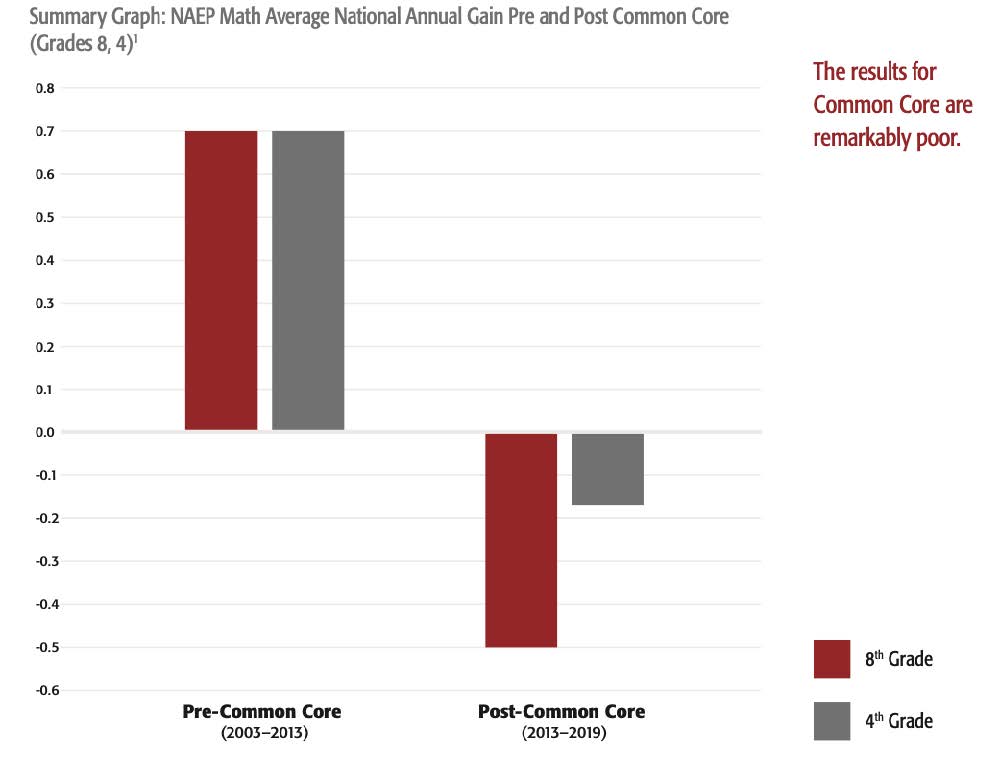
Breaking with decades of slow improvement, U.S. reading and math scores on the National Assessment of Educational Progress (NAEP) and other assessments have seen historic declines since most states implemented national Common Core English and math curriculum standards six years ago, according to a new study published by Pioneer Institute.
While Common Core was promoted as improving the international competitiveness of U.S. students in math, our international standing has remained low while the skills of average and lower performing American students have dropped in both math and reading.
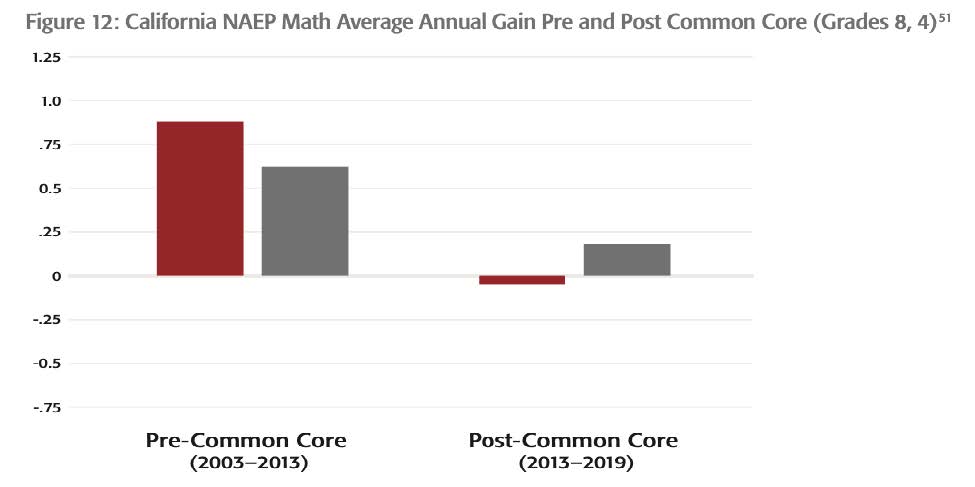
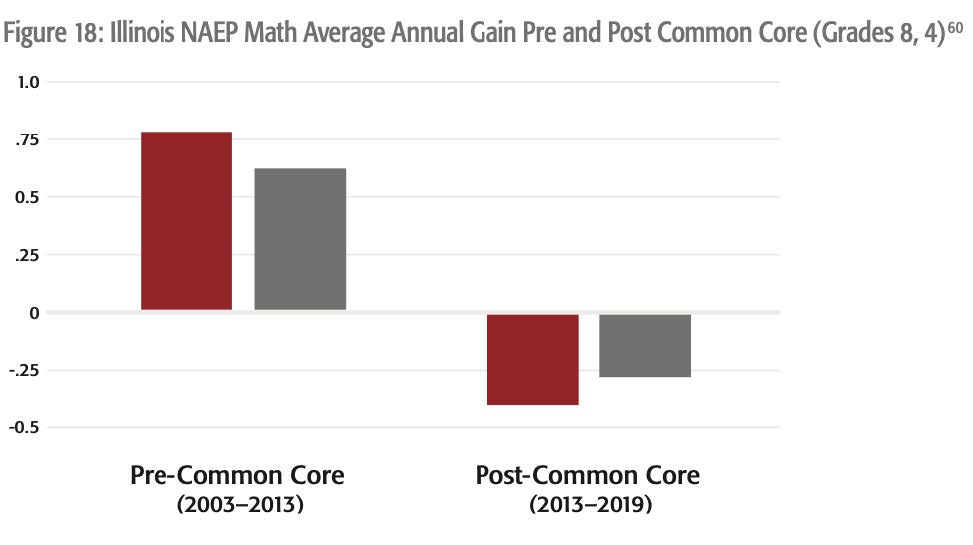
Nationally, fourth- and eighth-grade NAEP math scores were rising gradually in the years before Common Core was implemented (2003-2013).  Post-Common Core, scores at both grades have fallen, eighth grade at nearly the same rate as it was previously increasing.
The declines are most acute for the lowest-achieving students, increasing inequality.  Scores for students at the 90th percentile have mostly continued their pre-Common Core trend of gradual improvement. But the farther behind students were, the more substantial the declines, with the biggest drops occurring for those at the 25th and 10thpercentiles.
“The sustained decline we’re now seeing, especially among our most vulnerable students, simply cannot be allowed to continue,” said Theodor Rebarber, author of “The Common Core Debacle.”
U.S. students fare better in reading than they do in math when compared to international competitors, but U.S. reading trends are similar to those seen in math, with gradual pre-Common Core improvement replaced by declines after Common Core was implemented.
From 2003 to 2013, national fourth- and eighth-grade reading scores were increasing at an average of about half of a point each year.  Since 2013, fourth-grade reading scores have been falling by less than half of a point each year, while eighth-grade scores have dropped by nearly a full point a year.
Rebarber also finds that Common Core is a product of the misguided progressive pedagogies and biases of the education establishment that developed it. “Several of us allied with Pioneer Institute have been pointing out, ever since it was introduced, the deeply flawed educational assumptions that permeate the Common Core and the many ways in which it is at odds with curriculum standards in top-achieving countries.”  Unfortunately, the disappointing results of Common Core—particularly for lower performing students—were predicted in 2010.
“Nearly a decade after states adopted Common Core, the empirical evidence makes it clear that these national standards have yielded underwhelming results for students,” said Pioneer Executive Director Jim Stergios. “The proponents of this expensive, legally questionable policy initiative have much to answer for.”
“It’s time for federal law to change to allow states as well as local school districts to try a broader range of approaches to reform,” added Rebarber.  “With a more bottom-up approach, more school systems will have the opportunity to choose curricula consistent with our international competitors and many decades of research on effective classroom teaching.”
State Analyses (See Appendix)
The study also includes summary analyses of pre- and post-Common Core performance in seven states: Massachusetts, California, Florida, Georgia, Illinois, Kentucky, and New York. These states, chosen mainly based on their size and geographic distribution, generally reveal a pattern similar to the national results.
About the Author
Theodor Rebarber has worked on education reform and policy for three decades in the public, nonprofit and private sectors. He currently leads nonprofit AccountabilityWorks, which conducts education policy research and offers online testing services at AWSchoolTest.com. Previously, he was co-founder and chief education officer of a venture capital-backed charter school management company. Rebarber served as a senior staff member in Congress. He worked on education policy, including curriculum standards and testing, at the U.S. Education Department for the office of research and at the Vanderbilt Institute for Public Policy Studies. He has testified before Congress and state legislatures as well as developed analyses on a range of education policy topics.
About Pioneer
Pioneer Institute is an independent, non-partisan, privately funded research organization that seeks to improve the quality of life in Massachusetts through civic discourse and intellectually rigorous, data-driven public policy solutions based on free market principles, individual liberty and responsibility, and the ideal of effective, limited and accountable government.

Get Updates on Our Education Research

  •  
Massachusetts
In Massachusetts, from 2003 to 2013, before implementation of Common Core, NAEP fourth- and eighth-grade math scores were rising. Massachusetts had the highest rate of improvement among the states analyzed prior to Common Core. Post-Common Core, they’ve declined at nearly the same rate as they were previously improving.


California
In California, pre-Common Core NAEP fourth- and eighth-grade math scores were rising. Post- Common Core, fourth-grade math scores have barely risen by less than 0.2 points a year and eighth-grade scores have dropped.
Florida
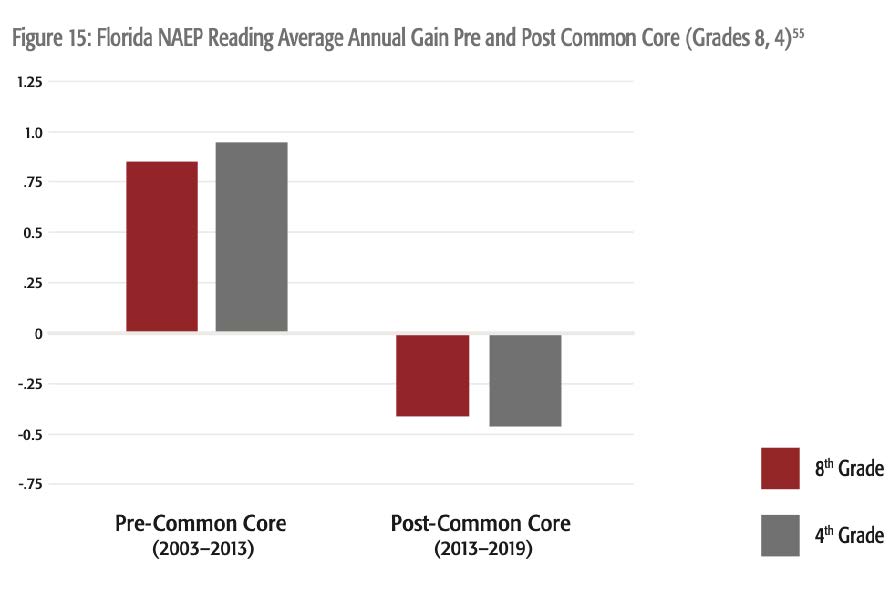
In Florida, Pre-Common Core NAEP fourth- and eighth-grade reading scores were rising. Post-Common Core scores have fallen.
Georgia
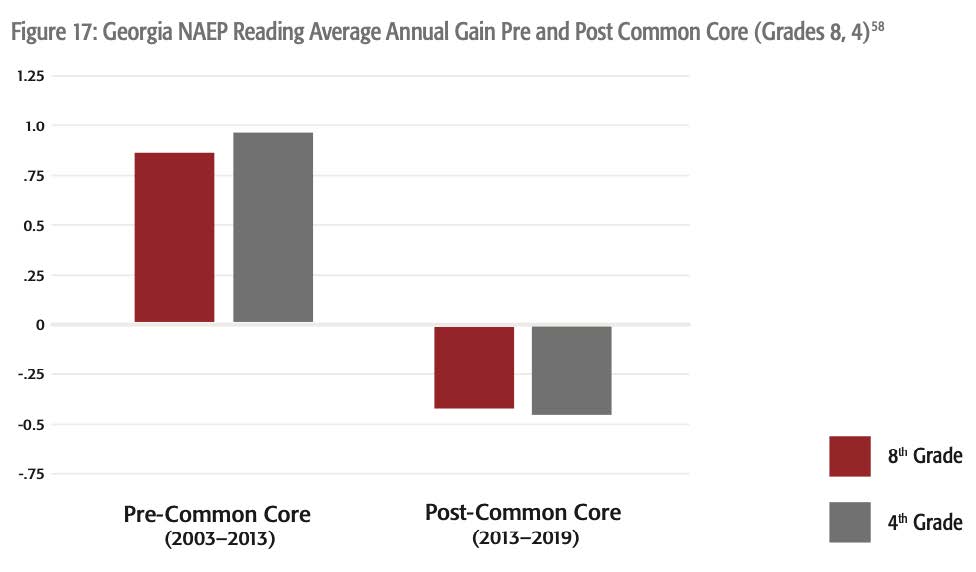
In Georgia, pre-Common Core, NAEP fourth- and eighth-grade reading scores were rising. Post-Common Core, they’ve fallen.
Illinois
In Illinois, before Common Core, NAEP fourth- and eighth-grade math scores were rising. Post-Common Core, they’ve fallen.
Kentucky
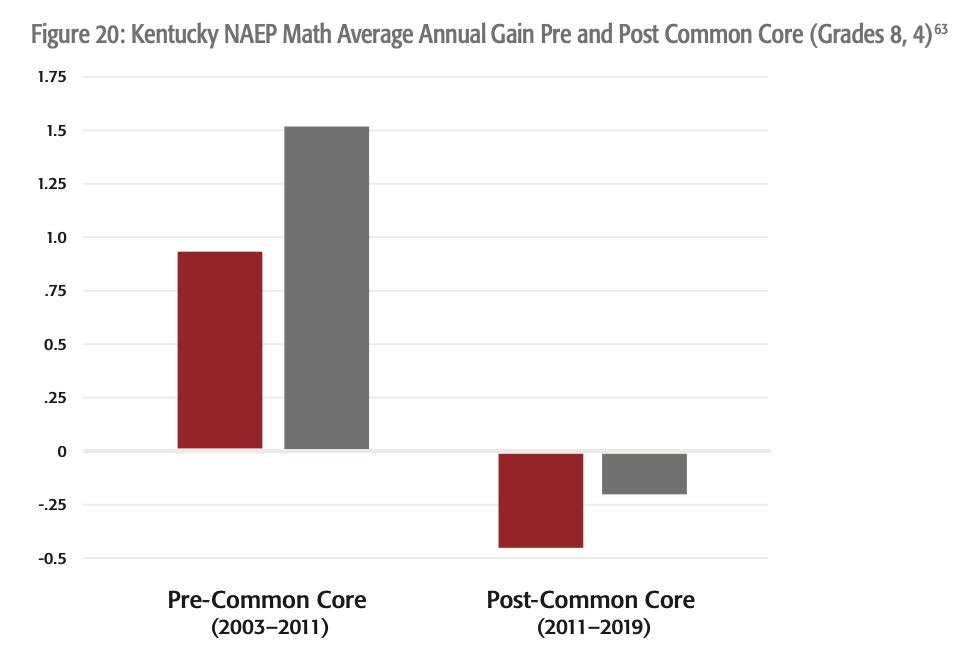
Kentucky was the first state to adopt and implement Common Core. In the years prior to imple-mentation (in this case, 2003-2011), fourth-grade math scores were rising at a substantial pace. Post-Common Core (2011-2019), fourth- and eighth-grade scores have fallen.
New York
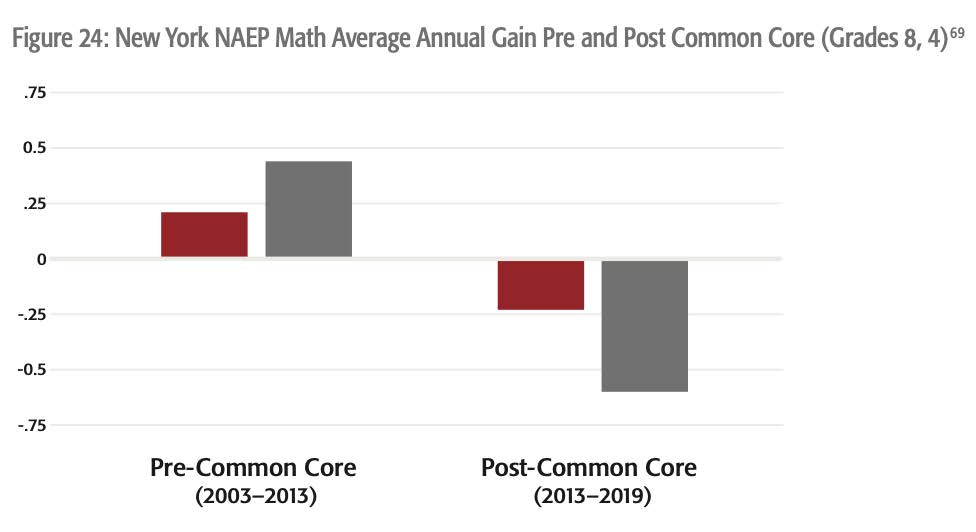
New York implemented Common Core in 2013. Prior to Common Core, NAEP fourth-grade math scores were rising. Post-Common Core, fourth- and eighth-grade scores have fallen, espe-cially in mathematics.

Monday, April 27, 2020

Public school teacher accused of offering to pay coronavirus-infected people to cough on President Trump has resigned


'Good. She is a first class piece of crap!'


A Rhode Island public school teacher accused of offering to pay people infected with the coronavirus to cough on President Donald Trump has resigned, WJAR-TV reported.


The Woonsocket School Committee voted 5-0 to accept a settlement agreement with Amy Bednarz on Wednesday night, the station said, adding that she tendered her resignation as part of the agreement. There was no report on other details of the settlement.

What's the background?

"Somebody with Covid-19, I will pay you to cough on #Trump," Bednarz allegedly tweeted in March, WJAR said.
Image source: Twitter
The user identified herself as a sixth-grade English Language Learner teacher at Villanova Middle School in Woonsocket in a subsequent post, WJAR reported, adding that the account has been deleted.
A district investigation into the Twitter post was launched in late March.

What did a state education official have to say about the tweet?

"I was saddened & disappointed to see this tweet — it is unprofessional and sends the wrong message during a time when our whole education community is setting a national example," the state's Commissioner of Elementary and Secondary Education Angelica Infante-Green tweeted. "This is not acceptable and certainly not representative of the overwhelming majority of RI teachers."


How are folks reacting to the teacher's resignation and settlement?

Commenters on WJAR's Facebook page were almost universally pleased that the accused teacher resigned — but wanted more done to her:
  • "Good. She is a first class piece of crap!"
  • "Trump Derangement Syndrome...still can't get over he won."
  • "She needs professional help!
  • "Only in RI do teachers [who] encourage endangering the president's life get paid to quit their jobs."
  • "But the taxpayers still have to pony up $!"
  • "She'll be picked up by some liberal college to teach."
(H/T: EAG News)

Wednesday, October 30, 2019

Across the Board, Scores Drop in Math and Reading for U.S. Students

Across the Board, Scores Drop in Math and Reading for U.S. Students

The latest results from the Nation’s Report Card show declines in student performance across demographics.

MATH AND READING SCORES for fourth- and eighth-graders in the United States dropped since 2017, and the decrease in reading achievement has government researchers particularly concerned.
"Over the past decade, there has been no progress in either mathematics or reading performance, and the lowest performing students are doing worse," Peggy Carr, associate commissioner of the National Center for Education Statistics, said during a press call Tuesday. 
The 2019 National Assessment of Education Progress, also called NAEP or the Nation's Report Card, was administered to more than 600,000 students enrolled in public schools and Catholic schools from every state and Washington, D.C., and also includes a break-out of student achievement in 27 large urban school districts.
Most notable were the score drops in reading, which occurred in 17 states with regard to fourth grade reading scores and in 31 states for eighth grade reading scores. On average, reading scores declined for fourth graders by 1 point and for eighth graders by 3 points compared to 2017.
"A 3-point decline for the country is substantial in as much as 31 states are driving it, large states, small states – and it's a very meaningful decline," Carr said. 
The declines in reading at both grades were also seen at all levels of achievement, whether students were high- or low-achieving, with the exception of the highest achieving fourth graders.
"Over the long term in reading, the lowest performing students – those readers who struggle the most – have made no progress from the first NAEP administration almost 30 years ago," she said.

Editorial Cartoons on Education

Changes in math achievement were mixed, with a 1-point increase among fourth graders and a 1-point decrease among eighth graders compared to their average scores in 2017. 
Washington, D.C., was the only place where students posted gains in three out of the four grade-subject combinations.
More importantly than the scores themselves, Carr underscored, is what happened among subgroups of students, including how the scores of high-performing students compared to low-performing students, how the scores of poor students compared to their wealthier peers and how students from different races scored. 
Most concerning, she said, was that compared to 2017, the scores of lower performing students declined in three of the four grade-subject combinations and those drops are what accounted for the overall drop in average scores.
"The distributions are pulling apart, with the bottom dropping faster," Carr said. "It's not clear what's happening here, but it is clear and it's consistent."
"The fact that students who need to make the most academic progress are instead making no progress or are falling further behind is extremely troubling," Tonya Matthews, vice chairwoman of the National Assessment Governing Board, which oversees NAEP, said in a statement. "We need to see all students make progress."
Carr said the score drops cannot be traced to any one specific student subgroup, as almost all of them logged declines. For example, black, Hispanic, Native American and white students in fourth and eighth grades scored lower in reading in 2019 compared to 2017. 
"They are generally all declining," she said. "So we can't say it's due to changes and shifts in the populations."
Carr said that she'd love to be able to more fully analyze all the subgroup data they collect, but her team is strapped for resources. She encouraged other researchers to dig deeper. 
"We would love to be able to analyze these data in more depth, but we just don't have the bandwidth to do that," Carr said. 
"The assessment is designed to tell you what, not why," she added. "Why is something the data cannot tell you."
When making comparisons about performance on a test like NAEP, Carr said, historic perspective is important. 
Students in the U.S. made significant progress in math and reading achievement from 1990 until 2015, when the first major dip in achievement scores occurred. During that time span, fourth grade students improved 27 points in math and 6 points in reading, and eighth grade students improved by 19 points in math and 5 points in reading.
Since 2015, however, achievement scores have mostly flat-lined or decreased in both subjects and in both grades.
"There is a clear pattern that we're seeing more progress for math and reading," Carr said. "Reading has just been more or less plateauing, stagnating – a little tweak here or there but not a lot of improvement, and we have lost considerably in this last assessments for eighth grade reading particularly."
"In math you see double-digit improvement in fourth- and eighth-grade math," she continued. "If you examine the whole trend line you will see there was some improvement, notably with the bottom coming up in 2003, but then it plateaued and we have just been creeping on the math front."
"Again," Carr said, "the why is something these data don't speak directly to."