Tuesday, September 4, 2018

You can tell who are the Left's friends.

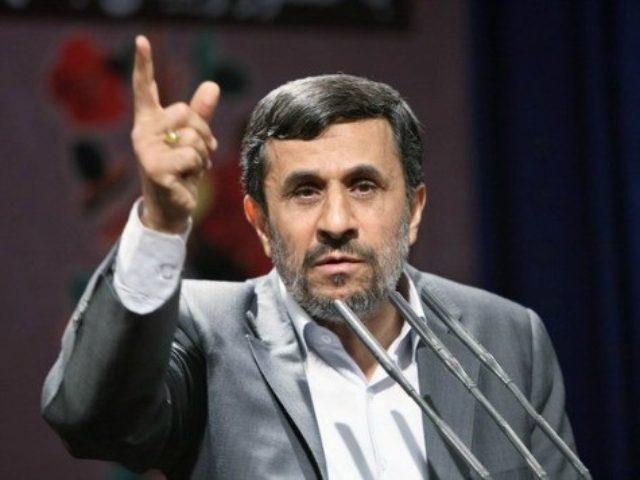
Former Iranian President Mahmoud Ahmadinejad Tweets Support for Colin Kaepernick

Mahmoud Ahmadinejad
The Associated Press

Former Iranian President Mahmoud Ahmadinejad took to Twitter on Monday, to lend support to anthem-protesting former quarterback Colin Kaepernick.

Ahmadinejad wrote:
Ahmadinejad served as Iran’s president from 2005-2013. During that time he ruthlessly suppressed all political opposition. Most notably in 2009, when he oversaw the murder and incarceration of thousands who protested his contested reelection.
Colin Kaepernick has not played football since the 2016 season, and even then, he wasn’t one of the best quarterbacks in the NFL. In fact, Kaepernick lost his starting job to journeyman quarterback Blaine Gabbert just prior to the start of that season.
However, the former dictator of one of the leading terrorist states in the world, has a different take. A take that happens to be consistent with most left-wing sports media opinions.
So, apparently, while ESPN loses loses thousands of subscribers in the United States, it seems they have at least one loyal subscriber left in the Islamic Republic of Iran.
Follow Dylan Gwinn on Twitter @themightygwinn

"The leftist "narrative" up until now is that illegals never take welfare." But, it appears not to be so!

September 4, 2018
Illegals drop out of government programs, welfare bureaucrats hardest hit

By Monica Showalter

Welfare bureaucrats are putting the scream on, with news that President Trump's efforts to enforce U.S. immigration law are incentivizing illegal immigrants to drop out of assorted welfare programs.
Get a load of this alarmism from the welfare administrative mafias quoted by Politico:
Immigrants are turning down government help to buy infant formula and healthy food for their young children

because they’re afraid the Trump administration could bar them from getting a green card if they take federal aid.
Local health providers say they’ve received panicked phone calls from both documented and undocumented immigrant families demanding to be dropped from the rolls of WIC, a federal nutrition program aimed at pregnant women and children, after news reports that the White House is potentially planning to deny legal status to immigrants who’ve used public benefits. Agencies in at least 18 states say they’ve seen drops of up to 20 percent in enrollment, and they attribute the change largely to fears about the immigration policy.
Are they serious? This is a crisis? We are supposed be alarmed, pound our feet, shout to our congressmen, and mobilize to put illegals back on taxpayer-funded welfare programs?

Obviously, someone's rice bowl is threatened and it's not actually that of the illegals. For starters, this whole thing looks funny.
The leftist "narrative" up until now is that illegals never take welfare. That looks rather tattered with this report about illegals dropping out of welfare. Actually, it confirms what conservatives have noticed all along: that illegals do take taxpayer-financed welfare, in large numbers, and come here with skills so low their capacity to succeed in a Western economy is compromised. Meanwhile, the very existence of that welfare, open to all comers, is acting as a "magnet" for more of them to head to el norte, kids in tow.
The second "narrative" it blows apart, is that illegals care so very much about their kids, much more than the rest of us, as the
border show around family separations for people caught breaking the law, demonstrated. What they're claiming now is that without government programs, these people would let their own kids starve in front of them instead of take other measures (such as getting jobs or going to private charities.) Politico reports the bureaucrats (notice they didn't find any narrative-perfect illegals) in full hysteria-call:
“One way or another society is going to pay for this,” said Hennessey of Public Health Solutions in New York City. “It’s very expensive for a baby in the NICU. It’s very expensive when a child’s developmental needs aren't met, or there’s a severe maternal morbidity event.”
So illegals, who come here for jobs, not welfare, and adore their kids so much they can't bear to be separated from them, would stand there and let their kids starve if America doesn't cough up a full food ride for them through the Women, Infants, and Children program, and no other resources are available for them.
Nope, this is about bureaucratic rice bowls. Bureaucrats and their wealthy NGO allies get cash and funding based on the numbers of people they can enroll in their programs. A booming economy is bad news for them, because people take jobs and leave welfare rolls. So is President Trump's bid to enforce existing U.S. immigration law.
The bureaucrats and do-gooders quoted all admit that they aren't actually entirely sure why the Women Infants and Children program has seen its numbers drop from 7.4 million to 6.8 million since President Trump took office. There is a dismissive note about the "improving economy" but no recognition that the sudden availability of jobs in the Trump economy tends to have a very large effect on whether people (legal and illegal) stay on welfare rolls. For a lot of the poor, the promise of a job with the prospect of higher wages and an improved standard of living -- and no government supervision, no need to keep heads down and incomes low -- is preferable to any state welfare, so they're taking the jobs and running. Jobs in that much-dismissed 'improving economy' is likely the biggest reason the numbers of welfare recipients, both legal and illegal, is going down. This by the way, is correlated with falling food stamp rolls (illegals supposedly can't get those) and declines in other welfare populations in the Trump economy.
But the quoted bureaucrats do say that because they have fielded inquiries from illegals, those same people who supposedly aren't bright enough to manage a voter id card, yet are amazingly cognizant on the minutia of maintaining the exact qualifications for welfare, and who want to make sure that being a public charge won't hurt their green card chances.
What this shows is that the open borders lobby and the welfare industrial complex are amazingly integrated, and President Trump's effort to restore rule of law at the border and protect taxpayer assets is a threat to their money interests and raison d'etre. What it also shows is that President Trump can't keep pushing hard enough on this. Striking out at the money trail has always been a surefire effort to ending corrupt regimes, and by extension, corrupt bureaucratic empires.

Venezuela is collapsing before our eyes. The Left never gives up power without violence...

This story is from How Condoms Can Cost WeekWagesan episode of Economics with Subtitles presented by Ayeisha Thomas-Smith and Steve Bugeja, and produced by Simon Maybin and Phoebe Keane.To listen to more episodes of Economics with Subtitles from BBC Radio 4, please click hereAdapted by Sarah Keating.
  
Mariana Zuniga, a journalist in Caracas, went shopping for condoms and quickly discovered they were in very short supply.
When she did eventually track some down – in a shop with only seven boxes left – one packet cost more than 1 million Venezuelan bolívar. Condoms have become an unaffordable luxury for most.
Prior to a desperate move from President Nicolás Maduro to hike the national minimum wage 3,500% earlier in August, people were earning just 3 million bolívar per month on the minimum wage.
(Credit: Getty Images)
“We're living through an economic crisis,” Zuniga explains, saying the financial disaster has “caused the shortages of many things, including condoms and other kinds of contraceptive.”
The crisis she refers to – the economy has shrunk by a third since 2013 – has hit the country very hard. Venezuelans have experienced hyperinflation, an economic event where prices skyrocket in a short period of time and the currency devalues so much that it is essentially worthless. In Venezuela, the price of various goods has doubled on average every 26 days.
Millions of people have left the country, crossing into neighbouring Colombia in search of food and work. Those who stayed behind have to endure shortages of basic goods and rolling power outages.
One of the drivers for extreme inflation is soaring demand – in Venezuela there are far more people trying to buy goods from shops than there are goods out on the shelves.
And this, says Zuniga, has even changed the way people are having sex. “In Venezuela, some people are using old-fashioned ways to avoid getting pregnant and when I said old-fashioned ways, it's like the withdrawal method or the rhythm method, which is tracking your menstrual history to predict when you'll ovulate.”
With this has come a rise in unplanned pregnancies, STDs and HIV, she adds.
Because contraceptive pills have become so expensive, there has been a spike in the number of women taking more permanent measures to ensure they don’t have any more children.
(Credit: Getty Images)
Zuniga spoke to a clinic in Caracas which sterilised 400 women in 2017: it reached that number by May this year. On so-called ‘sterilisation days’ run by local health programmes, the appointments for 40 free sterilisations per day have been snapped up, with waiting lists of up to 500 women. 
“Before, the women that were sterilised in Venezuela were more than 30 [years old] and with more than three children,” Zuniga says. “Now you can find women [aged] around 19, 20, 24 that are looking to be sterilised because they can't afford to have another [child], because they can't find pills on the market anymore and it’s just desperation, they are desperate.”
The Venezuelan government has come under fire for the shortages. Critics claim that its bad money management and over-reliance on oil has sent the economy into freefall. When the price of oil plummeted, Venezuela was short of cash and struggled to import goods. This scarcity meant prices went up… and up and up.
And as goods became more scarce, cash became more readily available: President Maduro ordered literally planeloads of Venezuelan currency to be brought into circulation to stimulate the economy and get people spending.

“If a government prints a lot of money and there’s lots of money sloshing around, then people can just drive prices up and it can become a self-fulfilling prophecy,” says Rajiv Prabhakar, an economist with the Open University.
Because shopkeepers want more in exchange for their goods many have stopped accepting the local currency altogether. They'll only sell for US dollars, or barter for another product. And it's only through selling for these dollars that shopkeepers can get hold of the foreign currency they need to order in more condoms or other products. 
The banknotes themselves consequently become less valuable, and shopkeepers want more in exchange for goods which have retained their value. A loaf of bread, for instance, is still a loaf of bread regardless of how many bolívar s are stuffed in your purse. Of course, the cost of ingredients can also rise, which also drives up the price of goods.
The price of various goods has doubled on average every 26 days 
Of course, Venezuela isn’t the first country to endure hyperinflation. Some of the worst cases were in Germany in 1923 after World War One and in Zimbabwe in the late 2000s. But the IMF predicts that the rate of inflation in Venezuela will hit 1,000,000% by the end of 2018.
President Maduro announced in August that Venezuela would have a new currency – the sovereign bolívar – which would see five zeros being cut off the original bolívar. This redenomination is part of a package of financial measures that aims to take control of the country’s economy.
But for many Venezuelans it’s too little too late, as people struggle to afford basic goods such as medicine and food, and hyperinflation has prompted many young women to make permanent changes to their bodies in the form of sterilisation.
For those Venezuelans, as one woman told Mariana Zuniga, “the baby factory” is closed.
To comment on this story or anything else you have seen on BBC Capital, please head over to our Facebook  page or message us on Twitter.
If you liked this story, sign up for the weekly bbc.com features newsletter called "If You Only Read 6 Things This Week". A handpicked selection of stories from BBC Future, Culture, Capital and Travel, delivered to your inbox every Friday.

Argentina, Brazil and Venezuela all showing the effects of glorious socialism


Buenos Aires (AFP) - Former president Cristina Kirchner appeared in court on Monday for the second time in relation to a corruption case that has rocked Argentina's political and business elites.


Two weeks after the Senate voted to partially lift senator Kirchner's congressional immunity so that investigators could search her three homes for evidence linking her to the so-called notebooks corruption case, she was back before Claudio Bonadio, the judge leading the corruption investigation.
She was questioned for half an hour on Monday morning, having also been interviewed last month.
Kirchner submitted a letter to the judge reiterating her "categorical and strict denial" that she "committed any crime" or was involved in "any illicit activity."
The 65-year-old, president from 2007 to 2015 after succeeding her late husband Nestor, is suspected of having accepted millions of dollars in bribes from businessmen in exchange for public works contracts.
More than a dozen former government officials and 30 elite businessman are implicated in the case first reported by La Nacion newspaper on August 1, claiming that millions in bribes were delivered by a ministerial chauffeur to Kirchner's residences, both during her presidency and her husband's.
Her former vice president Amado Boudou has been sentenced to nearly six years in prison for "passive bribery" and conduct "incompatible" with his duties as a public servant.
Kirchner, though, remains defiant and told Bonadio in her letter that his investigation had "destroyed each and every guarantee that makes up due process" without producing "the minimum proof to justify the crimes with which I have scandalously been accused."
Facing trial in several other corruption cases, she has previously accused Bonadio of carrying out "judicial persecutions" aimed at derailing a possible run for the presidency next year.
She has compared her case to that of former Brazilian president and fellow leftist Luiz Inacio Lula da Silva, who is serving a 12-year jail sentence for accepting a bribe and was on Friday barred from standing in next month's presidential election.
Prosecutor Carlos Stornelli has said a total of $160 million in bribes was handed over during a 10-year period from 2005-15, allegedly from business leaders toBuenos Aires (AFP) - Former president Cristina Kirchner appeared in court on Monday for the second time in relation to a corruption case that has rocked Argentina's political and business elites.
Two weeks after the Senate voted to partially lift senator Kirchner's congressional immunity so that investigators could search her three homes for evidence linking her to the so-called notebooks corruption case, she was back before Claudio Bonadio, the judge leading the corruption investigation.
She was questioned for half an hour on Monday morning, having also been interviewed last month.
Kirchner submitted a letter to the judge reiterating her "categorical and strict denial" that she "committed any crime" or was involved in "any illicit activity."
The 65-year-old, president from 2007 to 2015 after succeeding her late husband Nestor, is suspected of having accepted millions of dollars in bribes from businessmen in exchange for public works contracts.
More than a dozen former government officials and 30 elite businessman are implicated in the case first reported by La Nacion newspaper on August 1, claiming that millions in bribes were delivered by a ministerial chauffeur to Kirchner's residences, both during her presidency and her husband's.
Her former vice president Amado Boudou has been sentenced to nearly six years in prison for "passive bribery" and conduct "incompatible" with his duties as a public servant.
Kirchner, though, remains defiant and told Bonadio in her letter that his investigation had "destroyed each and every guarantee that makes up due process" without producing "the minimum proof to justify the crimes with which I have scandalously been accused."
Facing trial in several other corruption cases, she has previously accused Bonadio of carrying out "judicial persecutions" aimed at derailing a possible run for the presidency next year.
She has compared her case to that of former Brazilian president and fellow leftist Luiz Inacio Lula da Silva, who is serving a 12-year jail sentence for accepting a bribe and was on Friday barred from standing in next month's presidential election.
Prosecutor Carlos Stornelli has said a total of $160 million in bribes was handed over during a 10-year period from 2005-15, allegedly from business leaders to politicians in exchange for public works contracts, all meticulously recorded by a government driver.

What possibly could have caused a 26% decline in agriculture


Man who stabbed American tourists in Amsterdam names Wilders, cites 'insults' to Islam

Man who stabbed American tourists in Amsterdam names Wilders, cites 'insults' to Islam


AMSTERDAM (Reuters) - A man who stabbed two American tourists at Amsterdam’s central station last week named Dutch, anti-Islam lawmaker Geert Wilders during police questioning and said he was motivated by perceived insults to Islam in the Netherlands, prosecutors said on Monday. 
FILE PHOTO: View of Central train station of Amsterdam, Netherlands, December 1, 2017. REUTERS/Yves Herman/File Photo
The man, identified by Dutch media as Jawed S., is a 19-year-old Afghan with residency in Germany, who traveled to Amsterdam to carry out an attack because of what he said were repeated insults to God, the Koran and Islam’s Prophet Mohammed, prosecutors said in a statement. 
The attack came after Wilders, a far right campaigner against Islam, canceled plans to hold a competition last week of cartoons depicting the Prophet Mohammed and had a clear “terrorist motive”, prosecutors said. 
“He named Wilders, but did not say anything about the cartoon competition,” a statement said. “Up to now there is no evidence the suspect worked with others.” 
The victims, both 38-year-old men, are still being treated in hospital, while the stabber, who was shot and wounded by police, was also being treated while his custody was extended for two weeks on Monday. 
Prosecutors said that German police had searched the man’s home in Germany and seized computer memory devices. 

Nike's Kaepernick Ad Has Cost The Company Over $4 Billion So Far...what next for Nike a Louis Farrakhan advert?

Nike's Kaepernick Ad Has Cost The Company Over $4 Billion So Far

Since announcing their new advertising campaign will be led by Colin Kaepernick, the social media backlash has dominated the virtue-signaling efforts we presume they hoped for.
With images of Nike apparel and footwear being burned and real sacrifice being discussed, it appears investors are growing disillusioned as NFL fans as Nike shares are down over 3% in the pre-market.
That is a loss of over $4 billion in market capitalization since the market close on Friday...
Nike may have "just done it" but was it worth it?
If the public backlash against other corporate brand names who have taken a vocal political stance is any indication, Nike faces considerably more pressure: companies from Dick's (which saw a sharp decline in sales after it stopped selling guns), to ESPN, to Papa John's, to Twitter and Facebook, to In-N-Out burger, have all seen an angry customer backlash - from either the left or the right - once these corporations entered the political arena, resulting in a hit to the top line, and ultimately, the shareholders' pocket.
And this could be a problem - #BoycottNike is now the number 1 trending topic on Twitter in the US...