

California’s Blackouts Display The Results Of Kamala Harris’s Favored Energy Policy
As I watched a senior citizen check out of Home Depot with a small generator being pushed by an employee. It exemplified unintended consequences of environmental policies. Instead of efficient centralized energy production we now have tens of thousands if not millions of people producing their own energy with gasoline, propane or natural gas. All these generators are significantly less efficient then industrial energy production. They are the neo Luddites of the Green New Deal.
Via The Strategic Culture Foundation,
William Binney is the former technical director of the U.S. National Security Agency who worked at the agency for 30 years. He is a respected independent critic of how American intelligence services abuse their powers to illegally spy on private communications of U.S. citizens and around the globe.
Given his expert inside knowledge, it is worth paying attention to what Binney says.
In a media interview this week, he dismissed the so-called Russiagate scandal as a “fabrication” orchestrated by the American Central Intelligence Agency. Many other observers have come to the same conclusion about allegations that Russia interfered in the 2016 U.S. elections with the objective of helping Donald Trump get elected.
But what is particularly valuable about Binney’s judgment is that he cites technical analysis disproving the Russiagate narrative. That narrative remains dominant among U.S. intelligence officials, politicians and pundits, especially those affiliated with the Democrat party, as well as large sections of Western media. The premise of the narrative is the allegation that a Russian state-backed cyber operation hacked into the database and emails of the Democrat party back in 2016. The information perceived as damaging to presidential candidate Hillary Clinton was subsequently disseminated to the Wikileaks whistleblower site and other U.S. media outlets.
A mysterious cyber persona known as “Guccifer 2.0” claimed to be the alleged hacker. U.S. intelligence and news media have attributed Guccifer as a front for Russian cyber operations.
Notably, however, the Russian government has always categorically denied any involvement in alleged hacking or other interference in the 2016 U.S. election, or elections thereafter.
William Binney and other independent former U.S. intelligence experts say they can prove the Russiagate narrative is bogus. The proof relies on their forensic analysis of the data released by Guccifer. The analysis of timestamps demonstrates that the download of voluminous data could not have been physically possible based on known standard internet speeds. These independent experts conclude that the data from the Democrat party could not have been hacked, as Guccifer and Russiagaters claim. It could only have been obtained by a leak from inside the party, perhaps by a disgruntled staffer who downloaded the information on to a disc. That is the only feasible way such a huge amount of data could have been released. That means the “Russian hacker” claims are baseless.
Wikileaks, whose founder Julian Assange is currently imprisoned in Britain pending an extradition trial to the U.S. to face espionage charges, has consistently maintained that their source of files was not a hacker, nor did they collude with Russian intelligence. As a matter of principle, Wikileaks does not disclose the identity of its sources, but the organization has indicated it was an insider leak which provided the information on senior Democrat party corruption.
William Binney says forensic analysis of the files released by Guccifer shows that the mystery hacker deliberately inserted digital “fingerprints” in order to give the impression that the files came from Russian sources. It is known from information later disclosed by former NSA whistleblower Edward Snowden that the CIA has a secretive program – Vault 7 – which is dedicated to false incrimination of cyber attacks to other actors. It seems that the purpose of Guccifer was to create the perception of a connection between Wikileaks and Russian intelligence in order to beef up the Russiagate narrative.
“So that suggested [to] us all the evidence was pointing back to CIA as the originator [of] Guccifer 2.0. And that Guccifer 2.0 was inside CIA… I’m pointing to that group as the group that was probably the originator of Guccifer 2.0 and also this fabrication of the entire story of Russiagate,” concludes Binney in his interview with Sputnik news outlet.
This is not the first time that the Russiagate yarn has been debunked. But it is crucially important to make Binney’s expert views more widely appreciated especially as the U.S. presidential election looms on November 3. As that date approaches, U.S. intelligence and media seem to be intensifying claims about Russian interference and cyber operations. Such wild and unsubstantiated “reports” always refer to the alleged 2016 “hack” of the Democrat party by “Guccifer 2.0” as if it were indisputable evidence of Russian interference and the “original sin” of supposed Kremlin malign activity. The unsubstantiated 2016 “hack” is continually cited as the “precedent” and “provenance” of more recent “reports” that purport to claim Russian interference.
Given the torrent of Russiagate derivatives expected in this U.S. election cycle, which is damaging U.S.-Russia bilateral relations and recklessly winding up geopolitical tensions, it is thus of paramount importance to listen to the conclusions of honorable experts like William Binney.
The American public are being played by their own intelligence agencies and corporate media with covert agendas that are deeply anti-democratic.
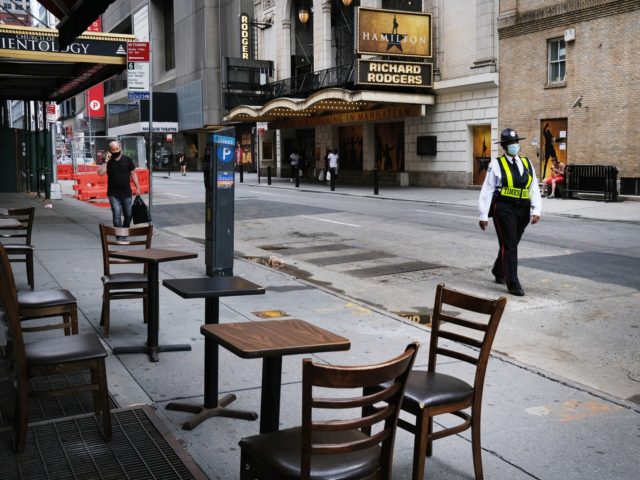
Crime, taxes, disease, and an anti-science approach to social distancing have chased a number of big retailers and restaurateurs out of New York forever, reports the far-left New York Times.
“In the heart of Manhattan, national chains including J.C. Penney, Kate Spade, Subway and Le Pain Quotidien have shuttered branches for good,” per the Times, which adds other big box retailers, like Victoria’s Secret and the Gap, have chosen to reopen in other states while their Manhattan locations remain shuttered.
On top of that, Victoria’s Secret, which had been paying $937,000 a month in rent, is no longer paying that rent. The Gap is not paying its own $264,000 monthly rent to Rockefeller Center.
“There’s no reason to do business in New York,” the chief executive of Ark Restaurants explains. He has five restaurants in Manhattan but only reopened two.
In Florida, though, he’s thriving.
“I can do the same volume in Florida in the same square feet as I would have in New York, with my expenses being much less,” he explained. “The idea was that branding and locations were important, but the expense of being in this city has overtaken the marketing group that says you have to be there.”
Subway represents a few dozen permanent closures; Le Pain Quotidien 27.
Iconic outlets like Shake Shack are teetering, and Neiman Marcus, an anchor store at the new Hudson Yards, just filed for bankruptcy.
On top of the obnoxious price of doing business in Manhattan — add taxes and fees to those sky-high rents — there are no customers. The fake news Times doesn’t mention the riots that hit Manhattan’s business district just a few weeks back, or the continued threat of more rioting, or the hair-raising rise in violent crime which is only going to get worse… The Times does, at least, mention the failing city’s “stringent lockdown and methodical reopening” that is “wreaking havoc on businesses with so few people going to work, virtually no visitors and many residents” who are terrified to leave their homes.
Meanwhile, sane states like Florida, Georgia, and Texas, those states that offer a much lower cost of doing business, and despite enormous pressure from the fake media, did not go to New York’s absurd lockdown extremes, are returning to normal. Red States with Republican governors approached the China virus with a respect for science that avoided the out-of-control plague that turned Manhattan into something resembling a ghost town.
:strip_exif(true):strip_icc(true):no_upscale(true):quality(65):fill(FFF)/s3.amazonaws.com/arc-authors/gmg/686affc5-5f24-499b-8898-2dd5df01e037.png)

 Posts
All Comments
Posts
All Comments


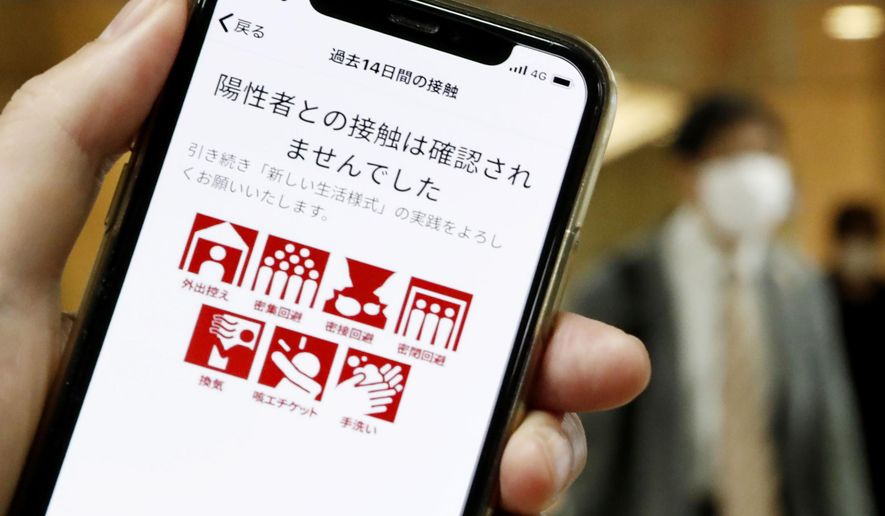
Make way for the U.S.S.A. — the United Surveillance States of America.
And it’s all due to COVID-19.
A contact tracing app that administrators at a college in Michigan forced on all students as a condition of their presence on campus not only identifies the app user by name — not only pinpoints the app user by geographic location — not only generates a specific code that labels the app user as either “certified” or “denied,” based on required coronavirus test results — but also sends an alert to school bureaucrats about “denied” students behaving against COVID-19 protocols. Administrators then, in turn, can lock these students’ identification cards remotely and prevent them from accessing certain buildings and campus facilities.
Think about that for a moment. An app that tattles; hmm, what could go wrong?
That means the college — Albion, a private liberal arts school tied to the United Methodist Church — is tracking students, monitoring students’ behaviors, and punishing students, long-distance, without regard for due process or, more figuratively speaking, trial by jury, for actions deemed in defiance of COVID-19 safety precautions.
From The Verge: “In addition to having to install the app, students were told they are not allowed to leave campus for the duration of the semester without permission over fears that contact with the wider community might bring the virus back to campus. If a student leaves campus without permission, the app will alert the school, and the student’s ID card will be locked and access to campus buildings will be revoked.”
Are you freaking kidding?
Or, put another way: What is this, freaking communist China?
And here’s the real kick in the teeth moment: TechCrunch found the app, called Aura, is a privacy leak just waiting to happen. In an analysis of the app, TechCrunch discovered that it was easy-peasy to reconfigure the student codes generated by the app and tap into other users’ personal, private data. Err, make than personal, not-so-private data.
Technology being what it is — technology — contact tracing apps are hardly 100 percent safe and secure from hacks. But Aura goes above the unsafe, flies right past the hack fears and jumps, head first, right into surveillance state darkness.
“I think [this app is] more creepy than anything and has caused me a lot of anxiety about going back,” one Albion College student told TechCrunch, as cited by Ars Technica.
There’s an understatement.
The bigger worry is what’s coming.
“Alabama college students encouraged to download COVID-19 contact tracing app,” an NBC affiliate reported in mid-August.
“Contact Tracing App Launches, College Students Highly Recommended to Utilize,” WAAY TV 31 reportedin early August.
“How to Get People to Actually Use Contact Tracing Apps,” Harvard Business Review wrote in July.
On that last, here’s a thought: Don’t let the apps be used to lock people out of buildings because they disobeyed a bureaucrat’s order. That’d be an idea. That’d be one idea.
But anyone who still thinks contact tracing is being developed and pushed as a best interest for the people is living with blinders.
This technology, in the hands of abusers — in the hands of government, any form of government — is a surveillance nightmare. And it’s one Pandora’s Box that just shouldn’t be opened, not in a free country like America, anyway. On contact tracing apps, just say no.
• Cheryl Chumley can be reached at cchumley@washingtontimes.com or on Twitter, @ckchumley. Listen to her podcast “Bold and Blunt” by clicking HERE. And never miss her column; subscribe to her newsletter by clicking HERE.