
U.S. Universities Underreport Donations from Hostile Regimes by Over $1.5 Billion
Elite colleges received billions in undisclosed donations from China, Qatar, and Russia
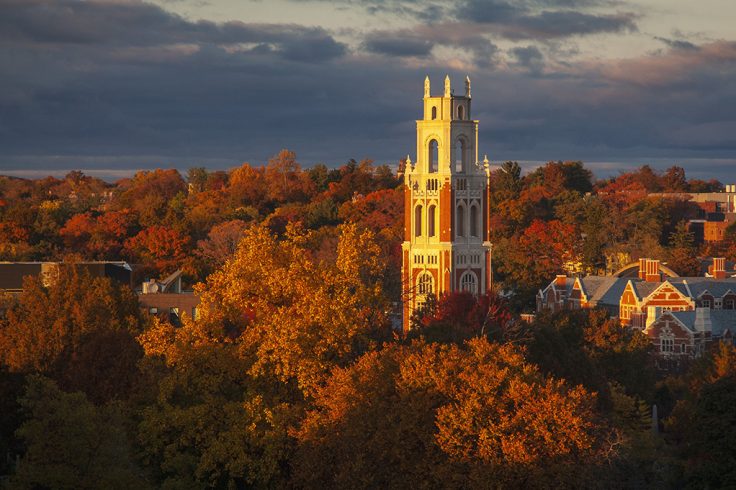
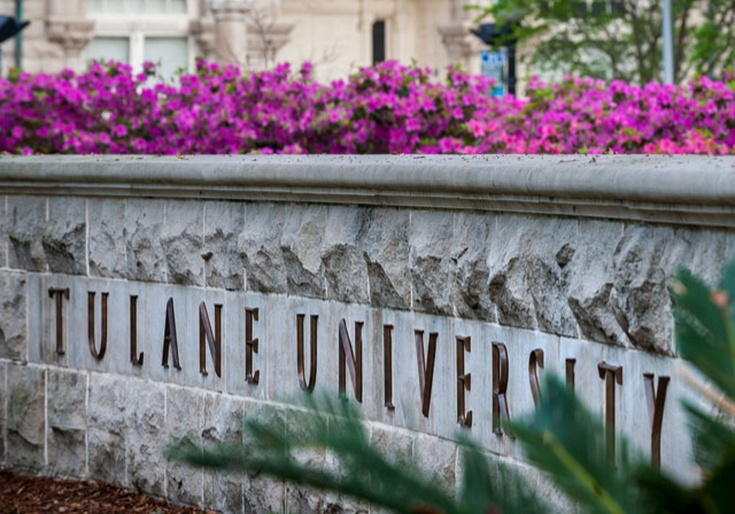
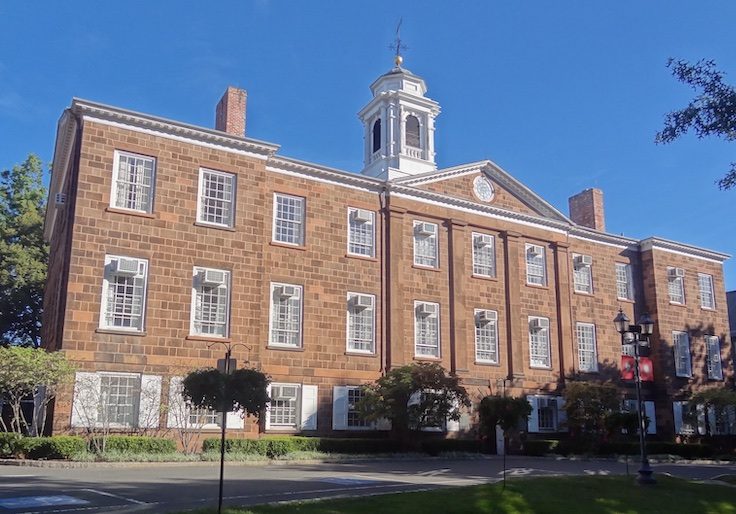
New data from the Department of Education show that several top-tier universities, including Yale and Cornell, failed to report more than $3 billion in foreign gifts and funds—many of which come from anti-American regimes such as China and Qatar.
According to a new study from the Clarion Project, American colleges and universities inaccurately disclosed foreign funding to the Department of Education. Between 2014 and 2019, they reported a total of $11 billion in foreign funds. But the Clarion Project's data show that the true number is over $14 billion. Some of the biggest discrepancies involve Cornell University, Texas A&M University, the University of Colorado Boulder, and Yale University.
Cornell initially reported taking $340 million in foreign funding, but the real number is closer to $1.3 billion—over $800 million of which came from Qatar. The University of Colorado Boulder initially reported $55 million in foreign funding, but the real number is closer to $345 million—61 percent of which came from the United Arab Emirates. Yale initially reported $128 million, but the real number is $496 million—almost $42 million of which came from China, Qatar, Saudi Arabia, Turkey, and Russia.
Foreign influence is growing on college campuses, and universities seldom disclose their fiscal relationships with foreign actors. A Washington Free Beacon review of federal records found that over 100 U.S. universities have Confucius Institutes, a Chinese government-backed program that often pushes Chinese Communist Party propaganda on American students. The Department of Education has mandated that universities report all foreign money through a new online portal, which has unearthed previously hidden disparities.
In all, unreported contributions from China, Russia, Saudi Arabia, Turkey, the UAE, and Qatar totaled $1.59 billion between 2014 and 2019.
"If it wasn't for a crackdown by the Department of Education, this never would have been known. The universities still wouldn't feel the need to report this, they wouldn't feel under the microscope or any sense of urgency," said Clarion Project research analyst Alex VanNess. "We're seeing billions of dollars—much of which has strings attached—being used to influence U.S. students from countries that want to use a soft power against the United States."
Of the 211 universities that disclosed their foreign funding, only Yale refused to disclose where donations were coming from. A university typically reports whether a donation came in the form of a "monetary gift" or "contract," the gift's country origin, and the gifter's name. Yale disclosed whether the money came in the form of a gift or contract and the money's country of origin, but refused to disclose the gifters' names. The data do indicate that Yale accepted donations from China, Qatar, Saudi Arabia, Turkey, and Russia.
VanNess told the Free Beacon that the lack of transparency is concerning. "It's not necessarily nefarious, but the idea that it's not being reported and not being disclosed and we're not being told what the money is paying for and who it's going to, that is a problem," VanNess said.


 Posts
Posts


Make way for the U.S.S.A. — the United Surveillance States of America.
And it’s all due to COVID-19.
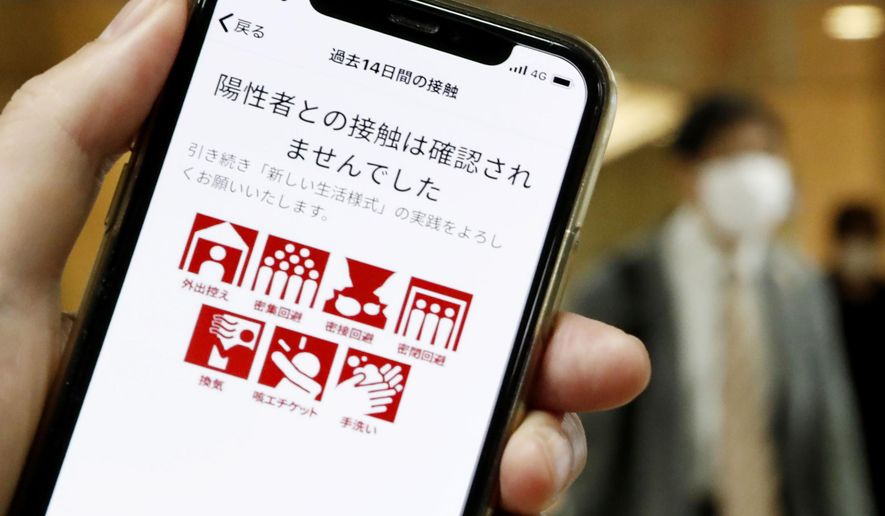
A contact tracing app that administrators at a college in Michigan forced on all students as a condition of their presence on campus not only identifies the app user by name — not only pinpoints the app user by geographic location — not only generates a specific code that labels the app user as either “certified” or “denied,” based on required coronavirus test results — but also sends an alert to school bureaucrats about “denied” students behaving against COVID-19 protocols. Administrators then, in turn, can lock these students’ identification cards remotely and prevent them from accessing certain buildings and campus facilities.
Think about that for a moment. An app that tattles; hmm, what could go wrong?
That means the college — Albion, a private liberal arts school tied to the United Methodist Church — is tracking students, monitoring students’ behaviors, and punishing students, long-distance, without regard for due process or, more figuratively speaking, trial by jury, for actions deemed in defiance of COVID-19 safety precautions.
From The Verge: “In addition to having to install the app, students were told they are not allowed to leave campus for the duration of the semester without permission over fears that contact with the wider community might bring the virus back to campus. If a student leaves campus without permission, the app will alert the school, and the student’s ID card will be locked and access to campus buildings will be revoked.”
Are you freaking kidding?
Or, put another way: What is this, freaking communist China?
And here’s the real kick in the teeth moment: TechCrunch found the app, called Aura, is a privacy leak just waiting to happen. In an analysis of the app, TechCrunch discovered that it was easy-peasy to reconfigure the student codes generated by the app and tap into other users’ personal, private data. Err, make than personal, not-so-private data.
Technology being what it is — technology — contact tracing apps are hardly 100 percent safe and secure from hacks. But Aura goes above the unsafe, flies right past the hack fears and jumps, head first, right into surveillance state darkness.
“I think [this app is] more creepy than anything and has caused me a lot of anxiety about going back,” one Albion College student told TechCrunch, as cited by Ars Technica.
There’s an understatement.
The bigger worry is what’s coming.
“Alabama college students encouraged to download COVID-19 contact tracing app,” an NBC affiliate reported in mid-August.
“Contact Tracing App Launches, College Students Highly Recommended to Utilize,” WAAY TV 31 reportedin early August.
“How to Get People to Actually Use Contact Tracing Apps,” Harvard Business Review wrote in July.
On that last, here’s a thought: Don’t let the apps be used to lock people out of buildings because they disobeyed a bureaucrat’s order. That’d be an idea. That’d be one idea.
But anyone who still thinks contact tracing is being developed and pushed as a best interest for the people is living with blinders.
This technology, in the hands of abusers — in the hands of government, any form of government — is a surveillance nightmare. And it’s one Pandora’s Box that just shouldn’t be opened, not in a free country like America, anyway. On contact tracing apps, just say no.
• Cheryl Chumley can be reached at cchumley@washingtontimes.com or on Twitter, @ckchumley. Listen to her podcast “Bold and Blunt” by clicking HERE. And never miss her column; subscribe to her newsletter by clicking HERE.